Nobody forgets their first round of golf — mostly because nobody tells you how any of it works beforehand. What time do you actually arrive? What happens at check-in? Where do you even stand on the first tee? This is the guide that answers the logistics everyone else skips: your first round of golf in exact chronological order, from booking to the parking lot beer.
Before: Booking and Choosing Wisely
- Book online or call — public courses list tee times on their site or apps like GolfNow. A tee time is just a reservation for your group's start.
- Choose the right arena. For a first round, the dream setup is 9 holes at a short municipal or "executive" course, at an off-peak time — weekday afternoon or the twilight rate after ~3pm. Cheap, quiet, forgiving. Avoid Saturday 9am at the popular track; that's playing your first piano recital at Carnegie Hall.
- Say you're new when booking. Zero downsides. Starters route beginners kindly.
- Renting clubs is normal. So is sharing a bag with a friend at most casual courses (each player having a bag is preferred where busy). You need: clubs, a dozen cheap balls (you will donate several to the woods — budget accordingly), tees, a ball marker (a coin works), and a glove.
Arrival: The 40-Minute Rule
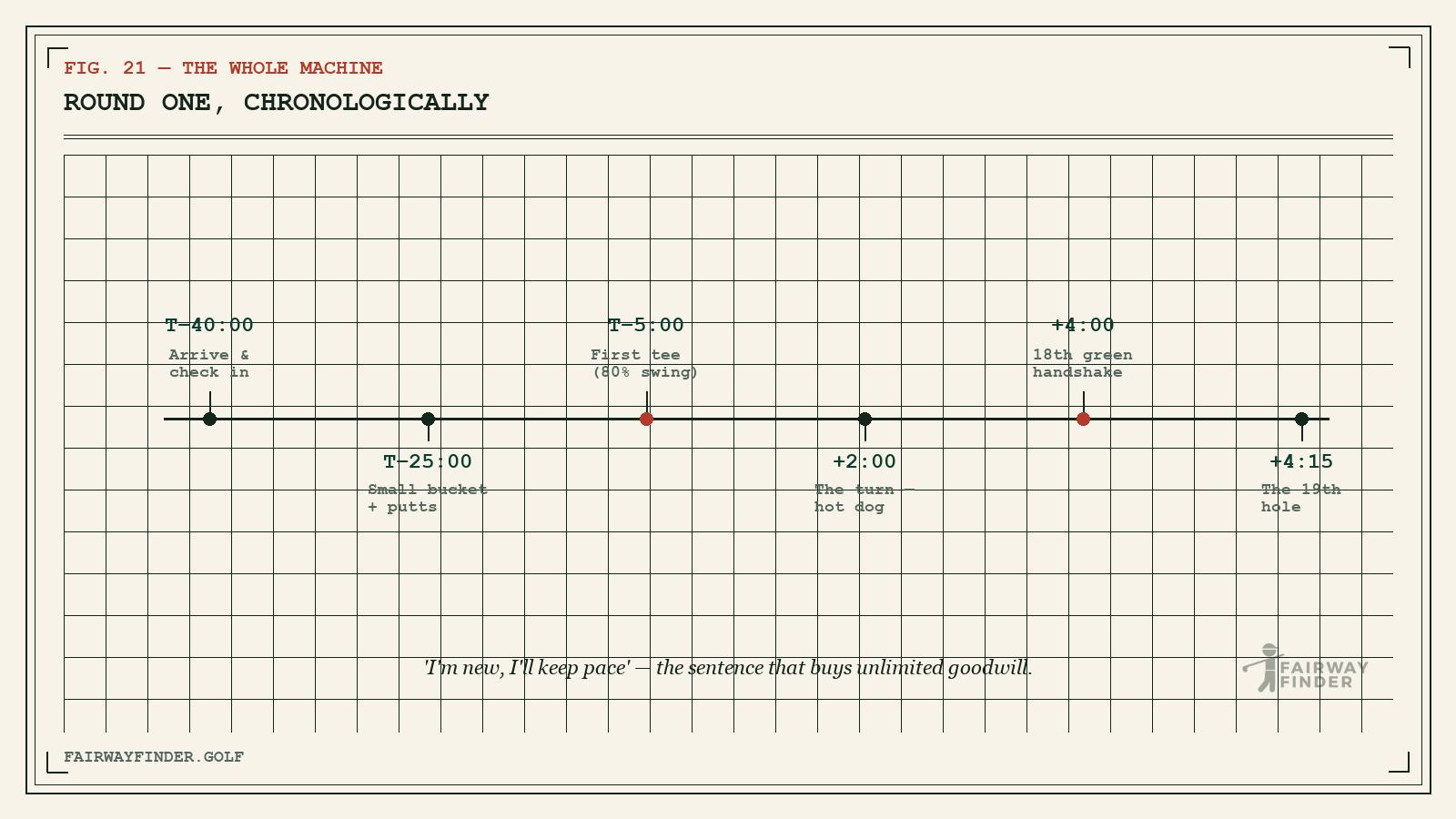
Arrive 40 minutes before your tee time. The sequence:
1. Check in at the pro shop. Give your name and time; pay if you haven't. You'll get a receipt and maybe a cart key. "Walking or riding?" means exactly that — walking is cheaper and, on a short course, genuinely pleasant.
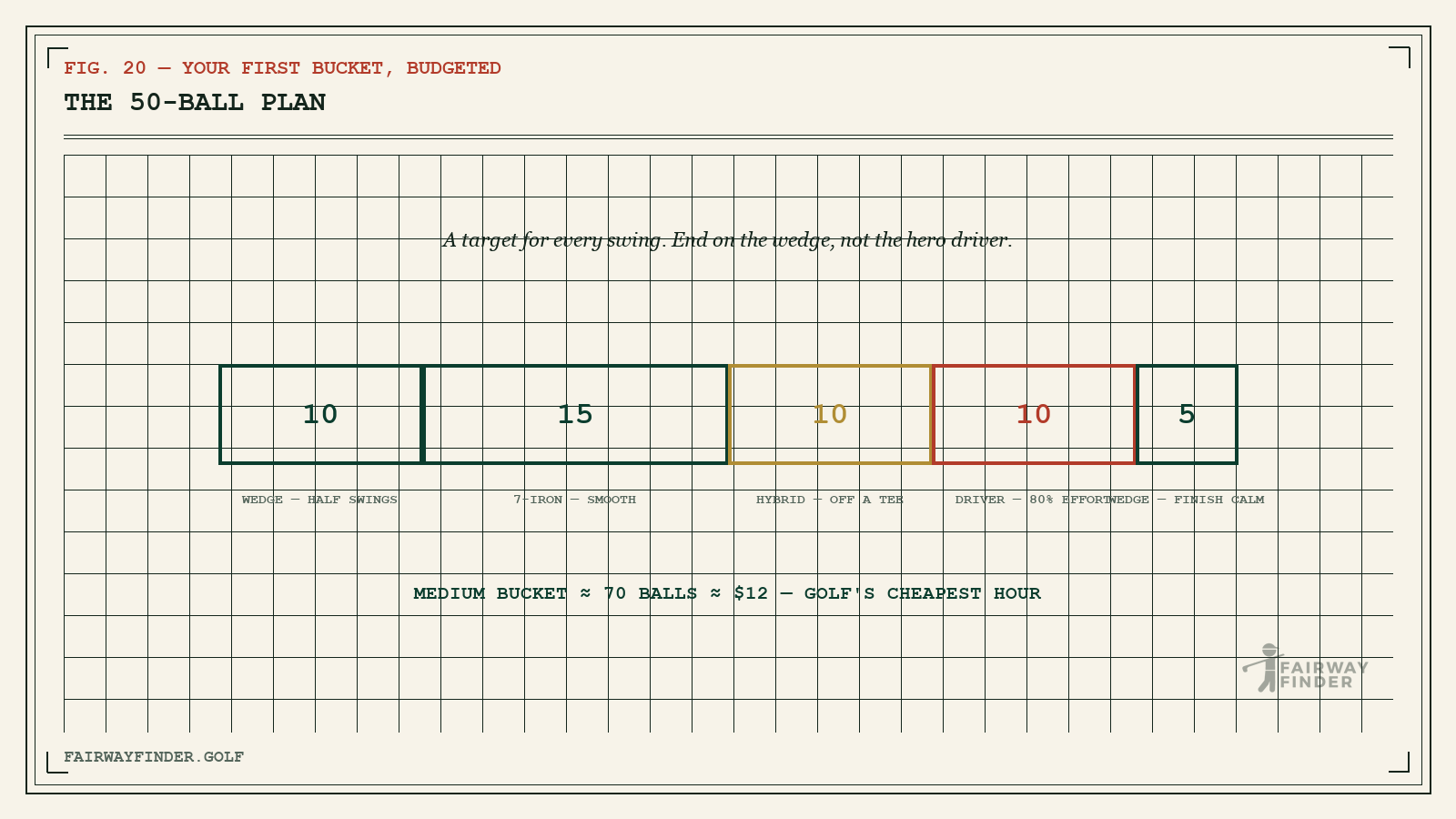
2. Warm up, don't practice. Hit a small bucket if there's a range (last 10 minutes of it with the club you'll tee off with), roll a few putts on the practice green to learn the day's speed. No range? Do the 10-minute warm-up — stretch, slow swings, done.
3. Be at the first tee 5–10 minutes early. The starter (if there is one) calls groups in order. When they say "the 2:40 group is up," that's you.
The First Tee (Everyone's Nervous; Here's the Script)
If you're paired with strangers — normal and, honestly, one of golf's best features — introduce yourself, first names only, confess "I'm pretty new, I'll keep pace," and you've said everything required. That sentence buys you unlimited goodwill; slow play is the only thing that spends it.
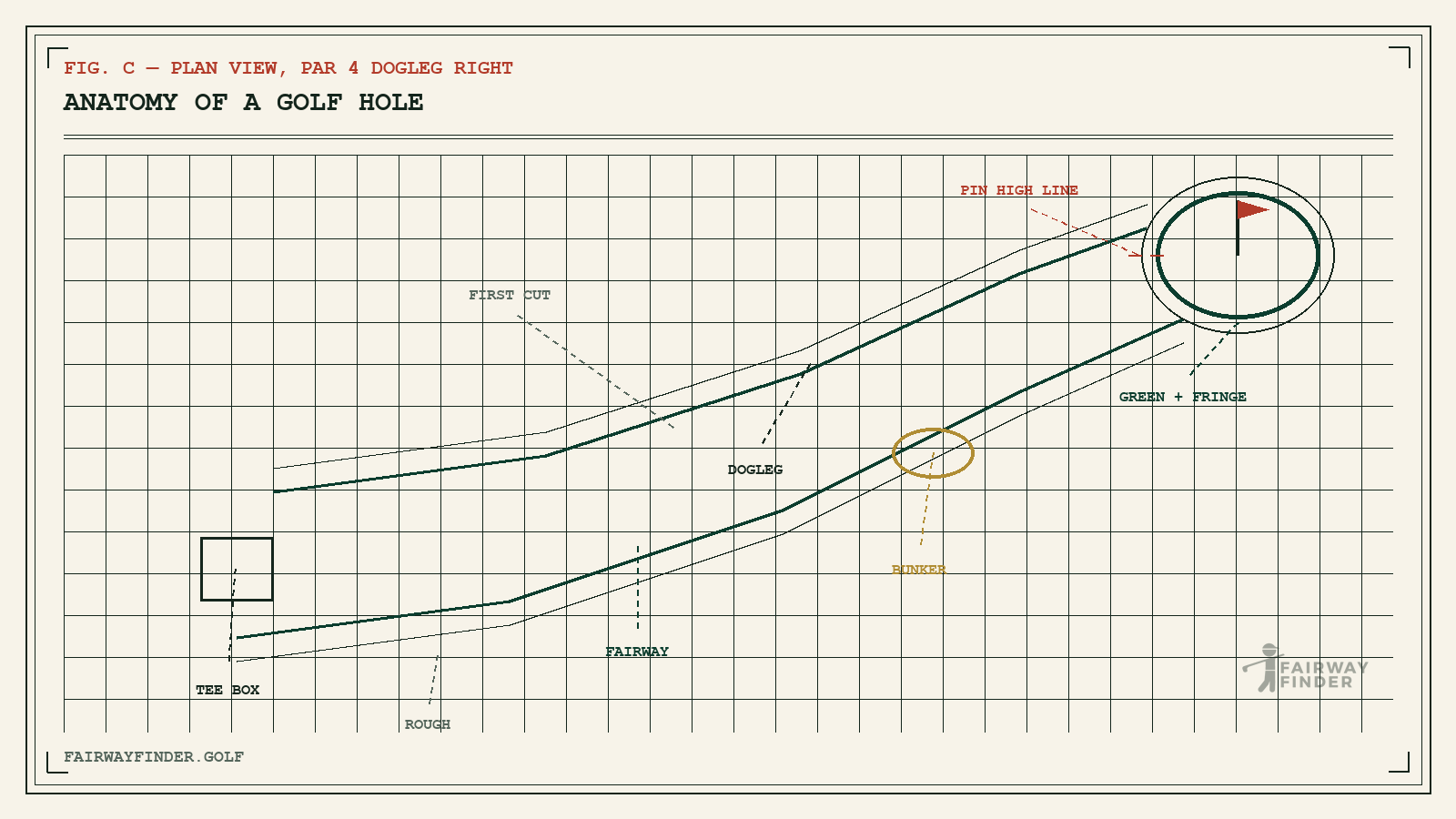
Then: tee your ball between the markers (up to two club-lengths behind them, never in front), pick a smooth 80% swing over a heroic one, and hit. If it goes 40 yards along the ground — that's a first tee shot in excellent standing. Walk after it happily. (When driving becomes your favorite part instead of your feared part, that's usually equipment plus physics — the case for shorter, easier drivers is right here.)
During: The Four Habits That Make You Great Company
1. Play ready golf. Whoever's ready hits (safely). Do your prep during others' shots.
2. Pick up at double par. On a par 4, once you've hit 8, pocket the ball, write 8, walk. This single habit is the difference between beginners people love playing with and beginners people dread.
3. Track your ball AND one other person's. Watching where shots land is the most valuable non-swing skill in golf and instantly makes you useful to the group.
4. Care for the course — divots filled, ball marks fixed, bunkers raked. Three seconds each; full how-to in the course care guide.
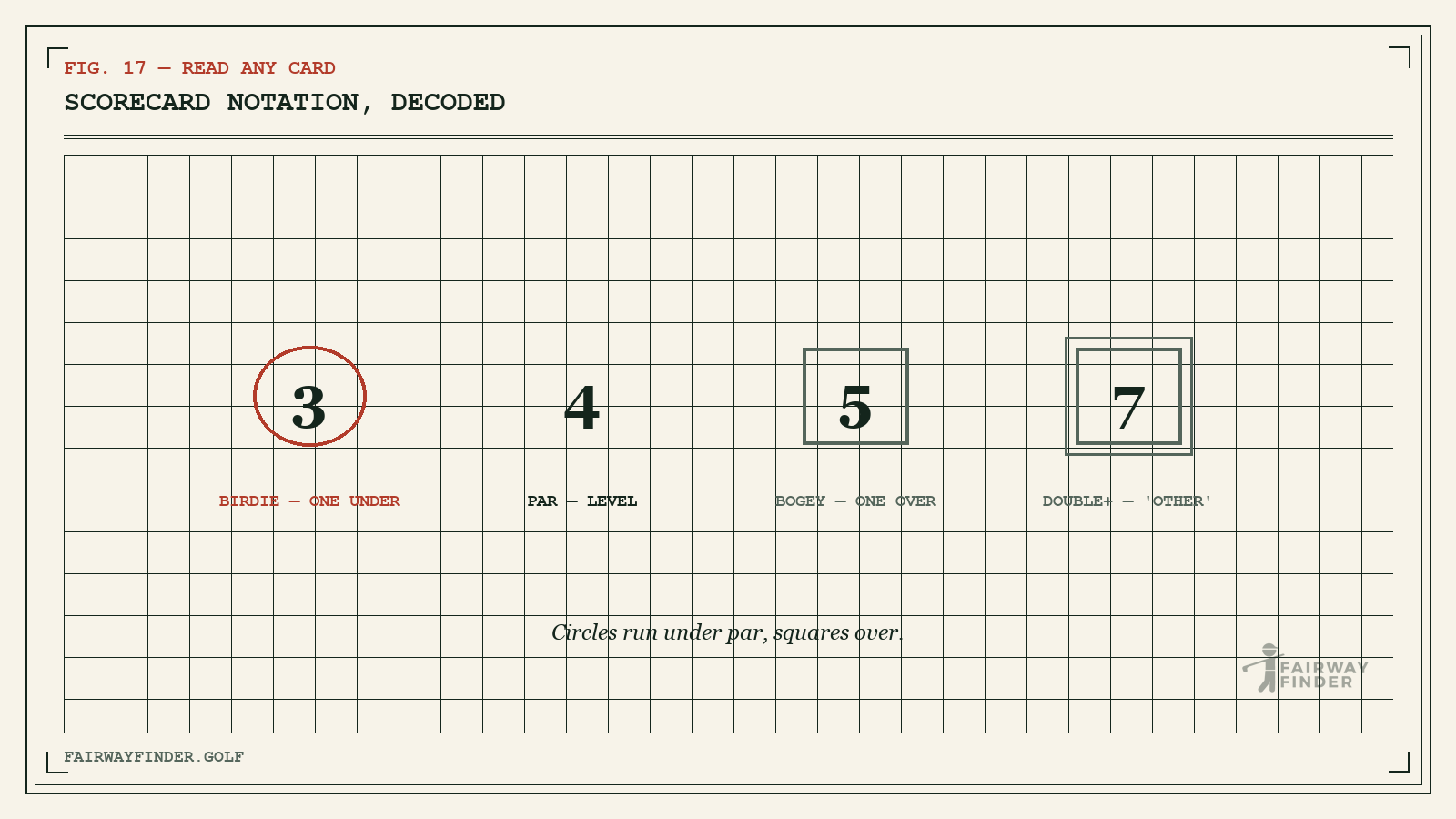
Scoring: count every swing at the ball honestly (whiffs count; practice swings don't), and let the double-par cap keep the math merciful. Nobody audits a beginner. The honesty habit is the thing being built.
The Cart, the Turn, and Other Logistics
- Cart rules are posted daily: "90 degrees" (cross the fairway at right angles), "path only" (stay on pavement), or open. Never drive near greens, tees, or bunkers.
- "The turn" is the break between the 9s — bathroom, snack, hot dog of tradition. Keep it under 5–10 minutes; the course keeps moving.
- Letting groups through: if your group falls a full hole behind and the group behind is waiting on every shot, wave them through on a par 3 or at the turn. It costs five minutes and reads as pure class.
- Weather horn: one long blast means clear the course (lightning). Not optional, not negotiable.
After: The 19th Hole
Shake hands or bump fists on the 18th green — hats traditionally off — and thank the group. The "19th hole" is the clubhouse bar/grill, and the postgame drink or snack is where golf's actual social life happens; if the group invites you, going is always the right call. Scores get retold (and improved slightly), plans get made, and somewhere in there you'll realize you've already decided to come back.
That's the whole machine: book smart, arrive early, keep moving, tell the truth, buy a round. The swing takes years; belonging takes one afternoon of the above. For your pre-round homework, the etiquette guide and the rules essentials cover every situation this guide didn't — see you on the tee sheet.
Ready to find more fairways?
The Fairway Finder driver — 43.5" control length, 460cc titanium, 11° high launch, oversize leather grip. $299 USD / CA$399 with headcover and 1-year warranty.