Golf has a vocabulary problem: everyone at the course speaks it fluently, nobody remembers learning it, and asking "what's a flyer lie?" mid-round feels like admitting you snuck in. So here's the glossary golfers actually need — golf terms explained in plain English, organized by when you'll hear them, with zero judgment. Bookmark it, skim it before your first round, and you'll follow every conversation in the clubhouse.
Scoring Words (You'll Hear These Immediately)
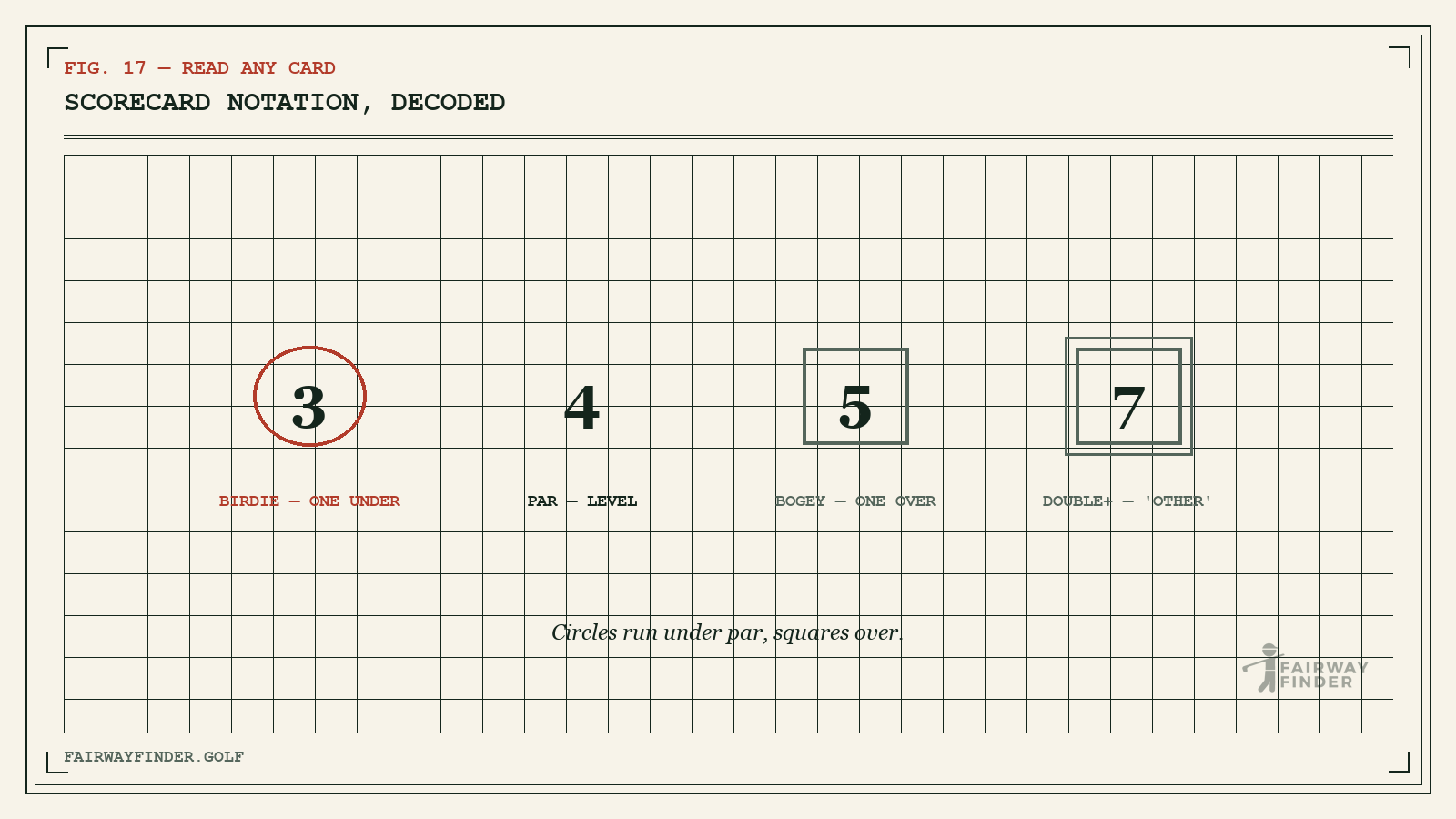
- Par — the expected score for a hole for an expert (3, 4, or 5 strokes). The whole scoring language hangs off this word.
- Birdie — one under par on a hole. Eagle — two under. Albatross — three under (you may play a lifetime without seeing one).
- Bogey — one over par. Double bogey, triple bogey — two, three over. For beginners, bogey golf (one over per hole, ~90 total) is a genuinely strong goal.
- Ace — a hole-in-one. Tradition says you buy the drinks afterward. Worth it.
- Up and down — getting the ball in the hole in two strokes from off the green (one chip, one putt). Sandy — an up and down from a bunker.
- Gimme — a putt so short your partners concede it in casual play ("that's good"). Not legal in stroke-play competition; universal on Saturdays.
- Mulligan — an unofficial do-over, usually granted on the first tee. Not in the rulebook, deeply embedded in the culture. Take it when offered; don't take a second.
The Course Itself
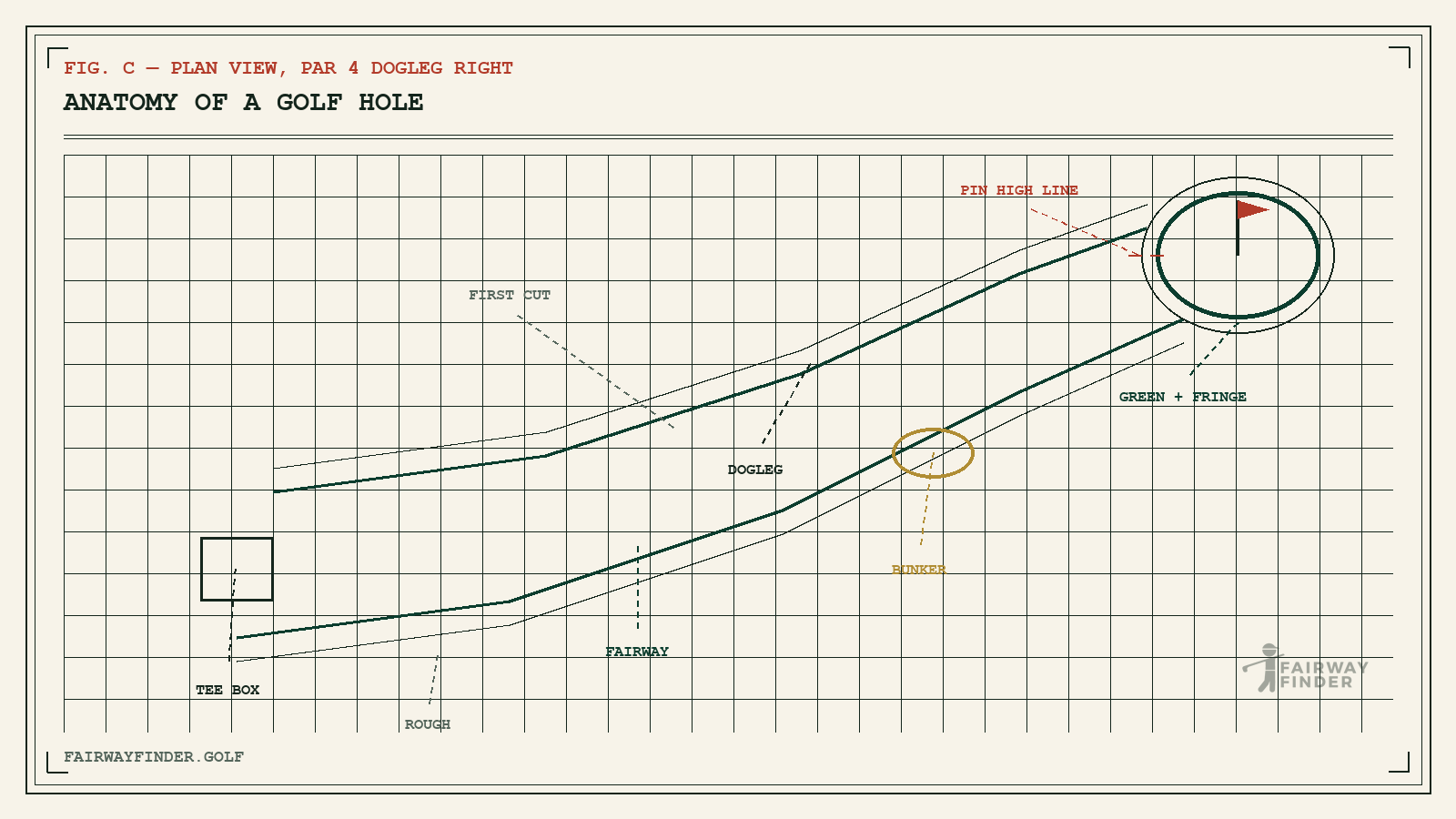
- Tee box / teeing area — where each hole starts. The colored markers denote different distances (see which tees you should actually play).
- Fairway — the short-mown highway from tee to green. Where you want to live. Rough — the longer grass flanking it. First cut — the semi-rough strip between them.
- Green — the ultra-short putting surface. Fringe/collar — its slightly longer border. Apron — the mown approach in front.
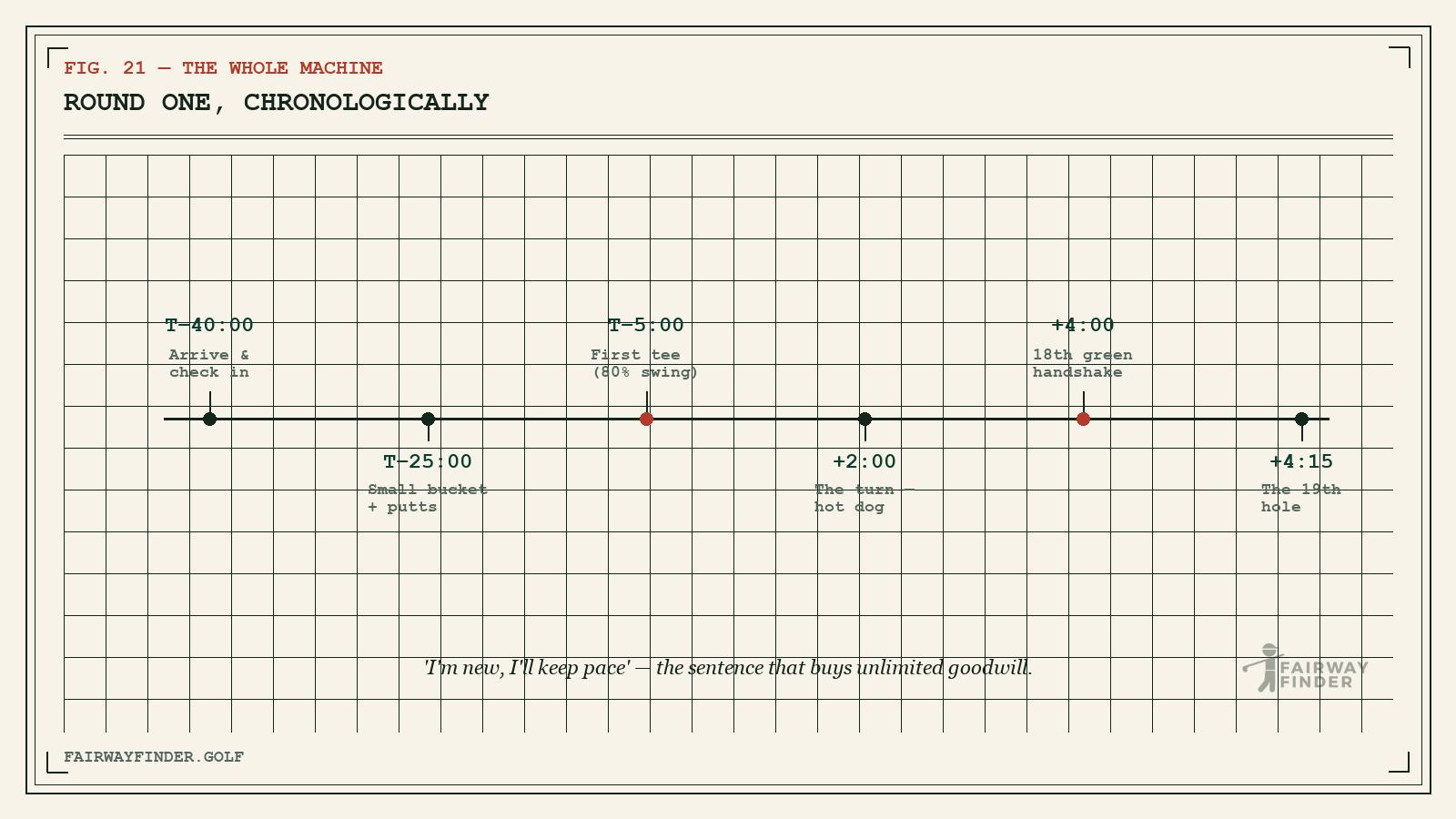
- Front nine / back nine — holes 1–9 and 10–18. "Making the turn" is passing between them (and grabbing a hot dog).
- Dogleg — a hole that bends left or right partway down.
- Links — technically, seaside dune courses like golf's Scottish originals (see our short history of golf); casually, people misuse it for any course. Now you know better.
- Pin / flagstick — the flag in the hole. Pin high means your ball finished level with the flag, just left or right — a compliment about your distance control.
Describing Shots (the Good, the Bad, the Sideways)
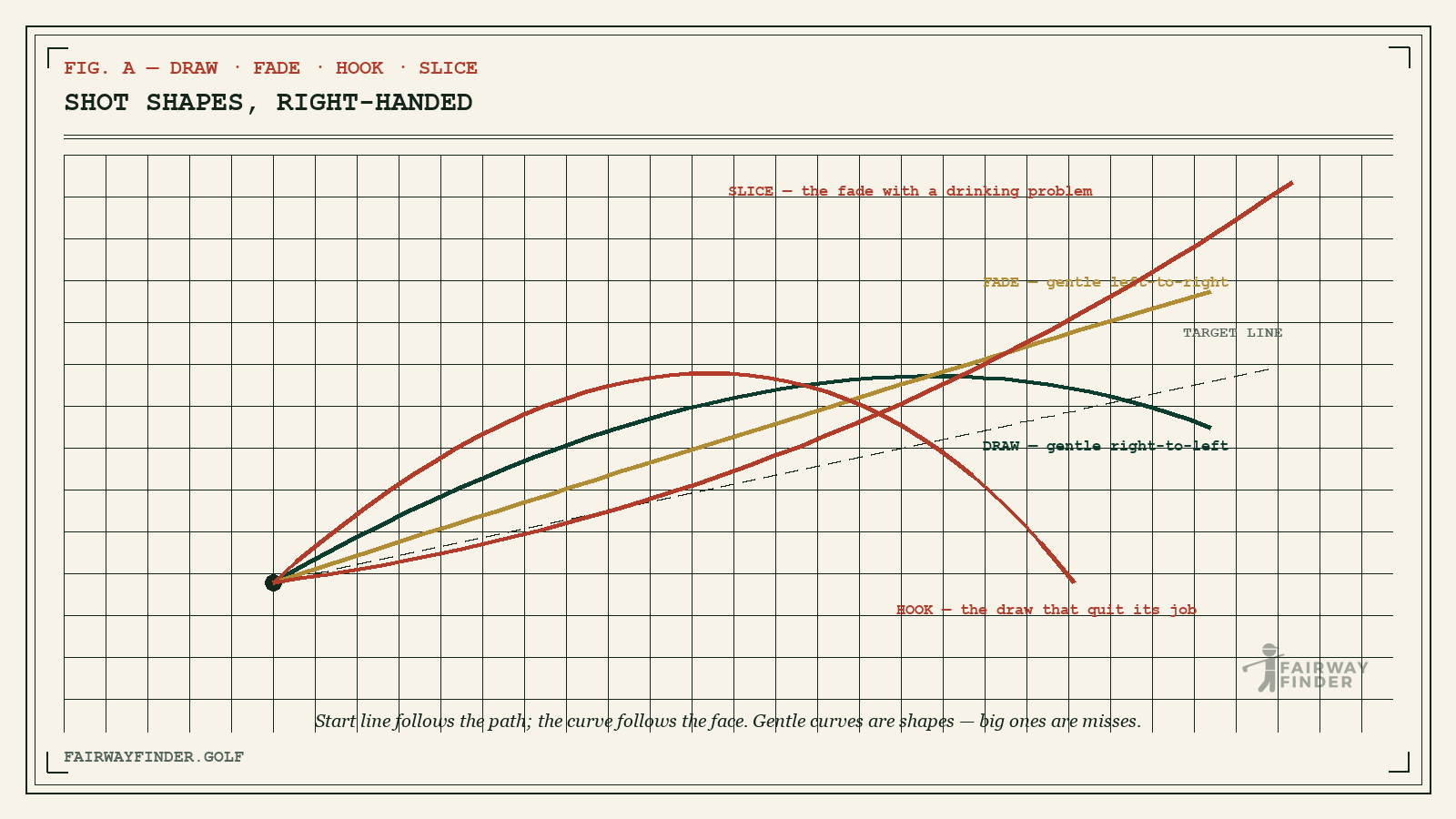
- Draw — a shot curving gently right-to-left (for a righty). Fade — gently left-to-right. Both are controlled, desirable shapes.
- Hook — a draw that quit its job and went hard left. Slice — a fade with a drinking problem, curving hard right. The slice is the most common miss in golf; our guide to why you slice your driver explains the physics.
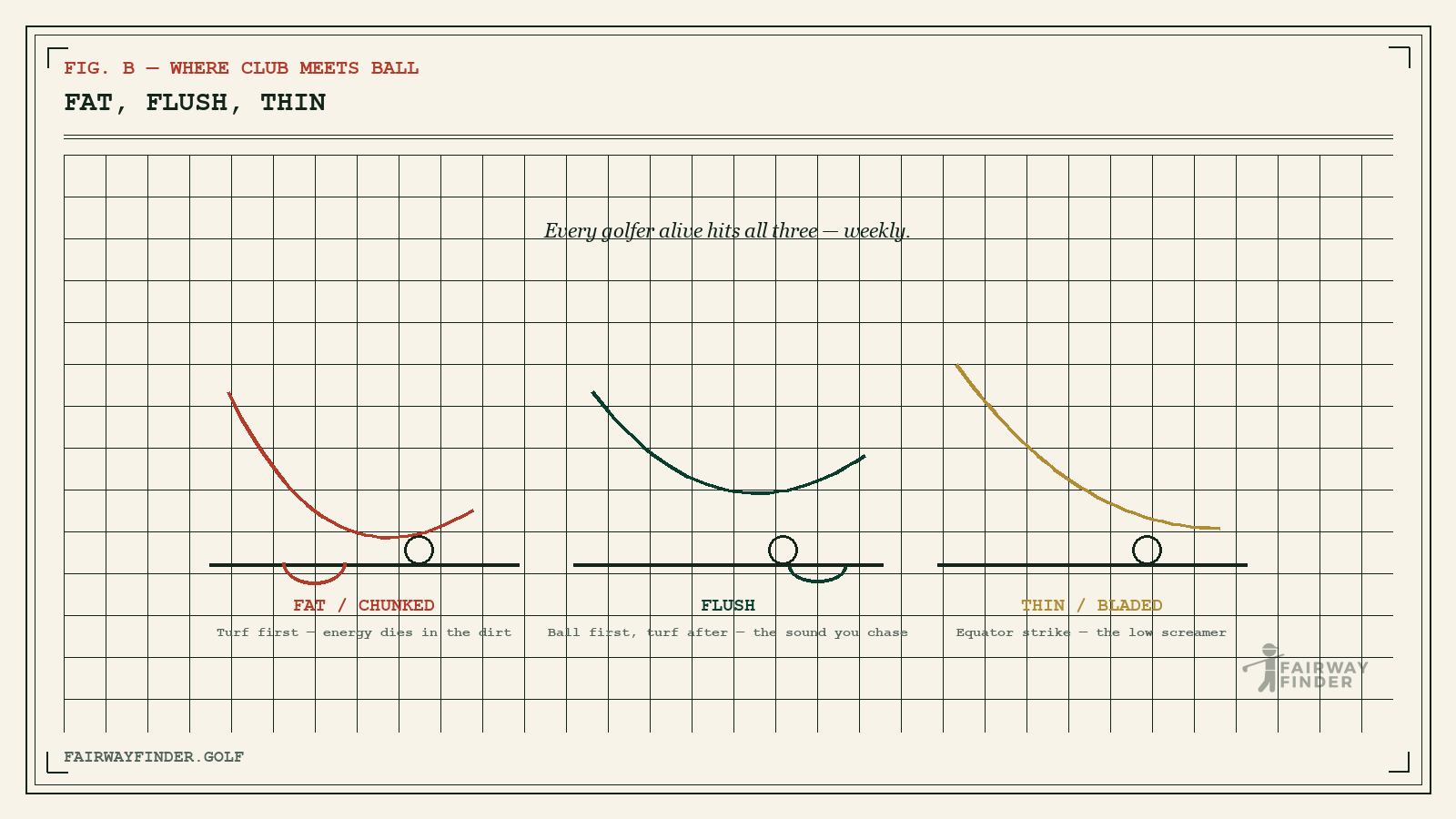
- Fat / chunked / heavy — hitting the ground before the ball. Thin / bladed / skulled — catching the ball's equator and sending a screamer. Every golfer alive hits both, weekly.
- Top — hitting the very top of the ball so it dribbles forward. Shank — the ball striking the club's hosel and shooting sideways; golf's forbidden word (many golfers won't say it aloud mid-round).
- Punch / knockdown — a deliberately low shot, usually from trees or into wind.
- Flyer — a shot from light rough that comes out with less spin and flies farther than expected. Sounds nice; ruins distance control.
- Worm burner — a shot that never gets more than a few feet off the ground. Descriptive, affectionate, inevitable.
Equipment Vocabulary
- Woods — the big-headed distance clubs (driver, fairway woods). Made of metal for forty years; the name outlived the material.
- Irons — the numbered clubs (lower number = longer shot, lower flight). Wedges — the highest-lofted irons for short shots and sand.
- Hybrid — a wood-iron crossbreed that's easier to hit than the long irons it replaced. Beginner's best friend.
- Loft, lie, flex, swingweight — the fitting numbers on every spec sheet; we decode all of them in driver fitting numbers in plain English.
- Sweet spot — the center of the face, where good things happen. Gear effect — the physics that makes off-center hits curve.
- Offset, draw-bias, oversize, game-improvement — equipment-speak for "designed to be forgiving." No shame in any of it; even tour players use forgiveness tech now.
Money Games and Formats
- Match play — winning individual holes rather than counting total strokes. Stroke play — total strokes, the standard.
- Scramble — team format where everyone hits and you all play the best ball's spot. The charity-outing standard, and the most fun a 25-handicap can legally have.
- Best ball, stableford, skins, nassau — formats and wagers explained fully in golf formats that make golf fun.
- Handicap — the great equalizer: a number expressing your skill so different players can compete fairly. Full plain-English explainer here.
- Sandbagger — someone whose handicap is suspiciously high, who then "surprises" everyone in the money game. Golf's most enduring villain.
Clubhouse Phrases That Confuse Everyone
- "Ready golf" — hit when ready instead of strict order. Modern standard for pace.
- "Cart path only" — keep the cart on the paved path today (usually after rain).
- "That'll play" — your shot wasn't pretty but it's fine. High praise, correctly calibrated.
- "Hitting the turn in two hours" — pace talk: nine holes took two hours. Good.
- "Fried egg" — a ball half-buried in its own crater in a bunker. Looks exactly like it sounds.
- "The tips" — the farthest-back tees. You are not obligated to play them. Almost no one should.
Language is half of belonging in golf. You now speak more of it than a lot of people who've played for years — and the other half is just showing up, which our first round survival guide will walk you through, first tee to final handshake.
Ready to find more fairways?
The Fairway Finder driver — 43.5" control length, 460cc titanium, 11° high launch, oversize leather grip. $299 USD / CA$399 with headcover and 1-year warranty.