The most common golf warm-up in the world: park, sprint to the pro shop, jog to the first tee, one violent practice swing, top the opening drive, then play the first three holes with a cold, betrayed body. Meanwhile, the "correct" advice — arrive an hour early for a full range session — ignores how actual humans schedule Saturday mornings. Here's the realistic middle: a 10-minute golf warm-up that fits between the parking lot and the tee, requires no gym membership, and measurably rescues your first three holes.
Why Bother (the Two-Minute Case)
Cold muscles do two bad things on the first tee: they can't produce speed (your first-hole drive is measurably shorter), and they can't sequence — the graceful chain of hips-then-torso-then-arms that makes a golf swing work arrives around hole four if you don't warm up, hole one if you do. Add the injury math (lower backs hate cold rotation under speed) and ten minutes is the cheapest insurance in golf. This isn't fitness culture invading golf; it's why every tour player you've ever seen swings a weighted club before they swing a real one.
Minutes 0–3: Wake the Body (Dynamic, Never Static)
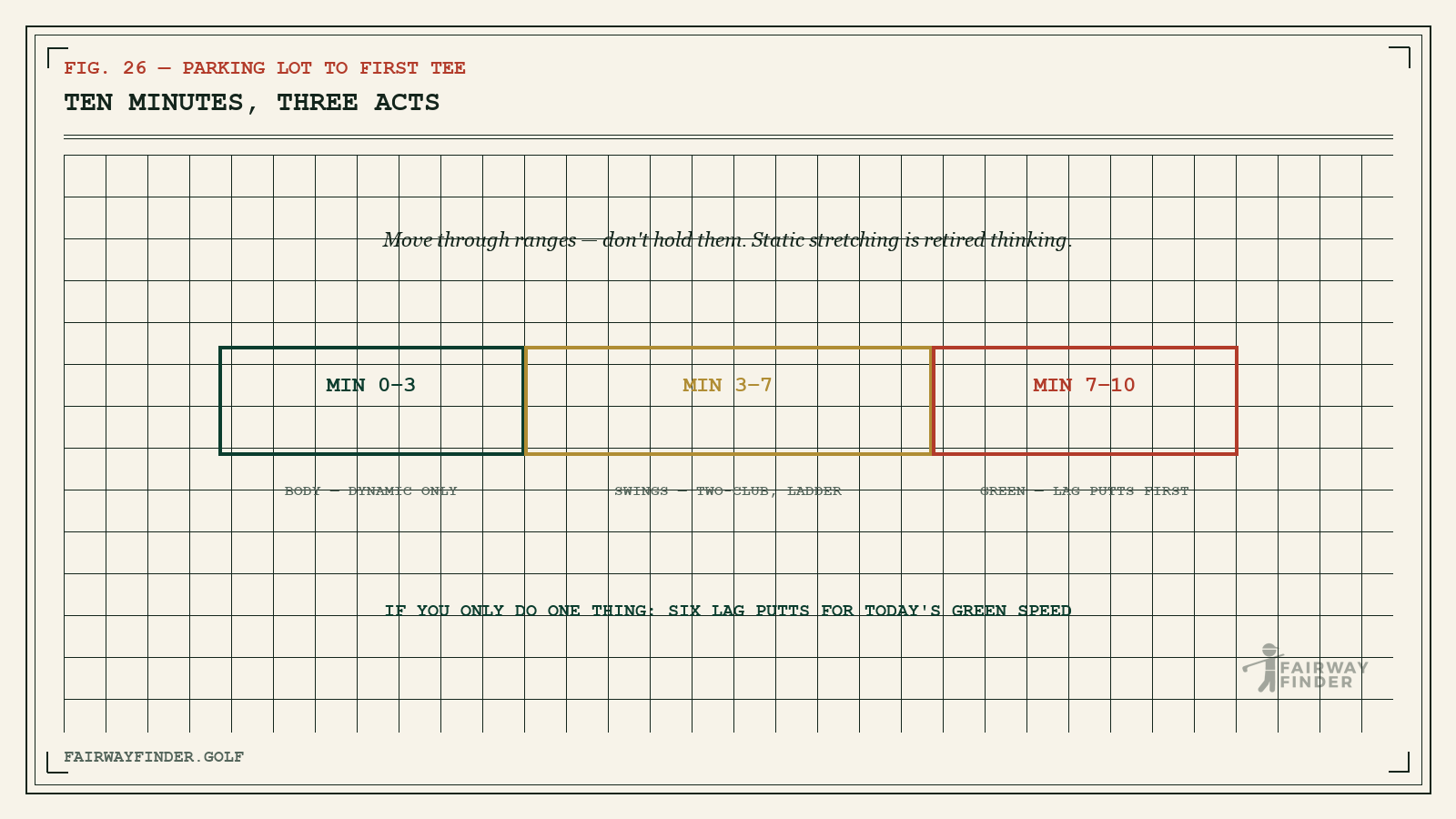
The outdated bit first: long, held static stretches before activity don't help performance and may briefly reduce power. Pre-round stretching should be dynamic — moving through ranges, not holding them. The circuit, right beside the cart:
- Arm circles and shoulder rolls — 20 seconds each direction, small to large.
- Torso twists — feet planted golf-width, arms crossed on chest, rotate back and through, gradually bigger. 15 each way. This is your backswing being installed.
- Hip openers — stand on one leg (hand on cart), knee circles out and in, 8 each leg. Golf lives in the hips.
- Standing side bends and a slow toe-touch-to-reach-up flow — 8 reps. The lower back gets a vote today; win it early.
- Wrist circles and forearm shakes — 15 seconds. The most-used, least-warmed joints in golf.
None of this looks cool. All of it works.
Minutes 3–7: Wake the Swing (the Two-Club Trick)
No range required — a patch of grass by the first tee does fine:
- Two-club swings: grip two irons together (instant weighted club) and make 10 slow, smooth, full swings. Heavy and slow teaches sequence and stretches the golf muscles golf-specifically. This one drill is 80% of the swing warm-up.
- Ladder swings with one club: 5 swings at 50% effort, 5 at 70%, 3 at 90%. Never 100% — you're tuning tempo, not auditioning for a long-drive contest. (That smooth-over-hard lesson is the same physics behind hitting more fairways: dispersion grows faster than distance.)
- Brush drill: 5 swings where the only goal is the club brushing the same blade of grass each time. Low point control — the difference between flush and fat on the opening approach.
- If there IS a range and time for a small bucket: hit it wedge → mid-iron → driver → wedge, last five balls with your opening-tee club at 80%. (Full range structure in the driving range guide.)
Minutes 7–10: The Green (Where the Warm-Up Pays Cash)
If you only warm up ONE thing, make it this — and it's the one most golfers skip entirely:
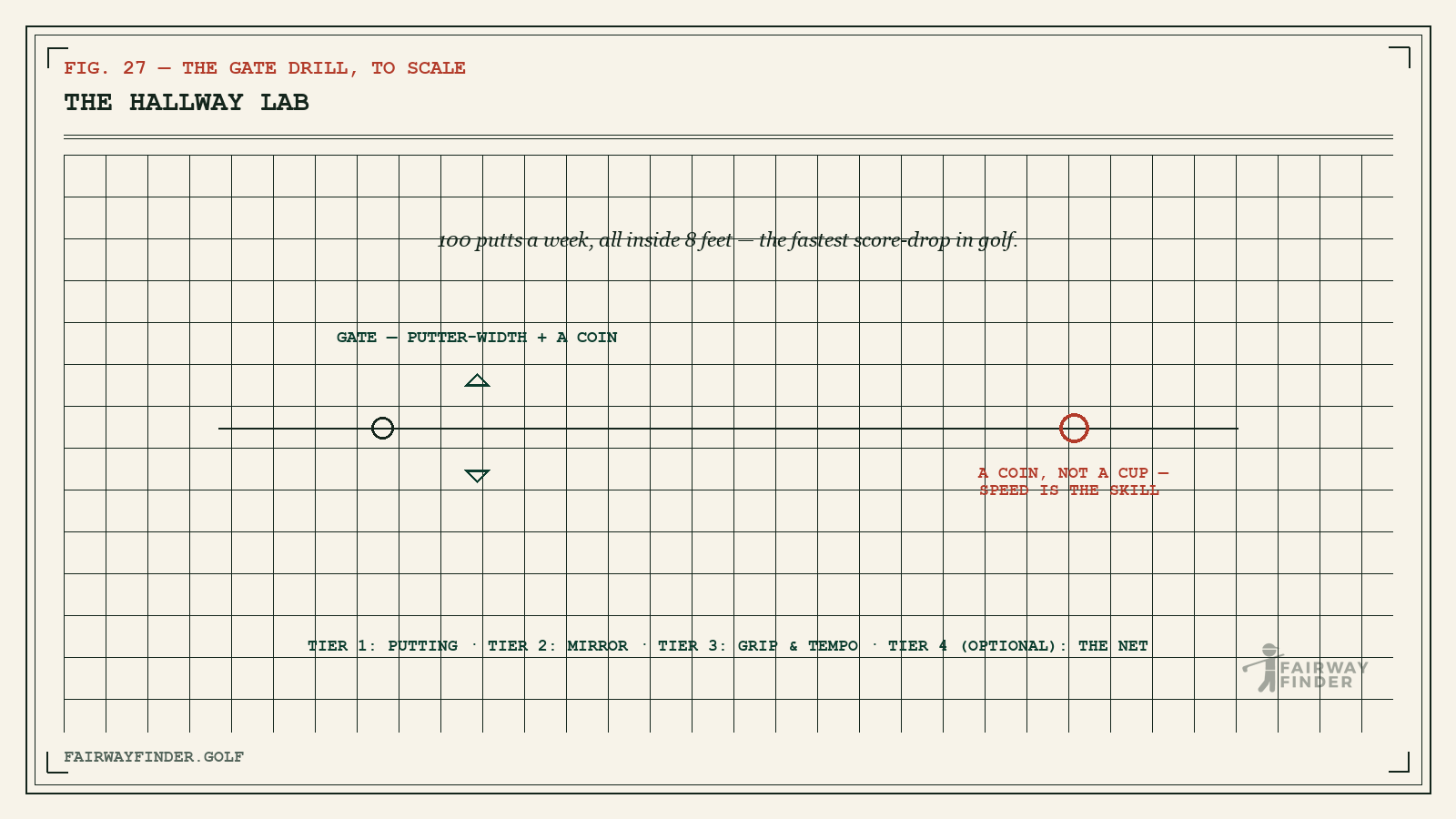
- Long lag putts first: 4–6 putts across the practice green's full length, 30+ feet. You're not aiming; you're downloading today's green speed into your hands. Speed, not line, is what three-putts are made of, and speed changes daily with mowing and moisture.
- Then short and real: 6 putts from three feet, holing each. Hearing the ball drop before the round quietly settles the nerves that live over short putts.
- Two chips if there's a chipping area — one bump-and-run, one carry. Feel the turf; today's tightness or fluff is now on file.
That's the whole routine: three minutes of movement, four of swings, three on the green. Total cost: arriving ten minutes earlier than the sprint-to-the-tee version of you.
The First Tee Coda
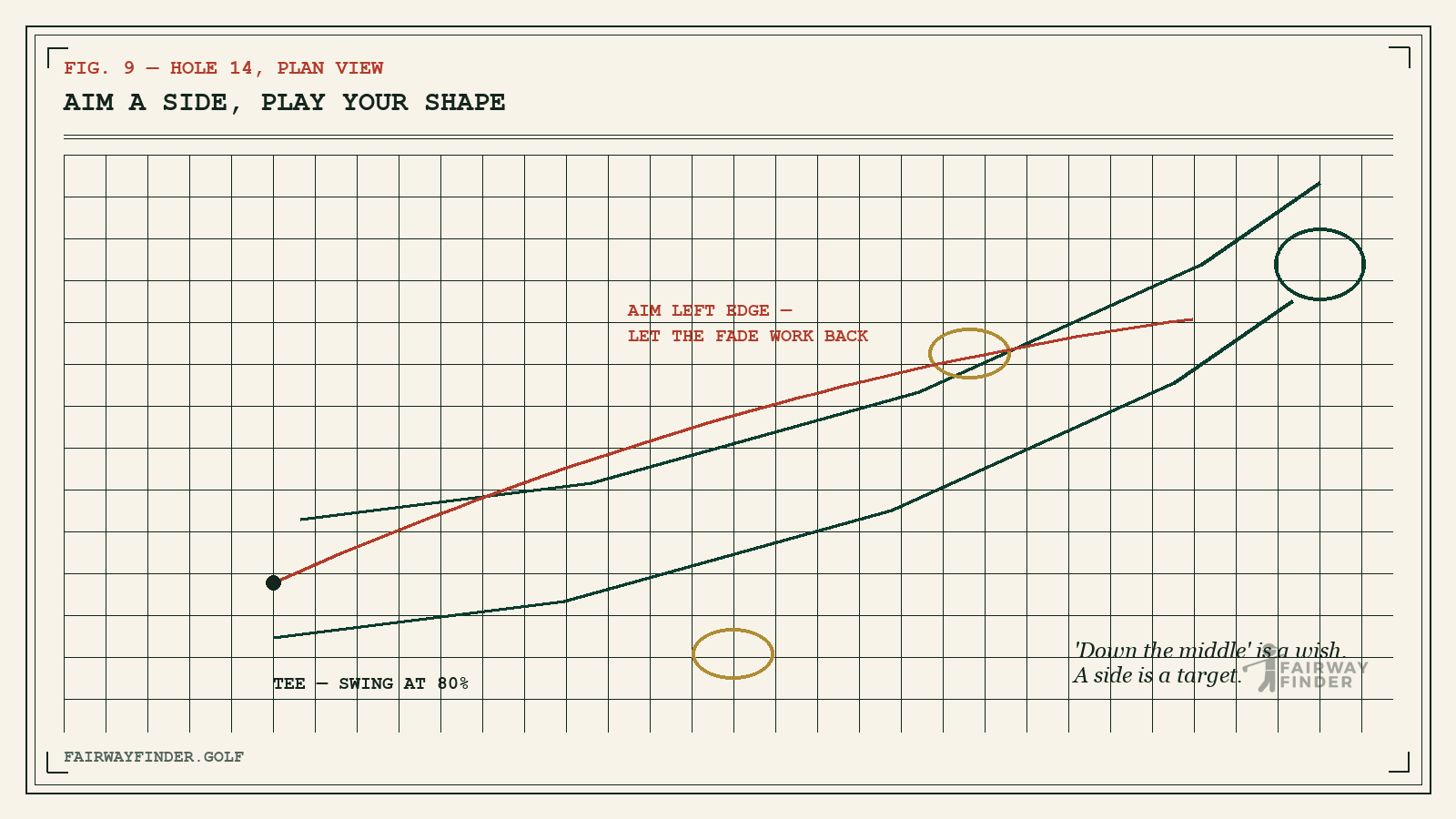
One last piece, free: after the warm-up, your opening swing should be the smoothest of the day, not a test of the speed you just built — pick the 80% swing, the generous target, and let the round arrive on its own schedule. A warm body plus a modest first swing is how good front nines start; a cold body plus a hero swing is how the first-tee-nerves genre got its name.
Cold-weather addendum: below 50°F, double the body section, keep the ball in your pocket between holes, and expect shorter carries all day regardless — that's physics, not your swing. And for the months when the course itself is closed, the at-home practice guide keeps the machine warm until spring.
Ready to find more fairways?
The Fairway Finder driver — 43.5" control length, 460cc titanium, 11° high launch, oversize leather grip. $299 USD / CA$399 with headcover and 1-year warranty.