The driving range is the single best place to start golf: cheap, low-stakes, no dress code, no one watching, quit whenever you want. It's also weirdly undocumented — everyone assumes you already know how the ball machine works and what to do with your bucket. This guide fixes that: your first time at the driving range, from parking lot to last ball, explained like nobody has yet.
How a Range Works (the Logistics Nobody States)
- You buy balls, not time. Walk into the shop (or up to a kiosk), buy a bucket — small (~35 balls), medium (~70), large (~100). Typically $8–20. First visit: get a medium. A large bucket exhausts a new golfer; a small one ends right as you find a rhythm.
- The machine: some ranges hand you a bucket; others give a token or code for a dispenser — put the empty bucket UNDER the chute before pressing, a lesson everyone learns once, loudly.
- Pick any open bay/mat. No assignments at most ranges. Leave a bay between you and strangers when possible — courtesy, not rule.
- No clubs? No problem. Nearly every range rents or lends clubs, often free or a few dollars. You genuinely don't need to own anything to start.
- Modern option: tech ranges (Toptracer/TrackMan-style bays and golf-entertainment venues) show your ball flight on a screen — fantastic feedback for beginners, more fun with friends, slightly pricier.
The Unwritten Range Rules (Learn Once, Belong Forever)
- Never, ever walk out onto the range to grab a ball, a headcover, or anything else. Balls are flying. The picker cart gets everything eventually.
- Hit from behind the line/mat edge, aim straight downrange, and take practice swings only where you have empty space around you.
- Keep tips to yourself and expect the same — range advice from strangers is a beloved tradition politely tolerated by no one.
- Hitting the ball-picker cart is not a badge of honor. (It happens to everyone. The cage exists. It's still not the game.)
- Return your bucket, replace borrowed clubs, that's the whole social contract.
Your First 50 Balls: A Plan That Isn't "Swing Hard 50 Times"
The default beginner move — dumping the bucket and machine-gunning drivers — teaches almost nothing except fatigue. Here's a plan that builds actual skill:
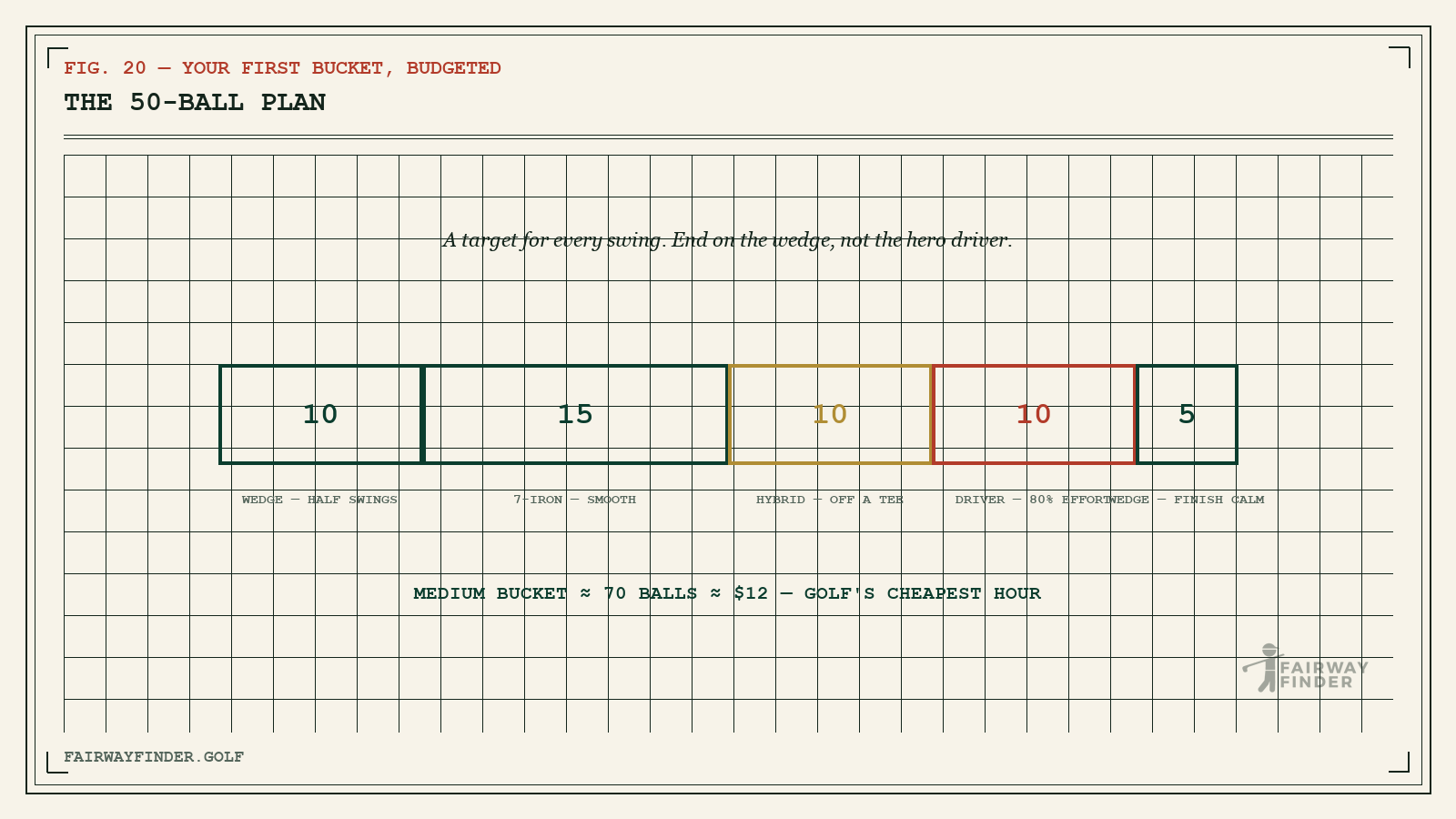
- Balls 1–10: half swings with a wedge or 9-iron, the shortest, most lofted iron available. Goal: just make contact, feel the club brush the mat, watch the ball climb. This club is the easiest in the bag — start where success lives.
- Balls 11–25: smooth 7-iron, three-quarter pace. Pick a specific target flag or sign — never hit without a target; aim is a skill and this is where it's built. One ball every 45–60 seconds, not every 10.
- Balls 26–35: a hybrid or fairway wood off a tee if the mat has one. Longer club, wider arc — expect chaos, celebrate contact.
- Balls 36–45: the driver, finally. Tee it so half the ball sits above the clubhead, swing at what feels like 80% effort. You'll see the beginner paradox live: the smoother swings go farther than the violent ones. (That paradox has physics behind it — see how to hit more fairways.)
- Balls 46–50: back to the wedge. End on contact and confidence, not on a driver crescendo. Your last swings are the ones your body remembers in the parking lot.
Between every few balls: step back, breathe, re-grip. The rebuild-your-stance reset is where range practice actually beats course play.
Expectations Management (Read Before Ball 1)
Your first bucket will include: topped dribblers, total whiffs (they count as swings only in your memory), one accidental screamer 40 yards right, and — usually somewhere in the last third — two or three shots so pure you'll feel them in your teeth. Those two or three are the hook. Every golfer on that line, including the smooth old guy flushing 7-irons, started with the same bucket you're hitting. The range's great mercy is that nobody's watching and nothing counts.
A note on mats vs. grass: mats forgive "fat" contact (the club bounces into the ball instead of digging), so mat practice flatters you slightly. Fine — beginners need flattering. Just know the lush turf of the course will be a touch less generous.
When to Graduate
You're ready for a real course — start with 9 holes, ideally a short "executive" course — when you can advance the ball airborne more often than not with two different clubs. That's the whole bar. Not distance, not consistency, not a pretty finish. Airborne, most of the time, twice over.
Before that first round, arm yourself with the beginner's etiquette guide and the first-round survival guide — and when the driver becomes the club you reach for instead of the one you fear, you'll understand exactly why we built ours shorter, lighter to aim, and easier to hit than the ones that made the range feel hard.
Ready to find more fairways?
The Fairway Finder driver — 43.5" control length, 460cc titanium, 11° high launch, oversize leather grip. $299 USD / CA$399 with headcover and 1-year warranty.