Stand on enough first tees and you notice a pattern. The golfer who steps up with a driver stretched to maximum length and swings for the fences usually ends up reloading. The golfer who makes a controlled pass with a club they can actually manage walks down the middle of the hole. If you keep losing tee shots into the trees, it's time we talked about shorter driver shaft accuracy, because the quickest fairway-finding fix I know has nothing to do with rebuilding your swing. It's swinging a shorter lever.
The Longest Club in Your Bag Is the Hardest One to Hit
Think about which clubs you actually trust. For most amateurs it's a 7-iron, a hybrid, maybe a 3-wood when the round is on the line. Notice what those clubs have in common: every one of them is shorter than your driver.
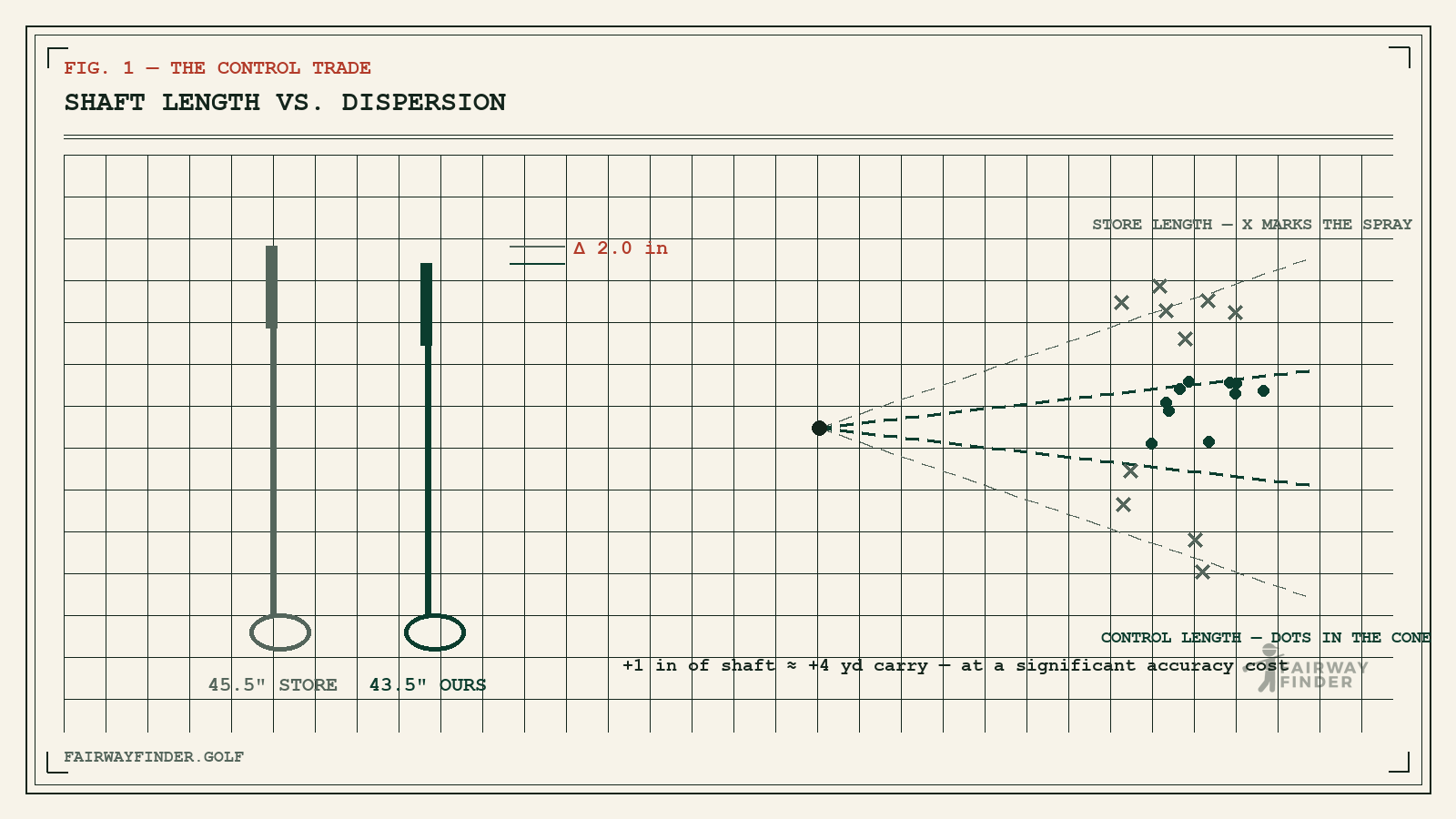
Most drivers sold off the rack today measure 45.5 inches or longer. That extra length puts the clubhead farther from your hands and your body, and more can go wrong across that distance. The swing arc gets longer, the timing window gets smaller, and the face has more time and more room to twist away from square before impact.
Here's the part nobody mentions in the store: driver shafts grew over the years because longer shafts produce bigger clubhead speed numbers on a launch monitor, and bigger numbers sell drivers. Nobody was measuring how often you'd find the short grass.
Shorter Driver Shaft Accuracy: What Actually Changes
Shorten the shaft and several good things happen at once:
- You stand slightly closer to the ball, which makes the whole motion more compact and easier to repeat.
- The clubhead travels on a shorter arc, so the same small timing error moves the face less.
- You get a far better sense of where the clubhead actually is during the swing.
- Center-face contact becomes dramatically more common, and center strikes are what tighten dispersion.
That last point is the whole ballgame. Off-center strikes don't just bleed ball speed; they twist the face through gear effect and add curve you never asked for. A toe strike wants to hook, a heel strike wants to slice, and neither one cares what your swing looked like. Find the middle of the face more often and your misses shrink on both sides of the fairway at the same time.
There's a control bonus too. A shorter club is simply easier to square. Ask yourself why you can aim a pitching wedge at a flag with confidence but can't promise which fairway your driver will visit. Length is a huge part of that answer.
"But Won't I Lose Distance?"
This is the objection I hear every single time, so let's be honest about it. Yes, a longer shaft can generate more clubhead speed, all else being equal. Cutting length gives up a few potential yards on paper.
But paper assumes you flush it, and that assumption is doing a lot of heavy lifting. A heel or toe strike loses ball speed in a hurry, because energy transfer falls off fast as contact moves away from the center. In practice, a centered hit with a slightly shorter shaft frequently flies as far as, or farther than, a mishit with a longer one. And it does its flying toward the fairway instead of the lumber.
There's a reason plenty of accomplished players, professionals included, put driver shafts in play that are shorter than standard retail length. They've done the arithmetic: good driving is distance multiplied by placement, and placement wins far more bets than raw yardage does.
Test It Yourself This Week
You don't have to take my word for any of this. Run a simple experiment on the range:
- Grip down on your current driver about an inch and a half, so your bottom hand is near the end of the grip.
- Dust the face with foot spray or dry shampoo so every strike leaves a mark.
- Hit ten balls choked down and ten at full length, then compare the two strike patterns.
- Watch your start lines and curves, not just the one perfect shot in each set.
Most golfers watch the strike pattern pull toward the center of the face almost immediately when they grip down. That's your own body telling you something the sales floor won't: the standard shaft is longer than your best swing wants it to be.
Why choking down isn't the full answer
Gripping down works, but it's a patch, not a fix. It changes how the shaft loads, throws off the balance the club was built with, and leaves you holding the skinniest part of the grip with your bottom hand. A driver actually built to a shorter length, with head weight and swingweight matched to that length, gives you the accuracy benefit without the side effects.
Why We Built a 43-Inch Driver
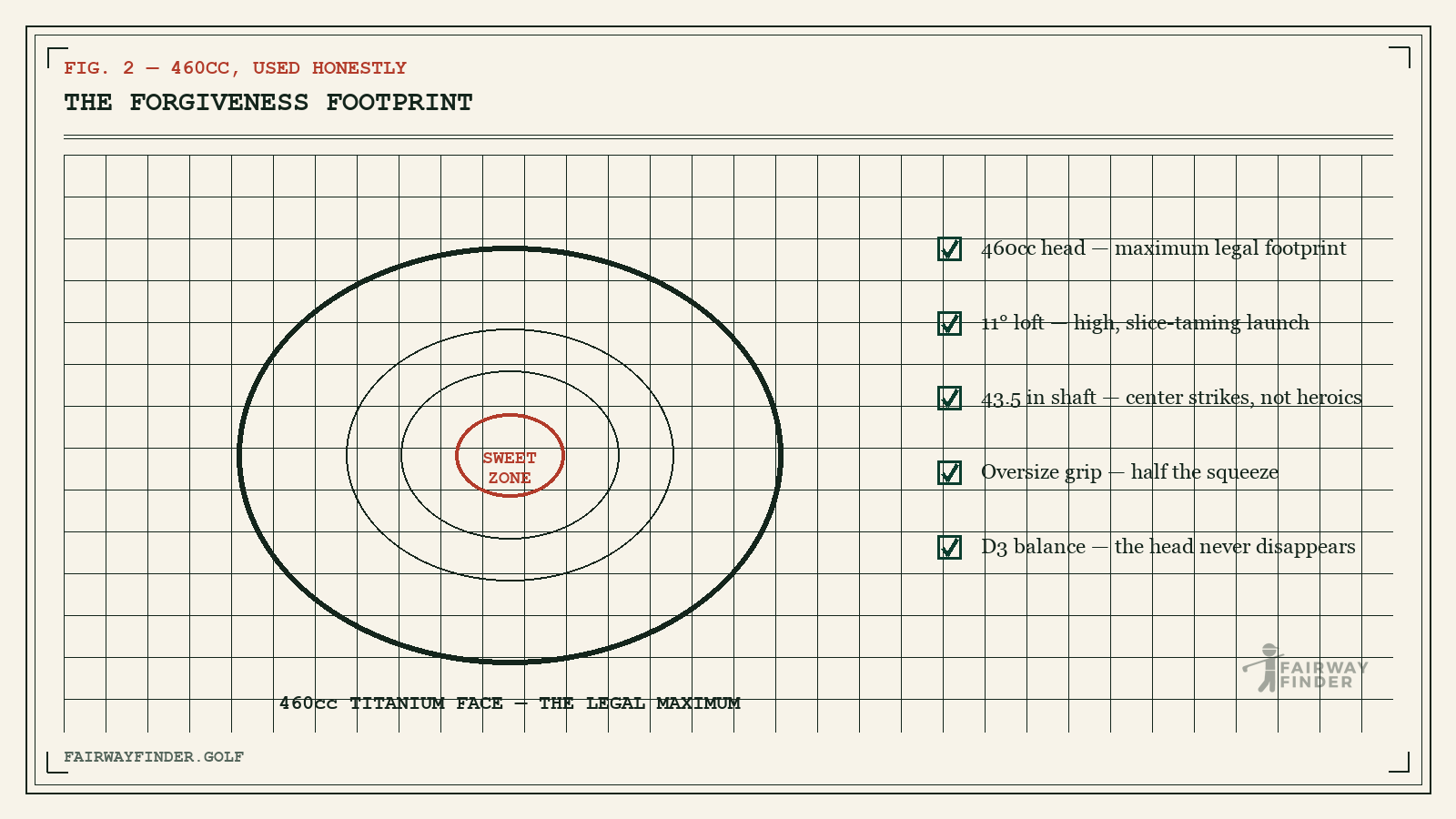
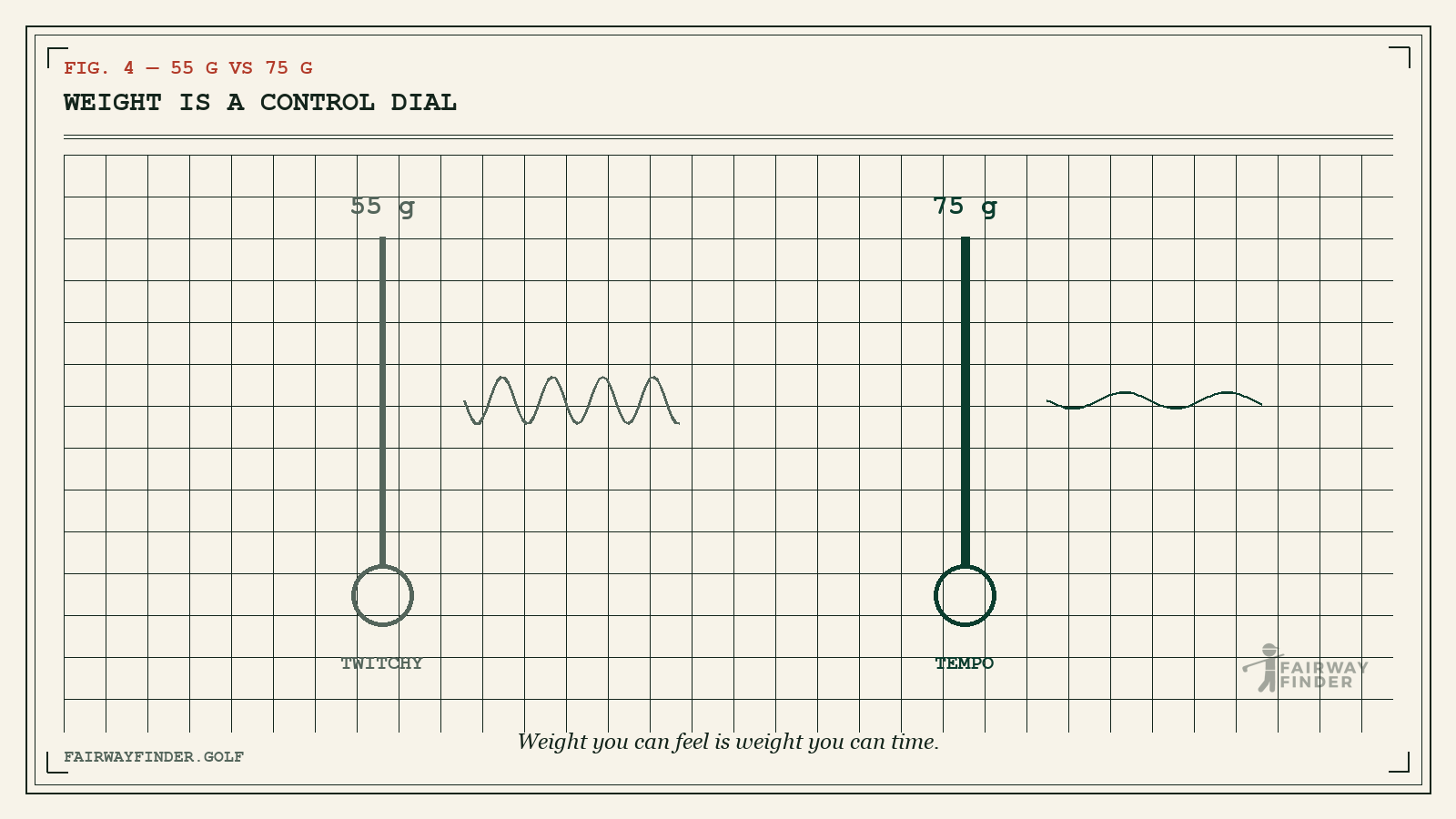
This idea is the entire reason the Fairway Finder driver exists. We built it around a 43.5-inch shaft, roughly two inches shorter than the typical rack driver, then balanced the whole club for that length: a 75-gram shaft, D3 swingweight, and an oversize grip so the club feels stable instead of stubby. If you're curious why the weight matters as much as the length, our piece on driver shaft weight walks through it.
The trade is printed right on the label. You give up a couple of inches of shaft, and the few theoretical yards that ride along with them, in exchange for strike consistency you can feel by the third swing. For the beginners and high handicappers we build for, that trade isn't close.
Play for the Second Shot
Here's the mindset shift that makes all of this click. The tee shot was never the point; the second shot is. A drive in the fairway gives you a clean lie, a clear line, and a green you can actually attack. A drive ten yards longer but sitting in rough or behind a tree gives you a recovery shot and a scorecard full of bogeys that all started the same way.
Golf gets easier from the short grass, and confidence compounds. The first time you play a full round without a lost ball off the tee, you'll understand why I push shorter shafts on almost every wild driver I meet. Distance is a thrill. Fairways are a strategy. Choose the strategy, and let the shorter shaft do the quiet work of finding them for you.
Ready to find more fairways?
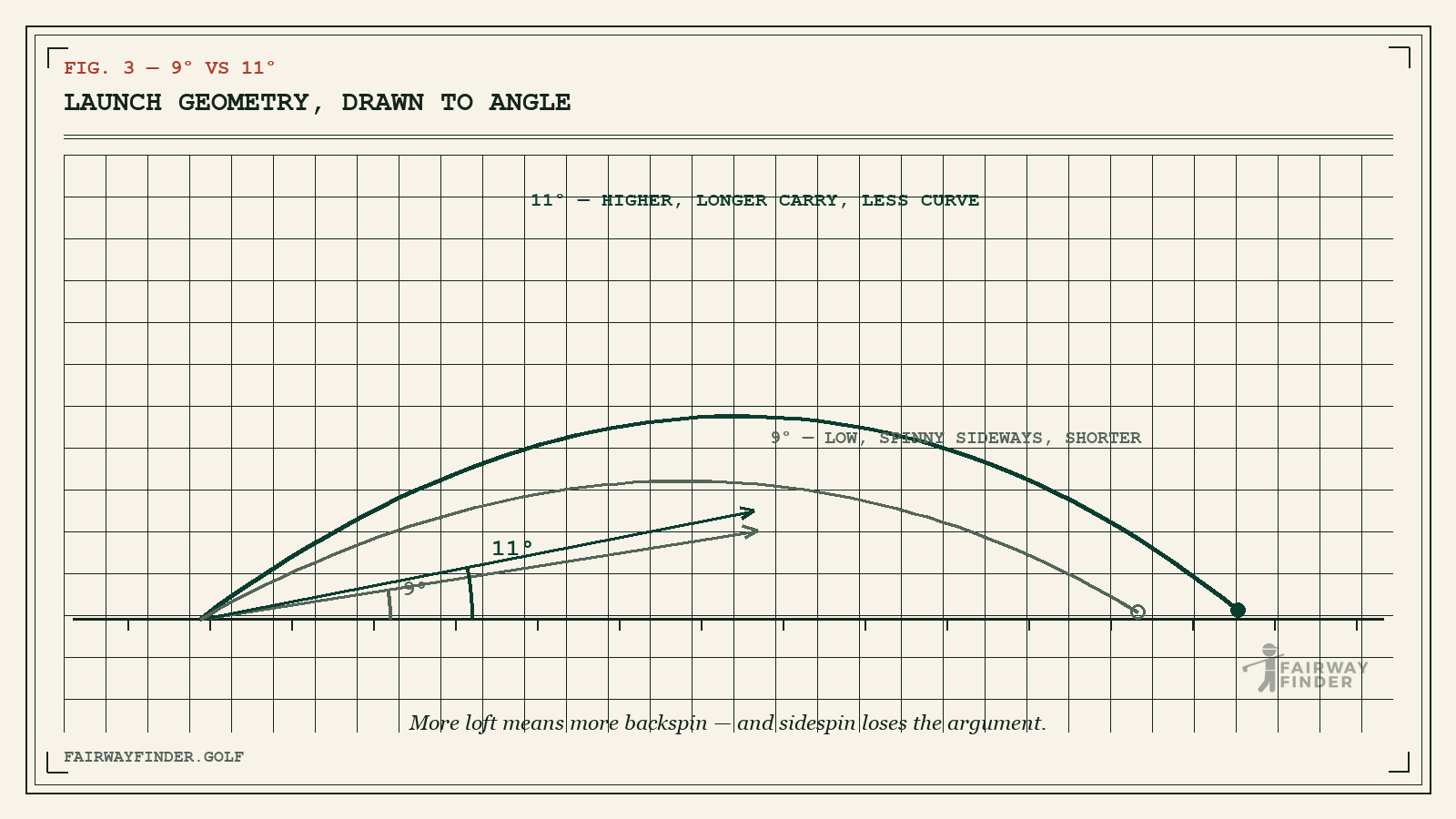
The Fairway Finder driver — 43.5" control length, 460cc titanium, 11° high launch, oversize leather grip. $299 USD / CA$399 with headcover and 1-year warranty.