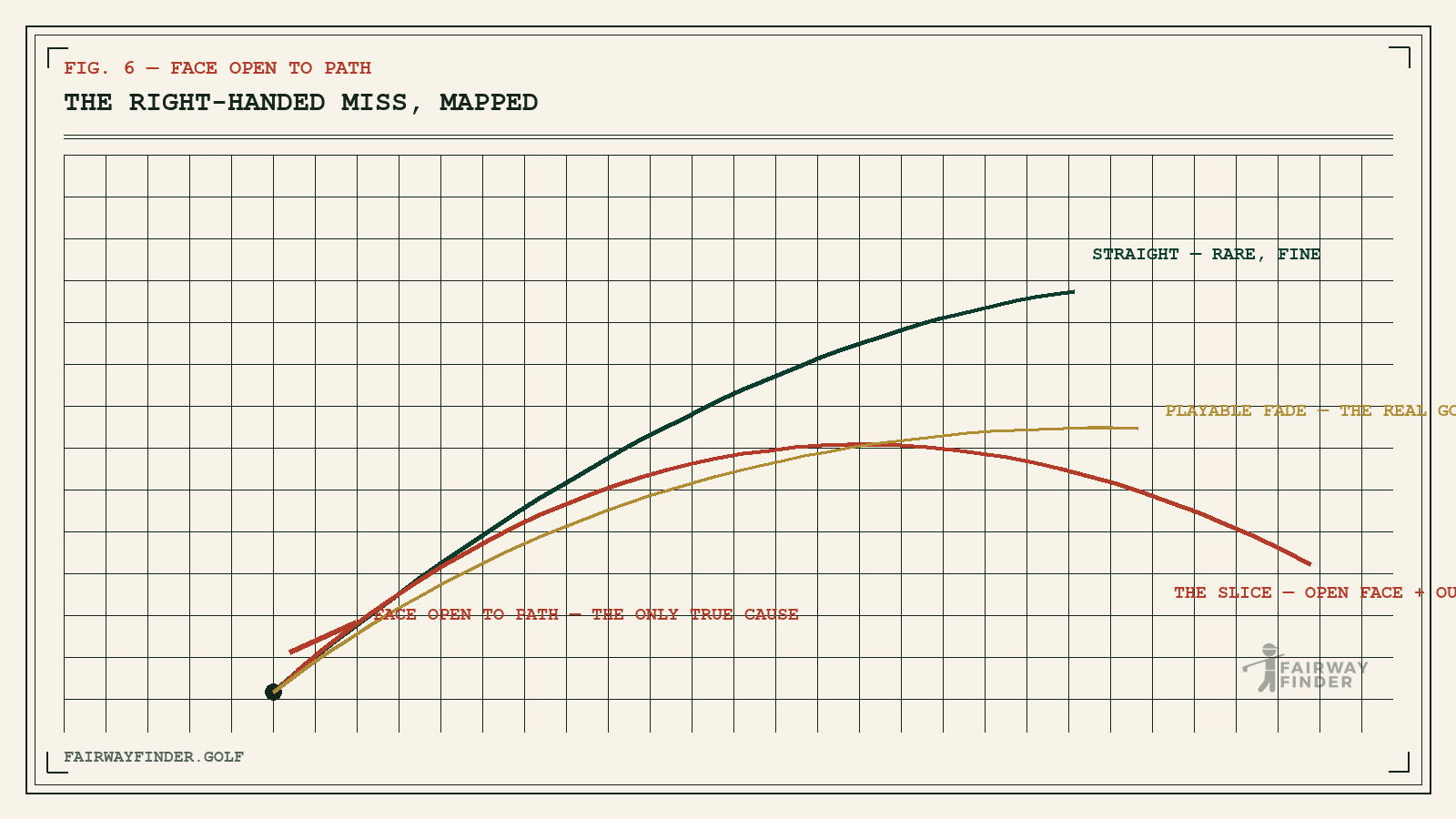
"Why do I slice my driver?" If I had a range ball for every time a student asked me that on the first tee, I could fill a picking cart. Here's the good news: a slice isn't a mystery, and it isn't a life sentence. It's ball-flight physics doing exactly what your club told it to do. The ball starts roughly where your swing path sends it and curves toward where your clubface points, and when that face is open relative to the path, you get the weak left-to-right banana that leaks into the right rough. Understand the causes, and the curve calms down.
I've watched more than a thousand golfers hit their first tee shot of a round, and slices come from the same short list almost every time. Let's walk through the five causes I see most, and the fixes that actually stick past next Tuesday.
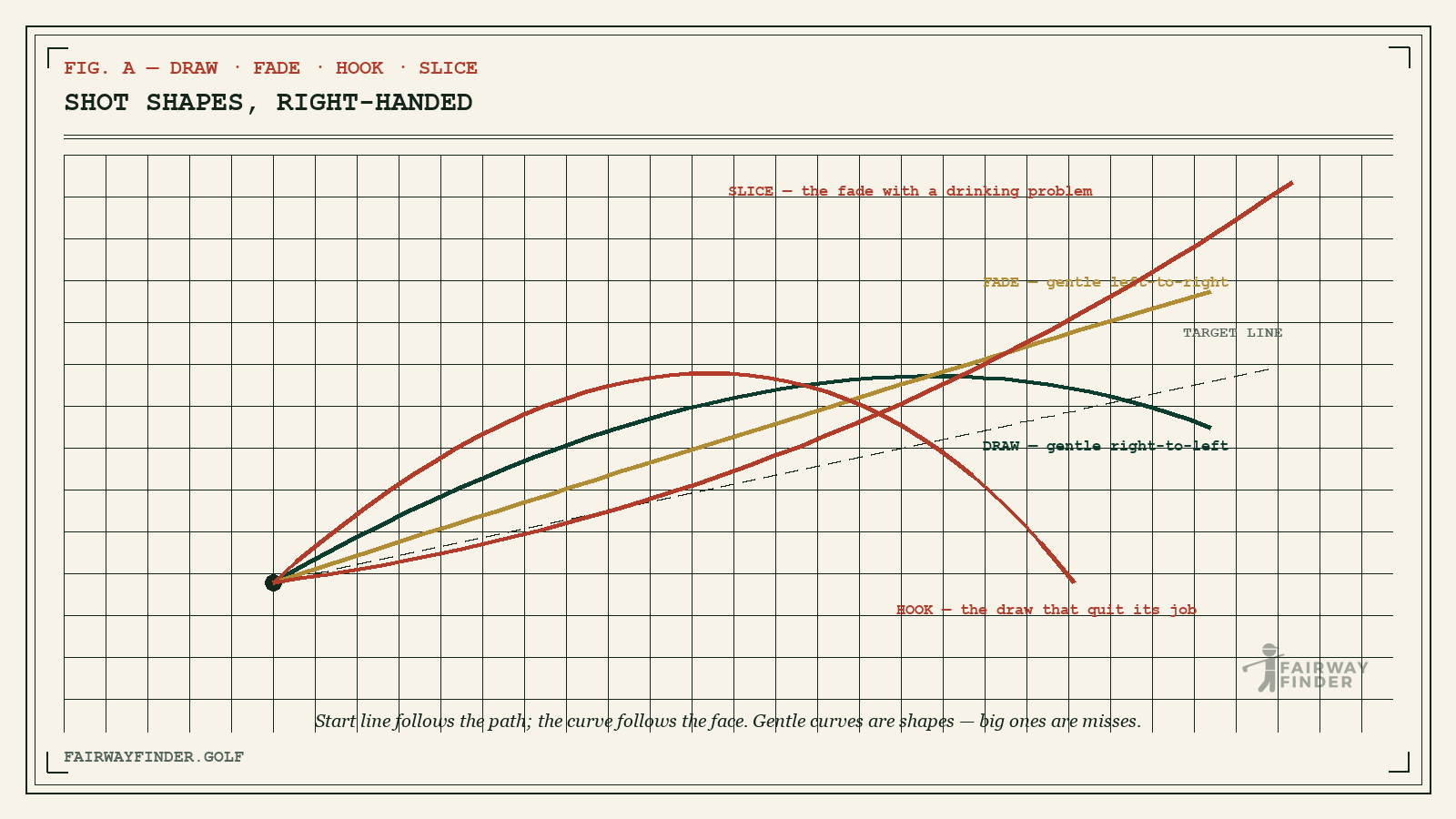
Cause 1: Your Clubface Is Open at Impact
The face angle at impact is the boss. It has the biggest say in where the ball starts and how it curves. Most slicers deliver the face open — pointed right of their swing path — and the two usual suspects are a weak grip and a cupped lead wrist.
A weak grip means your hands are rotated too far toward the target, so the face wants to hang open through the hitting zone no matter how hard you try to release it. A cupped (bent-back) lead wrist at the top of the swing does the same thing: it adds loft and openness that you have to undo on the way down, and under pressure, nobody undoes it.
The fix
Look down at your lead hand at address. If you can only see one knuckle, rotate the hand away from the target until you see two, maybe two and a half. Then make slow rehearsal swings feeling the lead wrist stay flat — like the back of your hand and your forearm form one straight line — at the top and into impact. Slow is the key word. Speed hides the old habit; slow motion rebuilds the new one.
Cause 2: The Over-the-Top Path
The classic slicer's move: the downswing starts with the shoulders spinning open, the club gets thrown outside the ideal line, and it cuts across the ball from out to in. Pair that path with an open face and you've manufactured a textbook slice.
Over-the-top is almost always a sequencing problem. The upper body fires first because it's in a hurry to hit. The fix is to give the lower body a head start.
The fix
Feel like your trail shoulder drops down toward your trail hip pocket to start the downswing, instead of spinning out toward the ball. On the range, pick a spot out to "right field" (for a right-hander) and try to start the ball there. It will feel like you're swinging way out to the right. You won't be — you'll be swinging closer to neutral for the first time in years.
Cause 3: Grip Pressure That Strangles the Club
Tension is the quietest slice cause and the one almost nobody diagnoses. When you squeeze the handle like it owes you money, your forearms lock up, the natural rotation of the face through impact never happens, and the face arrives open. Then you swing harder to make up for the weak fade, which adds more tension, which opens the face more. It's a loop.
The fix
On a scale of one to ten, hold the club at about a four. Waggle the clubhead before you swing — if you can't waggle it freely, you're squeezing. Grip size matters here too: a handle that's too thin for your hands invites you to strangle it. That's a big part of why thicker handles help so many players; I break down the honest case in our guide to oversize grips and the slice.
Cause 4: A Setup That Aims You Into Trouble
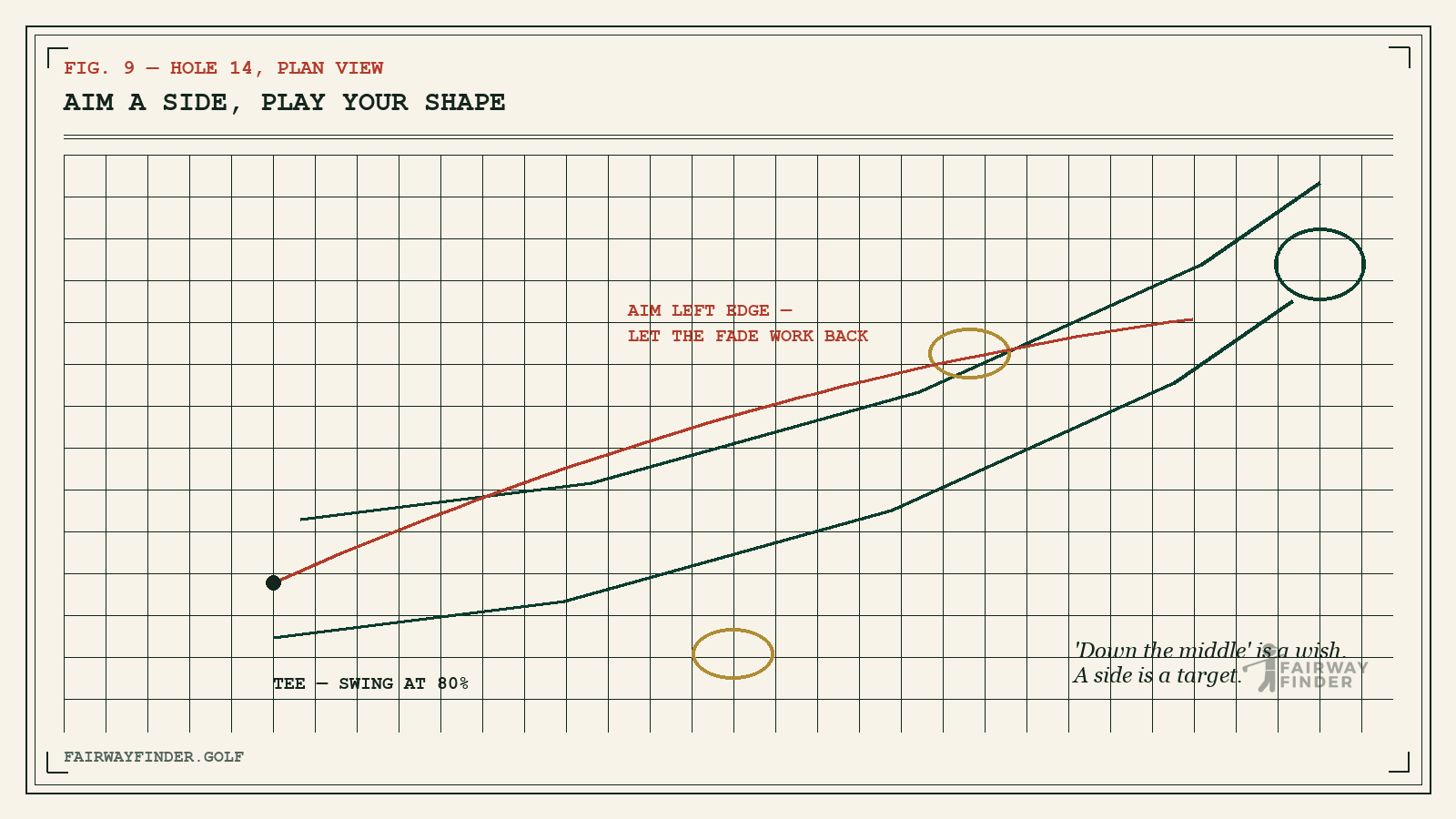
Here's the cruel joke of the slice: the more it curves right, the more you aim left, and the more you aim left, the more out-to-in your path gets — which makes the slice bigger. Slicers also creep the ball too far forward in the stance and open their shoulders to the target line, both of which feed the exact impact conditions they're trying to escape.
Run through this checklist before every driver swing:
- Ball position just inside the lead heel — not off the lead toe
- Feet, hips, and shoulders parallel to the target line, not open to it
- Aim the face at your target first, then build your stance around it
- A slight spine tilt away from the target, so you can swing up on the ball
None of this is glamorous. All of it is free. I've seen setup work alone turn a 40-yard slice into a playable fade in one lesson.
Cause 5: Gear That's Working Against You
Modern drivers off the rack are long and light — shafts around 45 and a half inches or more. That length adds potential speed, but it also makes the club much harder to square up and harder to hit in the center of the face. Off-center strikes lose ball speed and exaggerate curve. Low loft makes things worse for a slicer: the less loft on the face, the more tilted and severe the same face-to-path error becomes. More loft, gentler curve.
This is the entire reason the Fairway Finder driver is built the way it is: a shorter 43.5-inch shaft that's easier to deliver to the center of the face, a heavier 75-gram shaft profile and D3 swingweight that smooth out a quick tempo, 11 degrees of loft to launch the ball higher with less severe sidespin, and an oversize grip that quiets tense hands. If your slice survives every fix above, look at what's in your hands before you blame your swing again.
Why Do I Slice My Driver but Not My Irons?
This is the follow-up question I hear most, and it's a fair one. Three reasons. First, the driver is the longest club in the bag, so the same small timing error produces a bigger face-to-path gap. Second, it has the least loft, and low loft converts that gap into maximum curve — your 8-iron has enough loft that the same swing produces backspin that masks the sidespin. Third, the ball is teed up and positioned forward, which gives your shoulders more time to spin open and your face more time to hang behind.
So no, you don't have two swings. You have one swing and one club that exposes it more than the others.
Make the Fix Stick
Pick one cause — the one that made you wince while reading — and work it for two weeks before touching the next. Slow rehearsals at home, half-speed balls on the range, then full speed. Golfers who try to fix face, path, grip, and setup in one bucket fix none of them. The players I've seen genuinely lose their slice all did the same boring thing: one change, repeated until it was theirs. The fairway is wide enough for you. Go take it back.
See the Fairway Finder Driver on Amazon →
Ready to find more fairways?
The Fairway Finder driver — 43.5" control length, 460cc titanium, 11° high launch, oversize leather grip. $299 USD / CA$399 with headcover and 1-year warranty.