Every time you tee one up, you're joining a game that predates the printing press in its homeland, survived two royal bans, crossed oceans in the luggage of homesick Scots, and somehow arrived at your local muni almost unchanged in spirit: get the ball in the hole, count every stroke, tell the truth about it. Here's the history of golf without the dusty-museum treatment — just the story of how we got here.
Scotland, Sheep, and Sand Dunes (1400s)
Golf as we know it grew up on the east coast of Scotland, on "links" land — the sandy, dune-rippled ground between the sea and the farmland, useless for crops and grazed short by sheep and rabbits. Locals knocked pebbles and, later, wooden balls across this ground toward targets with curved sticks. It was cheap, it was social, and it was apparently irresistible.
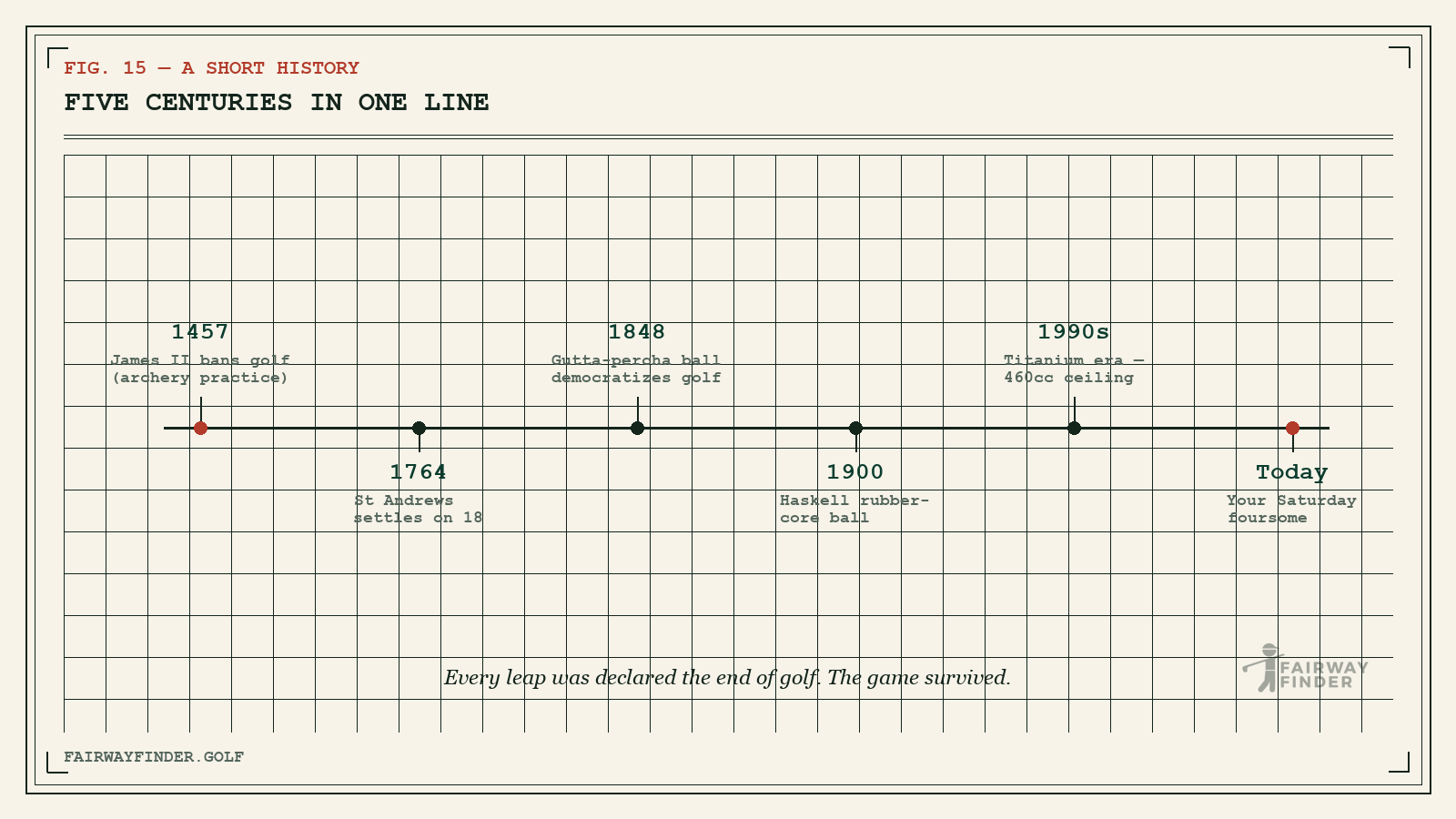
Irresistible enough that in 1457, King James II of Scotland banned it — golf (and football) were distracting his subjects from archery practice, which was a national-defense problem. The ban was reissued twice, ignored three times, and finally rendered moot when King James IV took up the game himself in the early 1500s. Golf has been defeating authority figures ever since.
Two details from that era still shape your Saturday round:
- The ground made the game. Links land's humps, hollows, and wind meant golf was always about managing bad bounces, not just making good swings. The game's tolerance for unfairness is a feature, not a bug — it was born on ground nobody designed.
- The hole count was an accident. Early courses had anywhere from 5 to 25 holes. St Andrews happened to settle on 18 in 1764 after consolidating some short holes, and because St Andrews was St Andrews, 18 became the number. There is no cosmic reason. It could have been 20.
Featheries, Gutties, and the First Equipment Wars (1600s–1800s)
The first "real" golf ball was the feathery — a leather pouch stuffed with a top hat's worth of boiled goose feathers, stitched and painted. A skilled maker could produce only a few per day, so a single ball could cost more than a club. Golf stayed a rich man's game largely because of ball economics.
Then in 1848 came the gutta-percha ball — molded from dried tree sap, cheap, durable, and remoldable when damaged. The "guttie" democratized golf overnight, and it taught the game its first equipment lesson: players noticed that scuffed, nicked gutties flew better than smooth ones. Makers started hammering patterns into the surface deliberately — the ancestor of the modern dimple. Golfers have been chasing equipment edges ever since, and arguing about whether they're fair for exactly as long.
The Game Crosses the Ocean (late 1800s)
Scottish emigrants and traveling professionals carried golf everywhere the British Empire and its trade routes reached. The first permanent American club era began in the late 1880s, and within twenty years the United States went from novelty to powerhouse: thousands of courses, a national championship, and a homegrown hero in Francis Ouimet — a 20-year-old former caddie who beat the great British professionals at the 1913 U.S. Open and put golf on American front pages. The caddie-turned-champion story mattered: it told working people the game could be theirs too.
The 20th century then gave the game its pantheon in waves — Jones the amateur ideal of the 1920s, Hogan's ball-striking mystique, Palmer who made golf television-worthy and blue-collar cool, Nicklaus who defined sustained greatness, and Tiger Woods, who in 1997 made golf global, athletic, and impossible to ignore. Each wave pulled a new population into the game.
How the Gear Became Your Gear
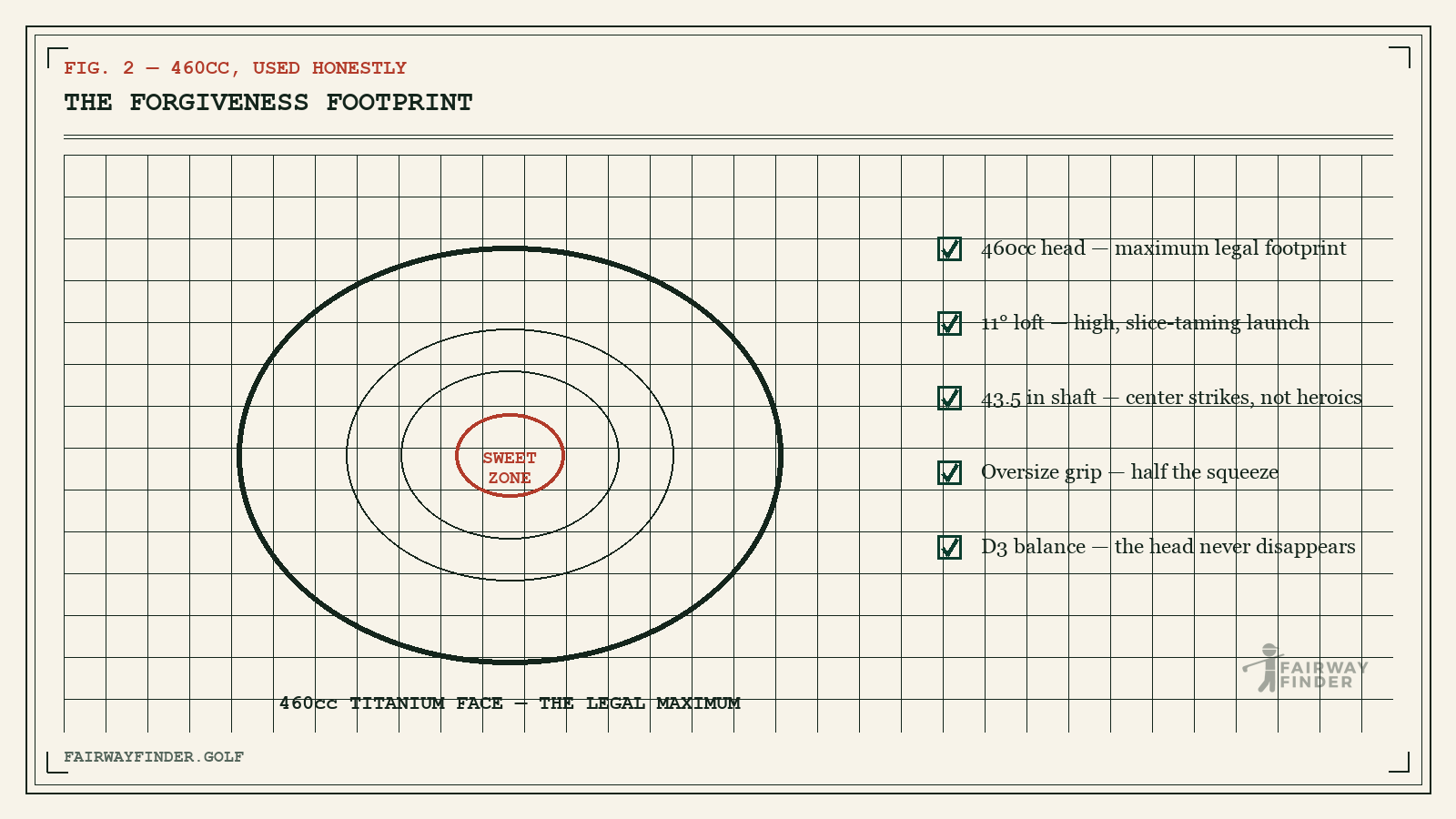
The equipment in your bag is a museum of specific breakthroughs: hickory shafts gave way to steel in the 1920s and 30s (consistency), steel to graphite for distance-hungry amateurs (lighter, faster), persimmon woods to metal "woods" in the 1980s and titanium drivers in the 90s (bigger, more forgiving, and suddenly 460cc was the legal ceiling). The rubber-core Haskell ball around 1900 did to the guttie what the guttie did to the feathery, and the modern multilayer urethane ball perfected the formula.
Notice the pattern: nearly every leap made golf easier for ordinary players, and nearly every leap was met with someone insisting the game was ruined. The game survived. It always does.
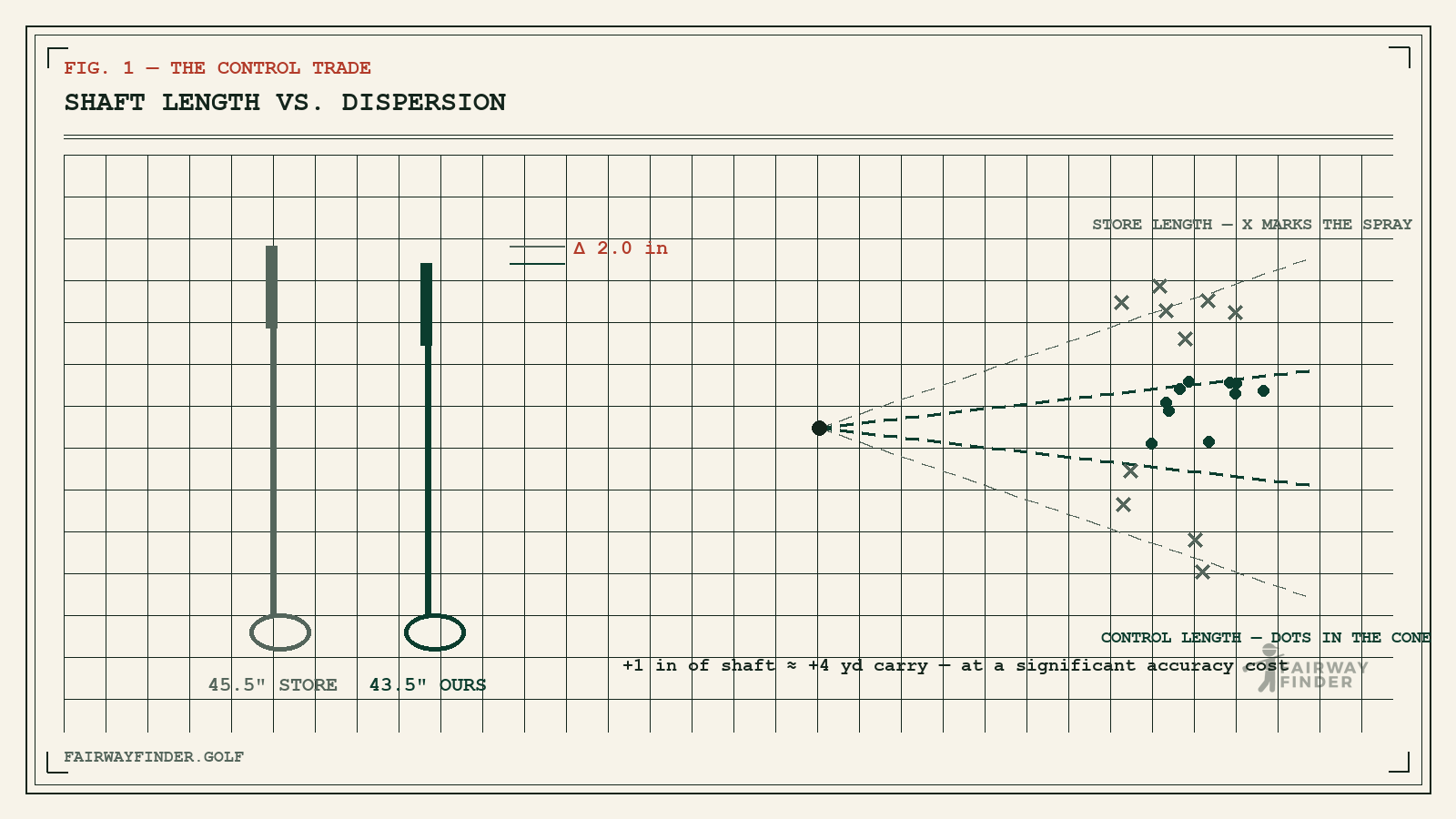
One thread of that history runs the other way, and it's worth knowing: driver shafts kept getting longer through the 1990s and 2000s — not because long played better, but because long tested faster on launch monitors and sold at demo days. The best players in the world quietly declined the extra length; retail golfers got it by default. That tension between what sells and what scores is a century old, and it's the exact gap the Fairway Finder driver was built into, with its deliberately shorter 43.5-inch shaft.
What Never Changed
Strip away five centuries of technology and the game your foursome plays is the shepherd's game with better turf: an outdoor puzzle where the field itself is an opponent, where you keep your own score and call your own penalties, where the handshake at the end matters more than the number on the card. Golf's rules have been rewritten dozens of times; its honor system never has.
That's the inheritance every new golfer picks up on the first tee — you're not just learning a sport, you're joining the longest-running gentleman's agreement in athletics. Wear it lightly, fix your ball marks, and add your chapter. And if the old game's vocabulary still sounds like a foreign language, our no-judgment glossary of golf terms will get you fluent fast.
Ready to find more fairways?
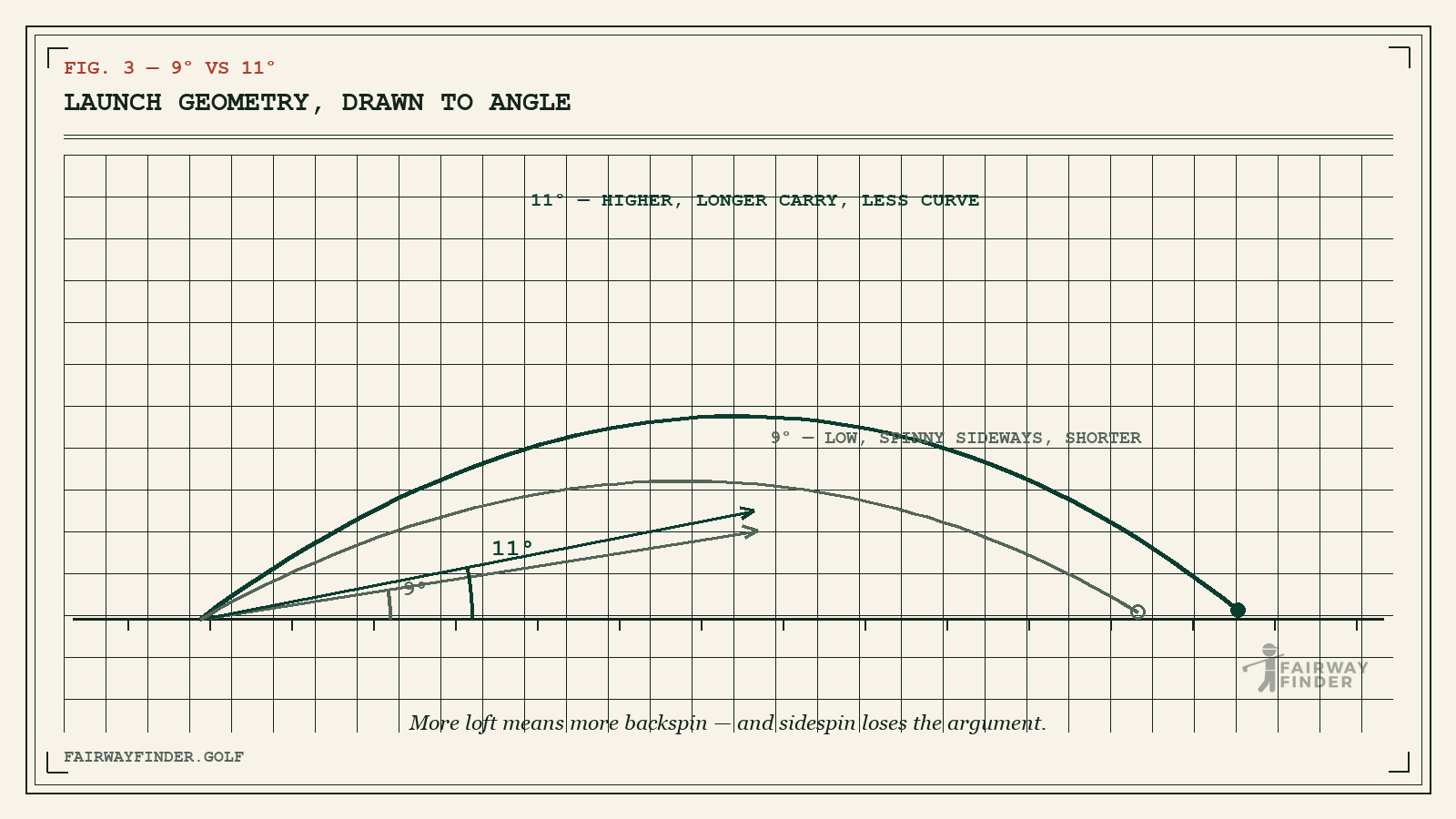
The Fairway Finder driver — 43.5" control length, 460cc titanium, 11° high launch, oversize leather grip. $299 USD / CA$399 with headcover and 1-year warranty.