Golf spec sheets read like a submarine manual: D3, stiff flex, 59-degree lie, 75 grams. Most golfers' eyes glaze over, which is a shame, because these numbers explain why two drivers with identical lofts can feel like completely different tools. So let's decode them. If you've ever asked what is swingweight in golf — or nodded along pretending to know — this one's for you.
What Is Swingweight in Golf? (The D3 Mystery)
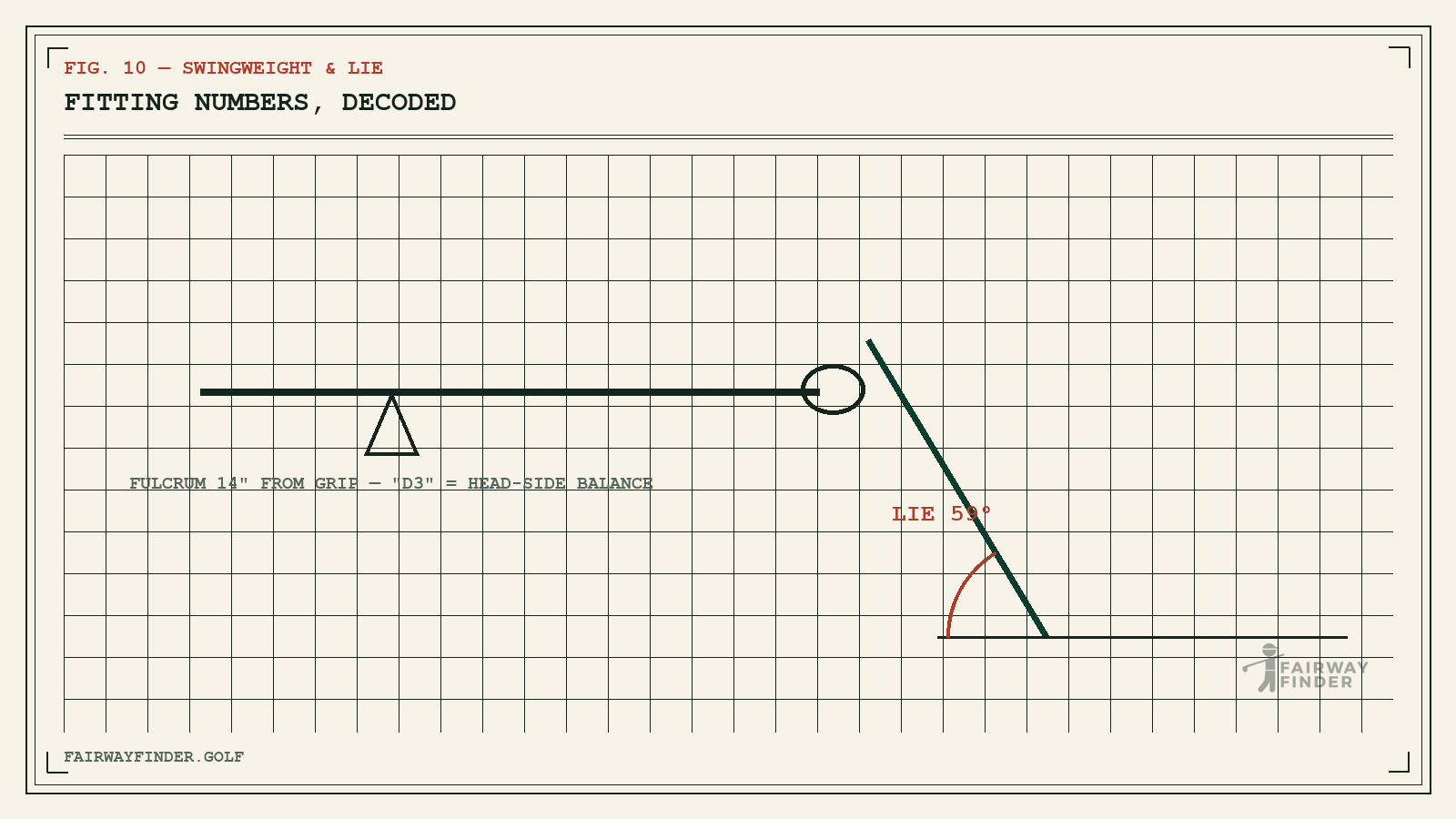
Swingweight is not how much the club weighs. It's how the weight is distributed — specifically, how head-heavy the club feels when you swing it.
The scale runs in letter-number steps: C8, C9, D0, D1, D2, D3, and so on. Higher means the club feels more head-heavy. Most men's drivers ship between D0 and D4, so D3 sits toward the substantial end of normal — you can genuinely feel where the clubhead is throughout the swing.
Why should you care? Because feel is timing:
- Too little swingweight and the head "disappears" — golfers get quick, handsy, and lose track of the face. This is the hidden flaw in many ultralight builds.
- Too much and the club becomes a chore to square by the back nine.
- In the pocket — and D3 is in the pocket for most average-tempo players — the club gives your transition a natural rhythm cue. You swing with the club instead of at the ball.
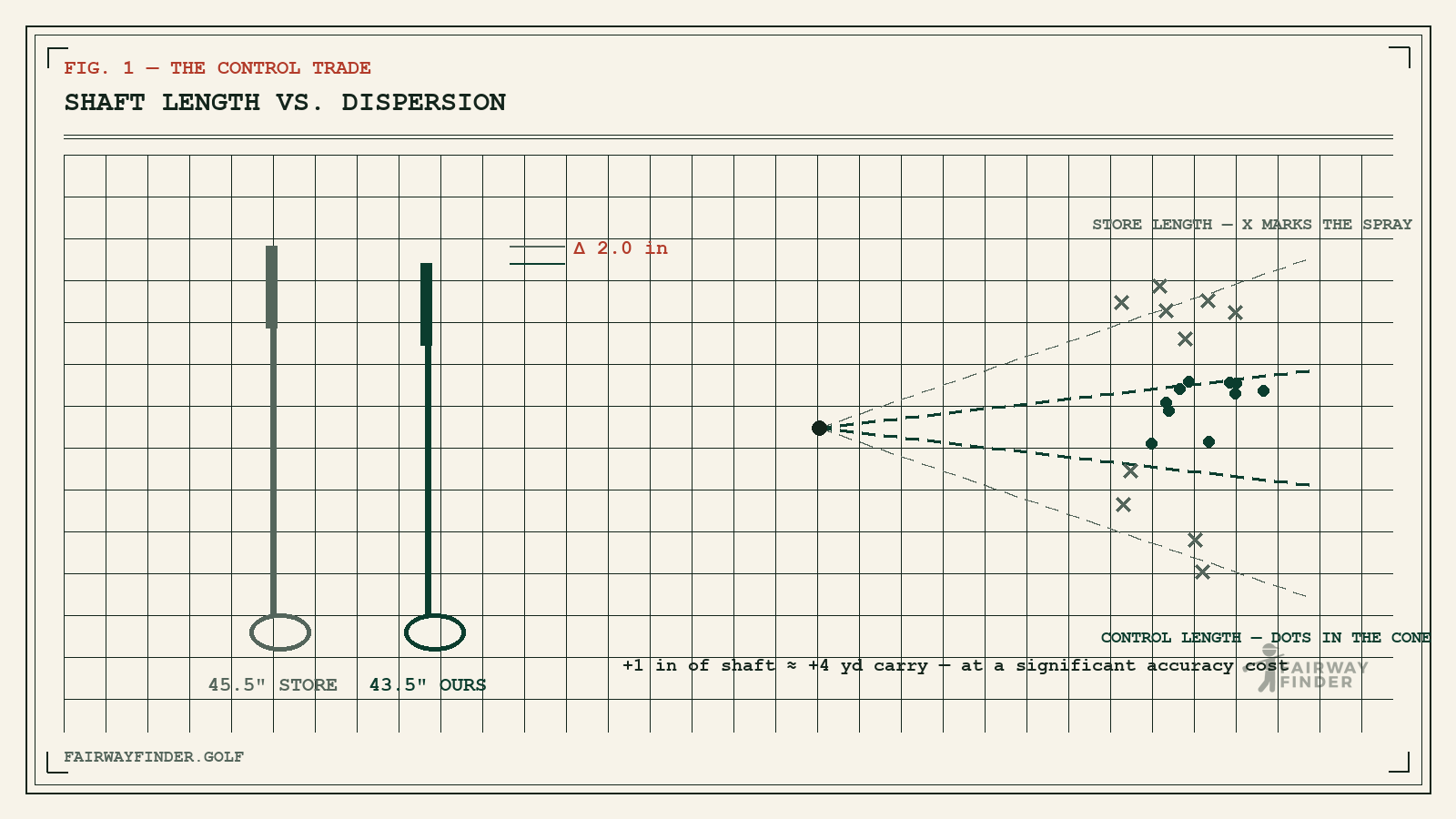
Here's a detail that matters when comparing clubs: cutting a shaft shorter lowers swingweight. So a shorter driver built carelessly would feel like swinging a broomstick with nothing on the end. A shorter driver built properly — like the 43.5-inch Fairway Finder at D3 — compensates with mass so you keep the head-feel that makes tempo repeatable. The number on the spec sheet is quiet proof somebody actually engineered the build as a system.
Shaft Flex: Stiff Isn't a Status Symbol
Flex describes how much the shaft bows during the swing — Ladies, Senior, Regular, Stiff, X-Stiff, in ascending firmness. The shaft loads on the downswing and unloads through impact, and the flex needs to roughly match the force you apply.
The honest fitting guidance:
- Faster, more aggressive tempos need stiffer shafts, or the shaft unloads at the wrong moment and the face shows up closed or open, seemingly at random.
- Slower, smoother tempos need softer flex to get any help from the shaft at all. Playing stiffer than you need costs launch, feel, and often a weak fade.
- When in doubt, match tempo, not distance bragging. A quick transition with average speed often needs more stiffness than the yardage chart suggests.
One flex note on the Fairway Finder specifically: its 75-gram stiff shaft is meant for average-to-quick tempos — the golfer with decent speed who sprays it. It is deliberately not an ultralight senior-flex build, and we'd rather say that plainly than sell you the wrong tool. Weight and flex work together, and we covered the weight half in Driver Shaft Weight Explained.
Lie Angle: The Direction Dial Nobody Checks
Lie angle is the angle between the shaft and the ground when the club sits flat — 59 degrees on the Fairway Finder's spec sheet, a heel-friendly number typical of modern drivers.
Why it matters: if the club's lie doesn't match your posture, the face points off-line at impact even when you deliver it square.
- Toe down (lie too flat for you): the face effectively aims right — hello, push.
- Heel down (too upright): the face aims left.
With a driver, lie is less touchy than with irons because the ball sits on a tee and the sole never digs. But posture still matters: stand a comfortable distance, hands neither jacked up nor slumped, and a properly built driver's lie takes care of itself. One more quiet benefit of a shorter shaft, by the way — it naturally puts you in a more athletic, consistent posture, so your effective lie angle stops wandering swing to swing.
Reading a Spec Sheet Like a Fitter
Put it all together and you can now translate a driver listing in ten seconds. Take the Fairway Finder's sheet:
- 43.5" / stiff / 75g — short lever, firm and substantial: this build is chasing control and tempo, not launch-monitor bragging rights.
- D3 swingweight — head-feel preserved at the shorter length; the build is a system, not a hacksaw job.
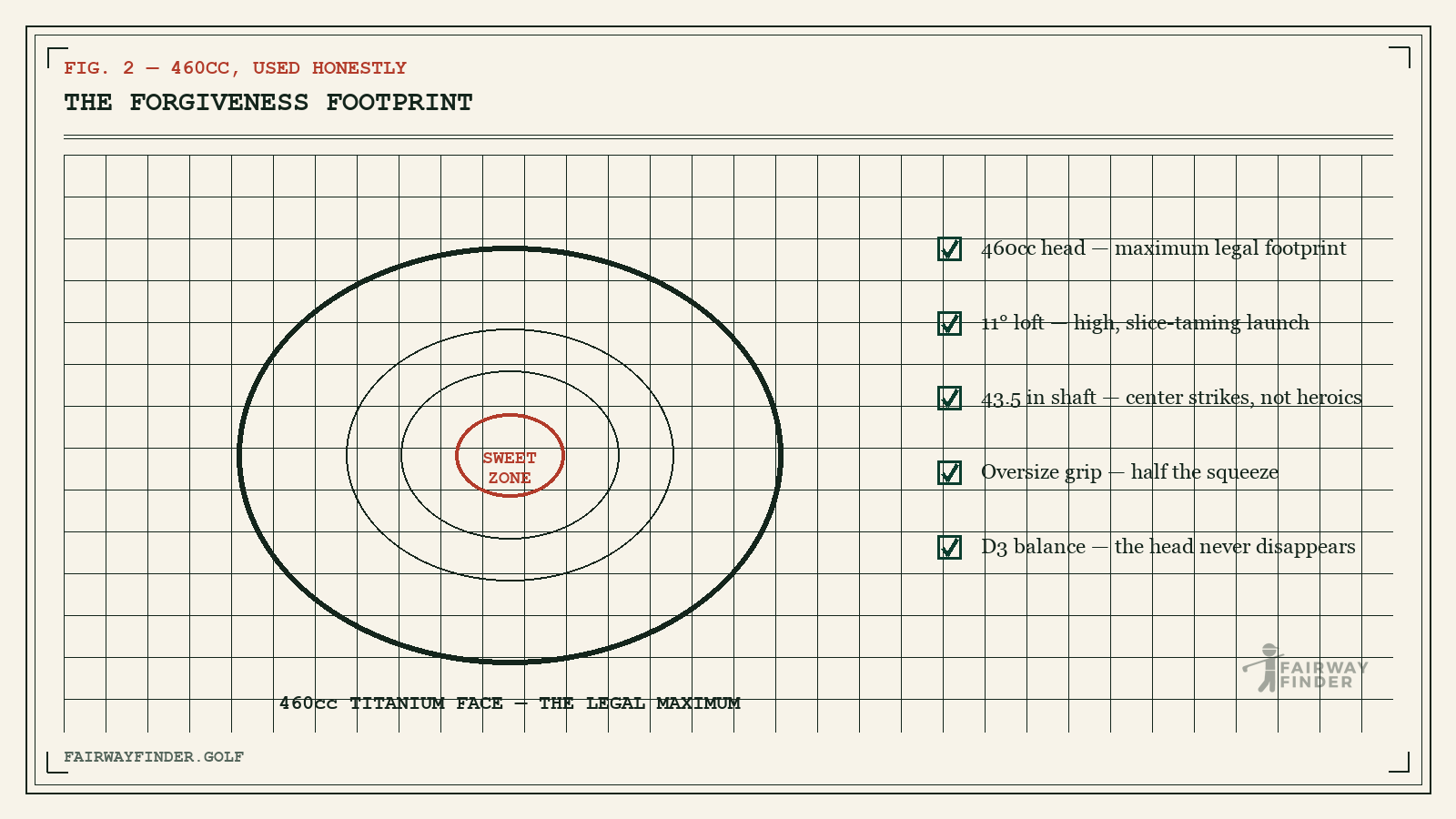
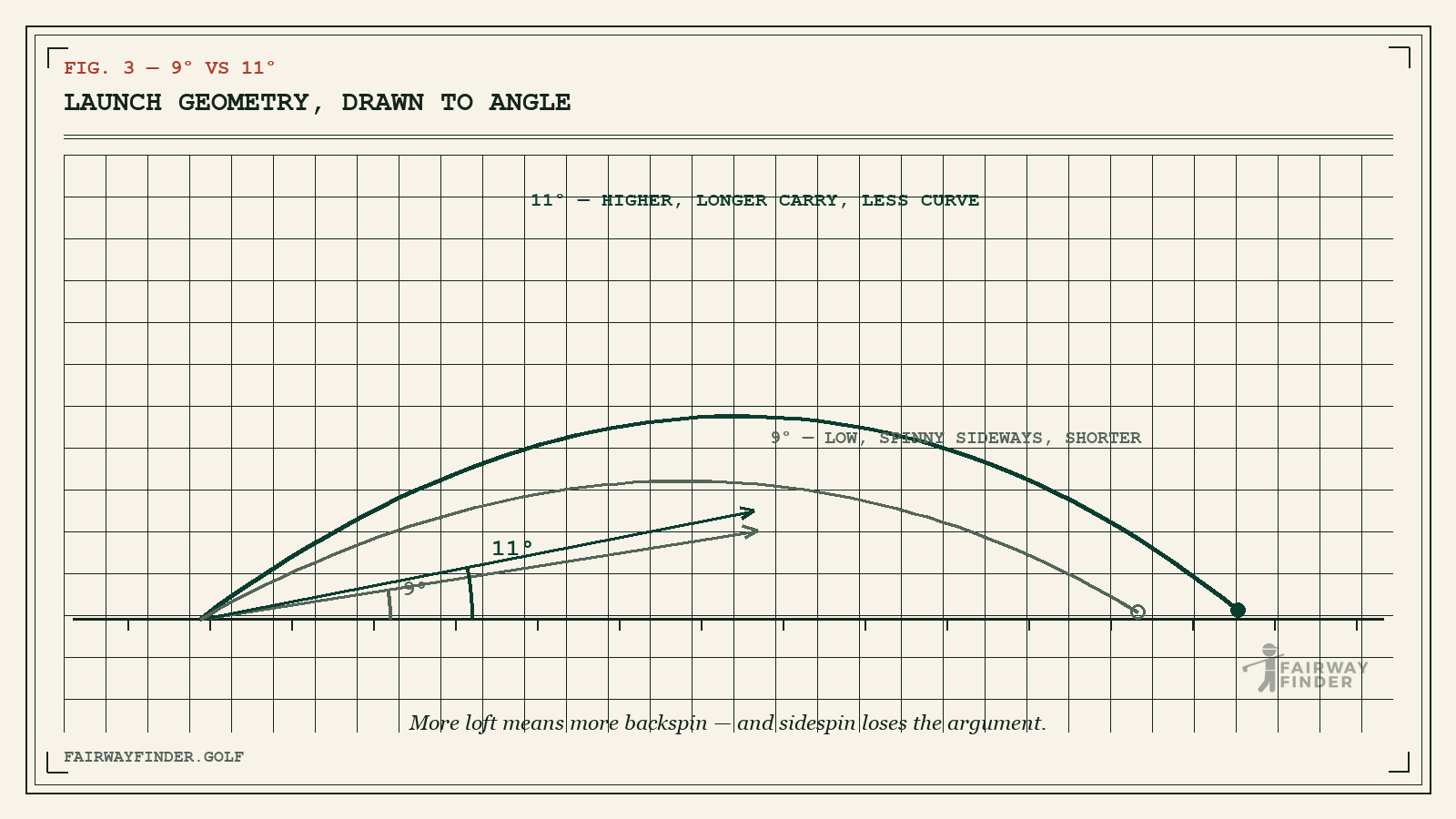
- 59° lie, 11° loft, 460cc — neutral direction bias, high easy launch, maximum legal forgiveness.
Every number tells you what the designer valued. When the numbers all point the same direction — control, feel, findable fairways — you're looking at an honest club. When they contradict each other (46 inches! ultralight! low spin! forgiveness!), you're looking at a marketing department.
The Bottom Line
Swingweight is feel, flex is timing, lie is direction. None of them are exotic, and together they matter more to where your ball finishes than any single technology on the sole plate. Learn these three and you'll never shop for a driver by paint job again.
Ready to find more fairways?
The Fairway Finder driver — 43.5" control length, 460cc titanium, 11° high launch, oversize leather grip. $299 USD / CA$399 with headcover and 1-year warranty.