Golf media sells the foursome: buddies, banter, beers. What it never mentions is that some of the best golf you'll ever play happens alone — and that "showing up solo" is not just allowed but quietly one of the game's great institutions. For new golfers especially, solo golf is an accelerator: more reps, less pressure, and a crash course in the game's social machinery. Here's everything about playing golf alone that nobody writes down.
Can You Even Book a Tee Time for One? (Yes — Here's How It Works)
- Online booking: most systems let you book as a single into any tee time with an open slot. You'll see "3 of 4 booked" — that remaining slot is yours. You're not intruding; the system is designed for exactly this.
- The walk-on: golf's oldest hack. Show up, tell the pro shop you're a single and flexible, and you will get out — often faster than booked foursomes, because singles are the starter's favorite gap-filler. Weekday twilight? You might have the course nearly to yourself.
- Busy courses may pair you with another group (that's the deal for prime-time slots), while empty evenings mean truly solo golf. Both outcomes are wins; more on each below.
- One expectation to calibrate: in the pairing hierarchy, singles have the least standing to demand a specific time on a packed Saturday morning. Flexibility is your currency, and it's a strong one.
Getting Paired With Strangers: The Feature Disguised as Fear
The number-one reason new golfers avoid going solo: terror of being paired with strangers. Reframe it — random pairings are golf's best networking engine and one of its last genuinely cross-generational social spaces. Retired engineers, off-duty nurses, college kids, scratch players: four hours, shared weather, low stakes.
The complete social protocol, demystified:
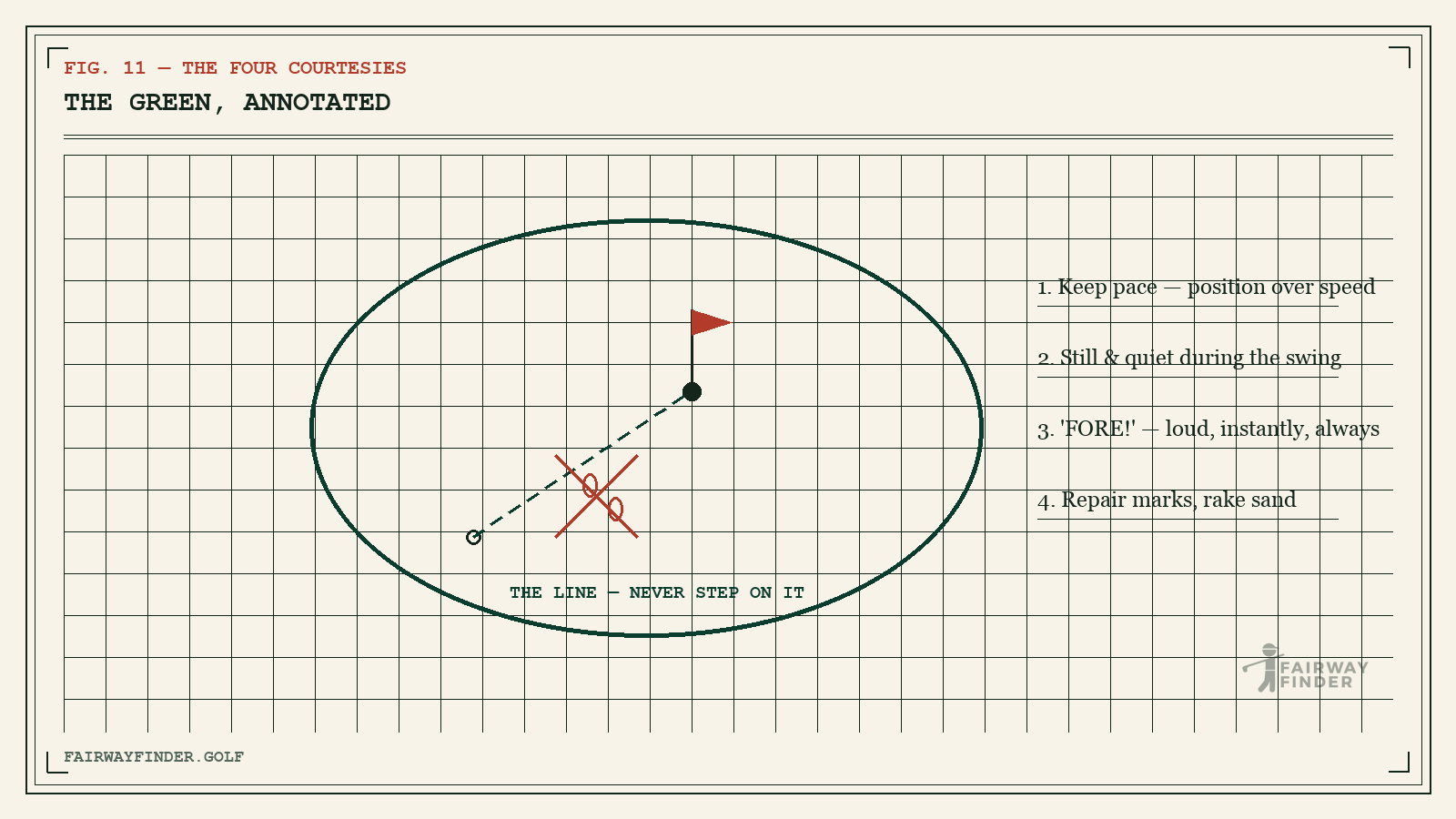
- First tee: first names, fist bump, and if you're new, the magic sentence — "I'm pretty new, I'll keep pace." (As covered in the etiquette guide, pace is the only thing anyone actually judges.)
- Match their talkativeness. Some groups chat all round; some barely speak between greens. Both are correct golf.
- No apologizing for bad shots beyond once. They've hit worse. Everyone has.
- Money games: you can always decline with "I'll just play my own game" — zero offense taken. If you join, know the terms before the first tee (the formats guide covers skins and nassau).
- The 18th green handshake and "enjoyed it, guys" completes the transaction. You'll never see most of them again; occasionally you'll meet a regular playing partner. Both are the point.
Truly Solo: Golf's Best Practice Environment
An empty course as a single is the finest practice facility in golf, and it's not close:
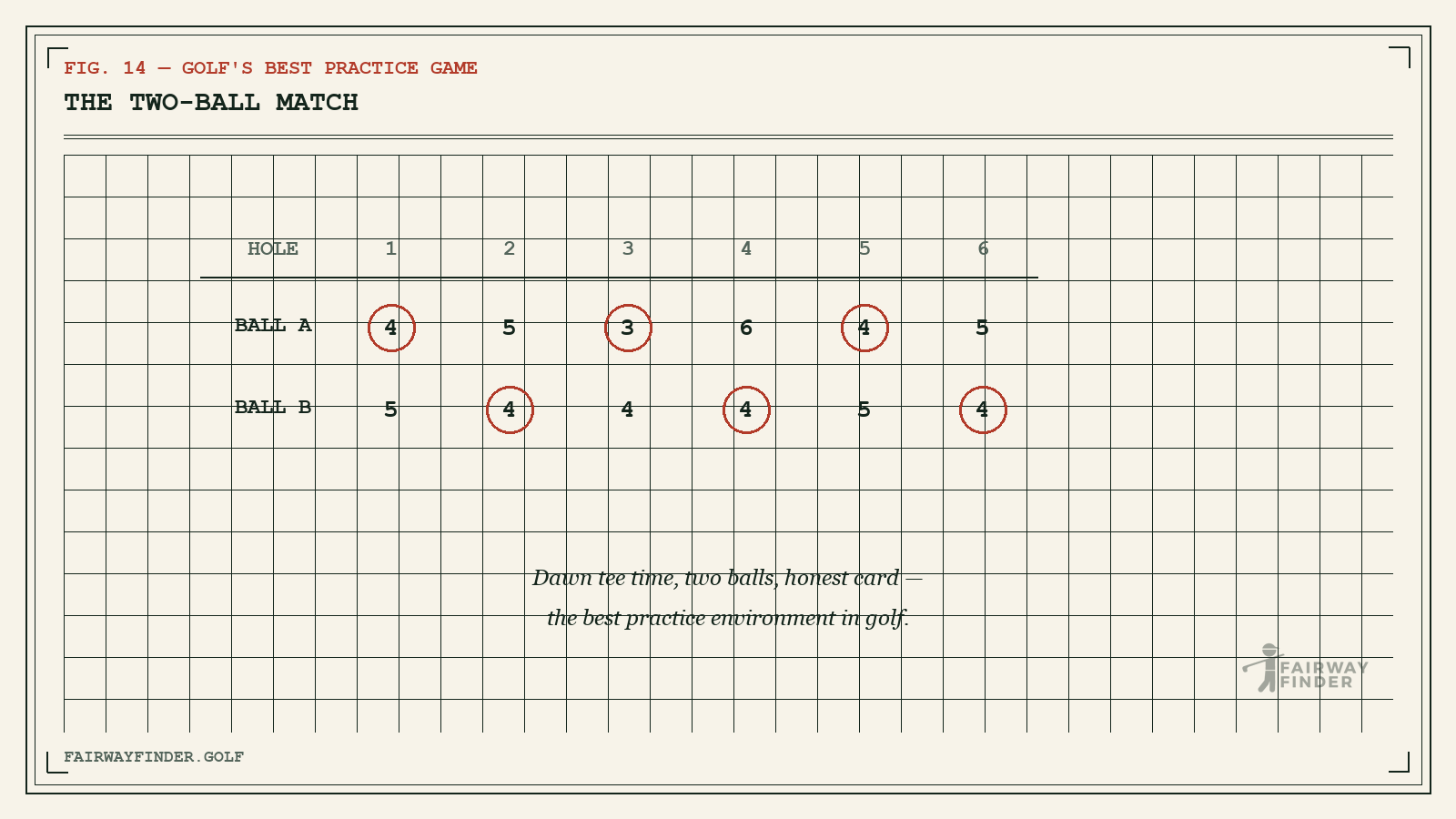
- Play two balls. The classic solo game: ball A vs ball B, match play against yourself. Doubles your reps at real targets from real lies — something no range mat can offer.
- Drop-and-experiment freely (when no one's behind): re-hit the approach you chunked, try the bump-and-run AND the flop from the same spot, hit three tee shots with three targets. This is exactly how skills transfer from range to course, and it's only possible alone.
- Learn your real distances. With no one waiting, pace off your typical 8-iron, note where drives actually finish. Solo rounds build the yardage self-knowledge that tee selection and club selection depend on.
- Practice the boring superpowers: pre-shot routine on every single shot, putting everything out, honest counting. Habits install fastest without an audience.
One rules note: solo rounds generally don't count for handicap posting under the World Handicap System (scores need someone along who can attest them — a playing partner, marker, etc.). So the solo two-ball round is officially "practice" — which is precisely its charm. No card pressure, all learning.
Solo Pace: The One Responsibility
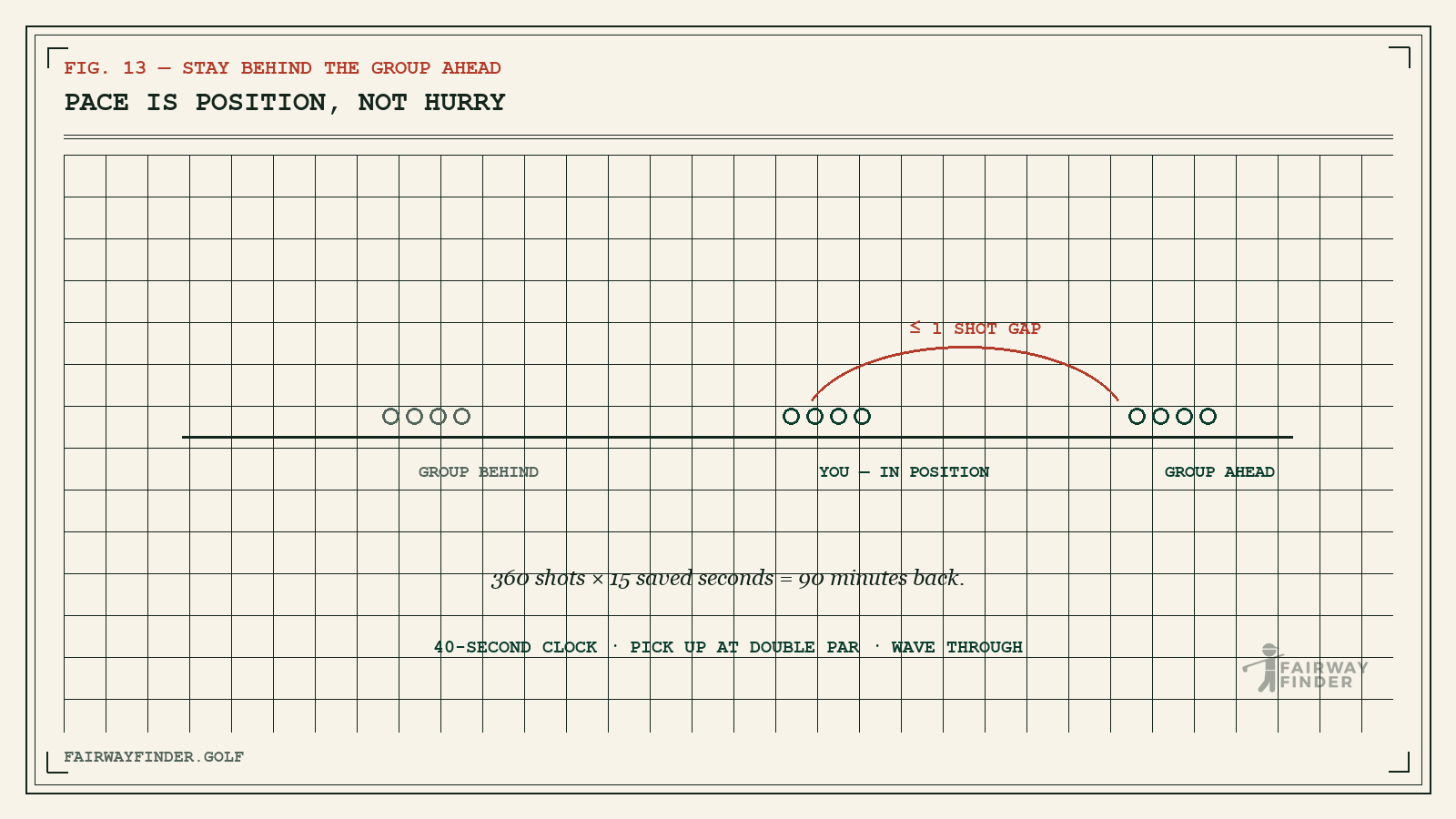
A single is the fastest unit in golf — you'll play 18 in under three hours walking — which creates the one solo-specific etiquette duty: managing the catch-up. When you reach a slower group ahead, don't hover on their heels shot after shot; they'll either wave you through (accept graciously, play through briskly, thank them) or they won't — in which case skip ahead a hole or use the gap to run your two-ball experiments. And if a course pairs you rather than sending you off alone into a full tee sheet, that's the system working, not a snub.
The Part Nobody Markets
Beyond the practice value, solo golf is simply one of the great walks available to a modern person: three hours, phone in the bag, a physical puzzle every 150 yards, nobody performing for anybody. Dawn rounds alone — dew lines, first light, the course empty as a private estate — convert more people into lifelong golfers than any commercial ever has. New golfers who only experience golf as a scheduled social event miss the version of the game that's a standing appointment with yourself.
So book the single. Walk on. Take the pairing when it comes and the solitude when it doesn't. And since solo golf means nobody's watching your tee shot anyway — it's the perfect arena to groove the smooth 80% driver swing that finds fairways, with a club built to make that easy doing half the work.
Ready to find more fairways?
The Fairway Finder driver — 43.5" control length, 460cc titanium, 11° high launch, oversize leather grip. $299 USD / CA$399 with headcover and 1-year warranty.