Every golfer knows their driver's loft. Most know the flex. Almost nobody knows the shaft weight — and yet that number quietly shapes your tempo, your strike, and how wide your misses spread. Driver shaft weight is the most overlooked spec in the big stick conversation, so let's fix that in plain English.
What Driver Shaft Weight Actually Does
Stock driver shafts in most off-the-rack clubs today weigh somewhere between 50 and 65 grams. The industry has spent two decades shaving weight, for one reason: lighter shafts help golfers swing a little faster, and faster swings make better numbers on the launch monitor at demo day.
But speed is only one side of the ledger. Shaft weight also changes:
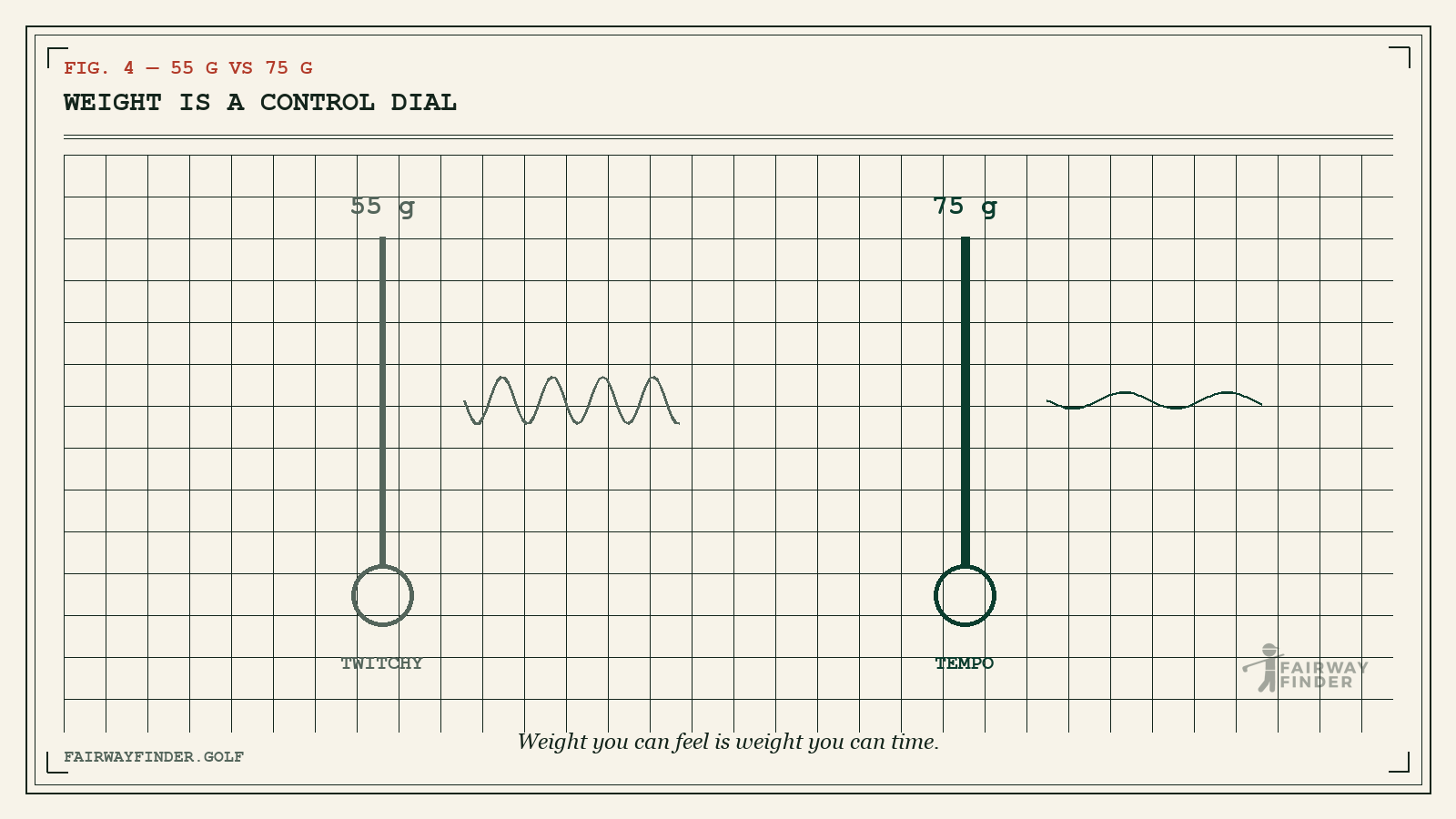
- Tempo. A heavier shaft gives your hands something to feel during the swing. Golfers with quick, jumpy transitions almost always smooth out with more weight, because the club itself resists being snatched from the top.
- Sequencing. Weight you can feel is weight you can time. When the club is too light, the fastest part of your swing tends to happen before the ball; a heavier build helps your arms and body arrive together.
- Dispersion. Fitters have a saying that heavier tightens the pattern. Adding roughly ten grams can calm a two-way miss for many players — not because of magic, but because the extra mass damps the small, twitchy hand movements that flip the face.
That's why "control shafts" — the builds in the 70 to 80 gram range — exist at all, and why stronger players have always gravitated to them.
The Honest Caveat
Is heavier always more accurate? No — and you should distrust anyone who says otherwise. Blind testing on this question shows the effect is individual: some golfers tighten up dramatically with a heavier shaft, others lose speed without gaining control. Shaft weight is a fitting variable, not a commandment.
But here's the pattern that holds up: the golfers most likely to benefit from more weight are the ones with average-or-better swing speed, a quick tempo, and a spraying miss pattern. If you swing hard, transition fast, and have no idea which side of the fairway you'll miss on, an ultralight shaft is pouring gasoline on the problem.
Why the Fairway Finder Runs a 75-Gram Shaft
The Fairway Finder driver is built around a 75-gram stiff-flex graphite shaft — firmly in the control band, a solid 15 to 20 grams heavier than the typical off-the-rack driver. That's not an accident and it's not a cost decision. It's one-third of a deliberate control package:
- The 75g shaft slows down the twitch and smooths the transition.
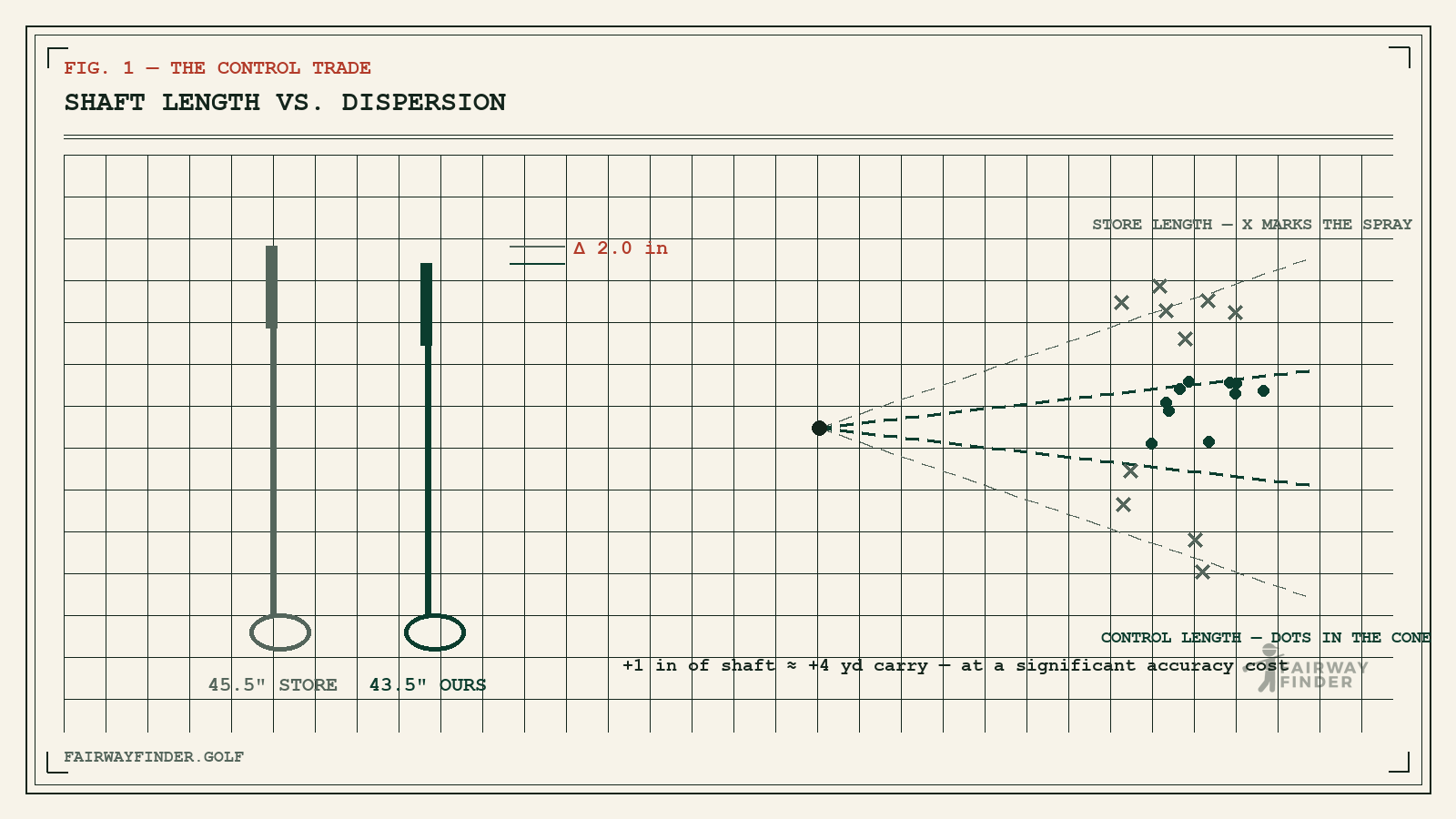
- The 43.5-inch length shortens the lever so the face is easier to square.
- The D3 swingweight keeps the head present in your hands even at the shorter length — cut a club down and its swingweight drops, so the build compensates with mass where you can feel it.
Each piece supports the others. A short, light, whippy driver would feel like swinging a badminton racket; a long, heavy one would be a fence post. Short and stout is the combination that produces a repeating swing. (For what the D3 number itself means, see our plain-English guide to swingweight, flex, and lie angle.)
How to Tell If Your Shaft Is Too Light
No launch monitor needed for the first pass. Watch for these tells:
- Your practice swings feel great, but over the ball the club feels like it disappears — you can't sense where the head is.
- Your miss is two-way: hook Tuesday, slice Thursday, no idea why.
- Your tempo gets quicker as the round goes on, especially under pressure.
- You've gotten faster on the monitor but your fairways-hit number hasn't moved, or it's gotten worse.
If two or more of those sound familiar, weight — not another swing tip — is probably your next experiment.
Weight vs. Speed: The Trade Nobody Frames Honestly
Yes, going from 55 to 75 grams may cost you a couple miles per hour of clubhead speed. Marketing departments have trained golfers to treat that as unthinkable. But run the real math on your scorecard: a couple mph is a handful of yards, and a handful of yards means nothing when the drive is in the trees. A controlled swing that finds grass beats a fast one that finds trouble every single week.
The pros figured this out long ago — tour bags are full of shafts in the 60s and 70s swung by the fastest players on earth. They can have any shaft made, free, and they choose weight they can feel. That should tell you most of what you need to know.
The Bottom Line
Driver shaft weight is a control dial, and the industry has it twisted toward "light" because light sells speed. If your driver feels weightless and your drives are scattered, move the dial the other way. A heavier shaft — in a build designed around it, like a shorter length and a proper swingweight — turns the driver from the club you fear into one that behaves like the rest of your bag.
Ready to find more fairways?
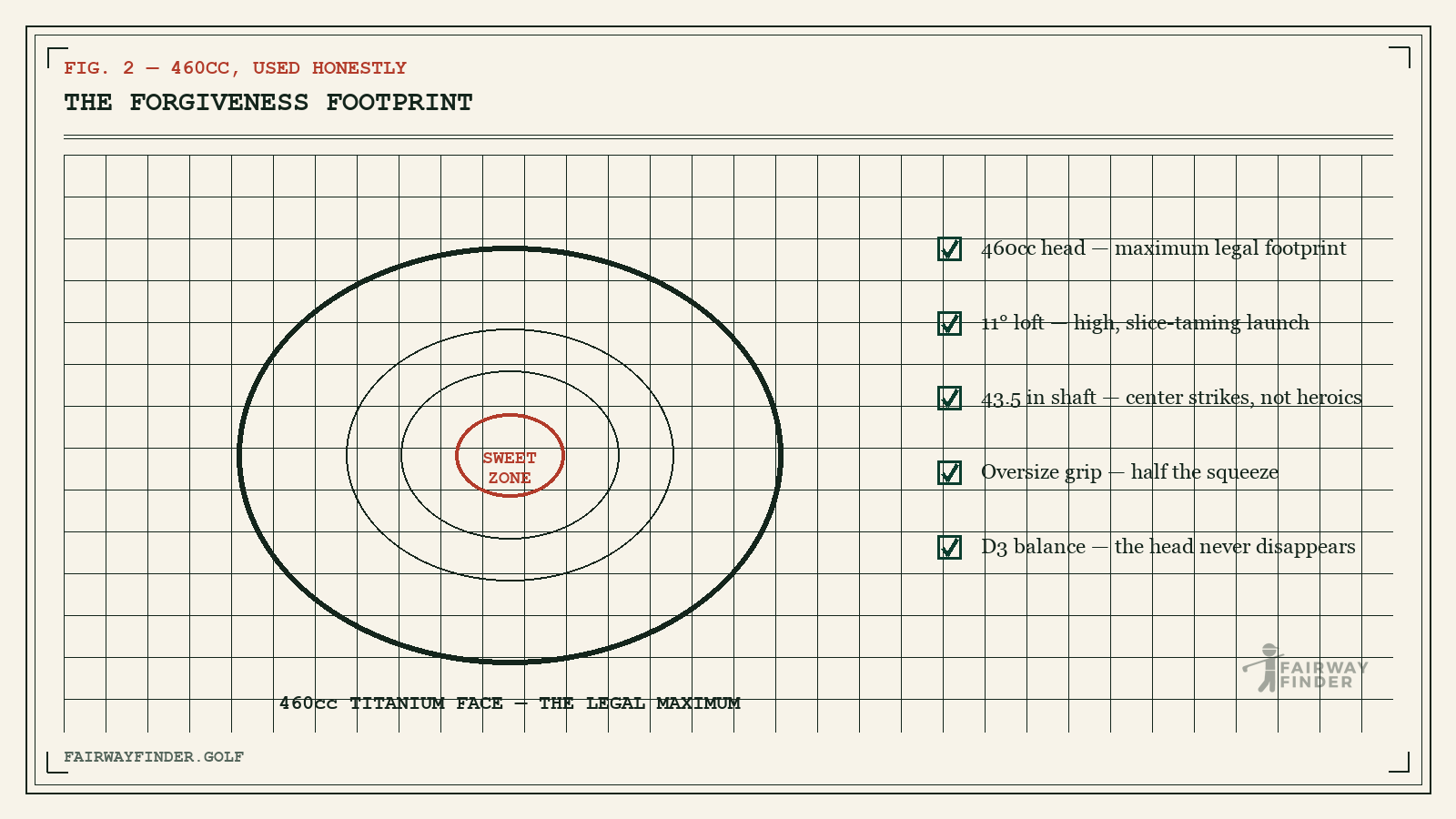
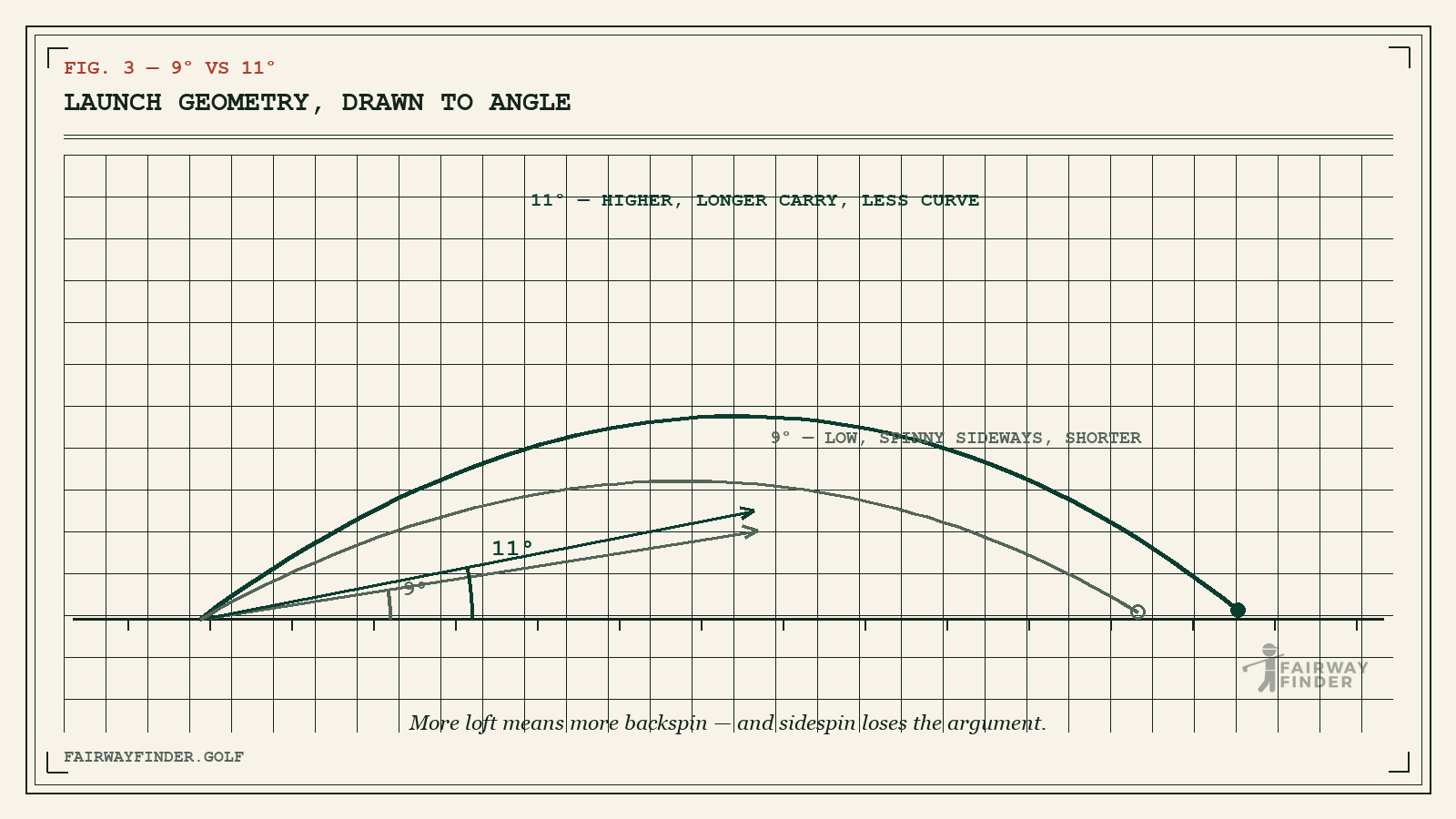
The Fairway Finder driver — 43.5" control length, 460cc titanium, 11° high launch, oversize leather grip. $299 USD / CA$399 with headcover and 1-year warranty.