Golf ball advice is where outdated information goes to thrive. Walk into any golf shop and someone will explain compression numbers, "distance balls," and why your swing speed demands a specific $55-a-dozen tour model. Most of that framework is twenty years stale. Here's the golf ball guide for beginners that reflects how balls actually work now — and it ends with you spending less, not more.
The Only Three Things a Beginner Needs to Know
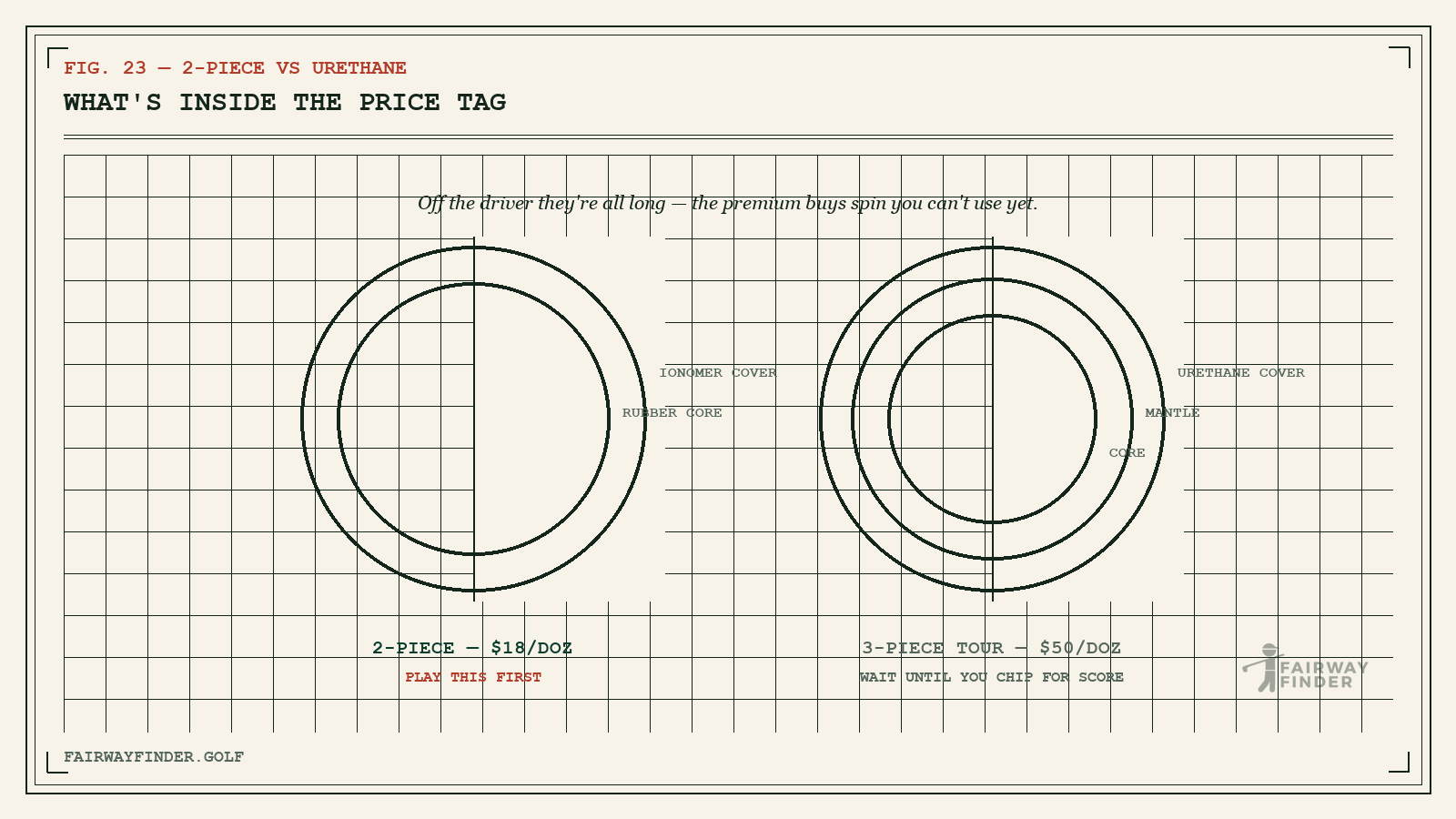
- All modern balls are long off the driver. The distance gap between a $22 dozen and a $55 dozen, for an average swing, is a few yards at most. "Distance balls" as a meaningful category died when solid-core construction took over decades ago. You cannot buy your way to 20 more yards through the ball, no matter what the box art implies.
- The real difference is around the green. Premium urethane-covered balls spin more on chips and pitches, so they check up instead of releasing. Cheaper ionomer ("Surlyn") covers spin less and run out more. Here's the twist: for a beginner, LESS greenside spin is usually easier to play — predictable rollout beats spin you can't yet control.
- You will lose them. A new golfer donates 3–6 balls per round to the woods and water. Losing a $1.80 ball stings; losing a $4.50 ball changes how you swing — tight, steering, afraid. Cheap balls literally improve beginner swings by removing the fear tax.
The Compression Myth, Retired
The old shop wisdom: "slow swings need low-compression balls or you won't compress it" — sometimes delivered with the reverse warning that fast swings will "over-compress" soft balls. Modern robot testing has repeatedly shown the story is far weaker than advertised: every swing "compresses" every ball; compression mostly changes feel (how soft it sounds and feels at impact) and small spin differences, not some unlock-code for distance. Choose softness because you like how it feels off the putter, not because a chart matched it to your swing speed. Feel is real; the compression-matching folklore is marketing with a lab coat on.
Same bin of myths: "range balls fly the same" (they're deliberately limited-flight — never judge your distances on them), and "ladies' balls / senior balls" as categories (they're just soft, low-compression balls with different paint).
What to Actually Buy, by Stage
- Brand-new (first months): whatever is cheapest in bulk — two-piece value balls ($15–25/dozen) or, honestly, used/recycled balls in "good" grade from the pro shop or online by the 50-pack. Mint-grade used premium balls also exist for half price and perform within a hair of new — lab tests keep confirming it. There is no more cost-effective purchase in golf.
- Breaking 100: stay on value two-piece balls, but pick ONE model and stick to it — consistency of feel, especially in putting, starts to matter before spin does. This is also when a soft mid-tier ball ($25–35) is worth trying for the nicer feel.
- Breaking 90 and chipping with intent: now the urethane conversation is real. Mid-price urethane balls ($30–40) give you most of the tour-ball short-game behavior without the flagship price. Try three sleeves of different models around the practice green — your wedges will tell you which one you trust.
- Never, at any stage: X-outs and waterlogged lake balls of unknown vintage for anything you care about, or mixing five ball models in one bag once you're keeping a handicap. (Fun fact for your rules education: in casual play you can swap models hole to hole; the famous "one ball rule" is a special condition mostly used in elite competition — another bit of folklore demystified in golf rules, simplified.)
Small Ball-Adjacent Wisdom That Saves Strokes
- Mark your ball distinctively (initials, dots — a sharpie lives in every good bag). Playing a wrong ball is a two-stroke lesson you only need once.
- A ball that hits a cart path or a tree trunk is fine. Modern covers shrug it off. Retire balls for visible cuts and smiles, not for adventures.
- Cold weather steals distance (a chilly ball is measurably shorter) — keep the round's ball in your pocket between holes in early spring, and expect less carry in winter regardless.
- Color is performance-neutral and finding-positive. Yellow and orange balls are easier to track for most eyes. Nobody credible cares what color you play. The ball you find is longer than the ball you lost.
The Beginner's Bottom Line
Spend $20–25 a dozen (or less, used), pick a color you can see, mark it, and pour the savings into the things that actually move scores: a lesson, range buckets, and a driver you can find fairways with. The ball is the most over-marketed product in golf; the tee shot is the most under-solved problem. We built our whole company on that second observation — the case starts at the most forgiving driver setup for high handicappers.
Ready to find more fairways?
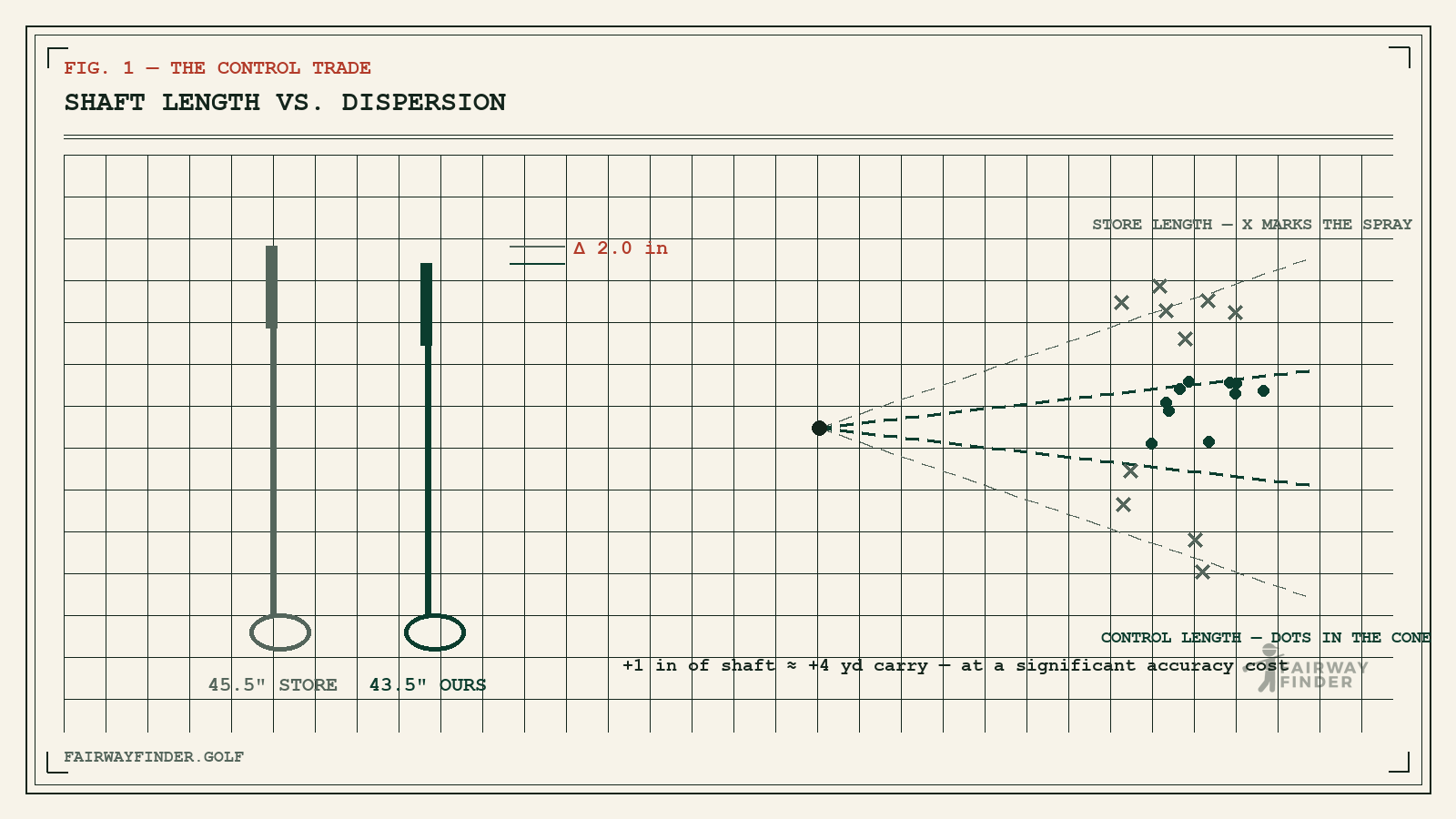
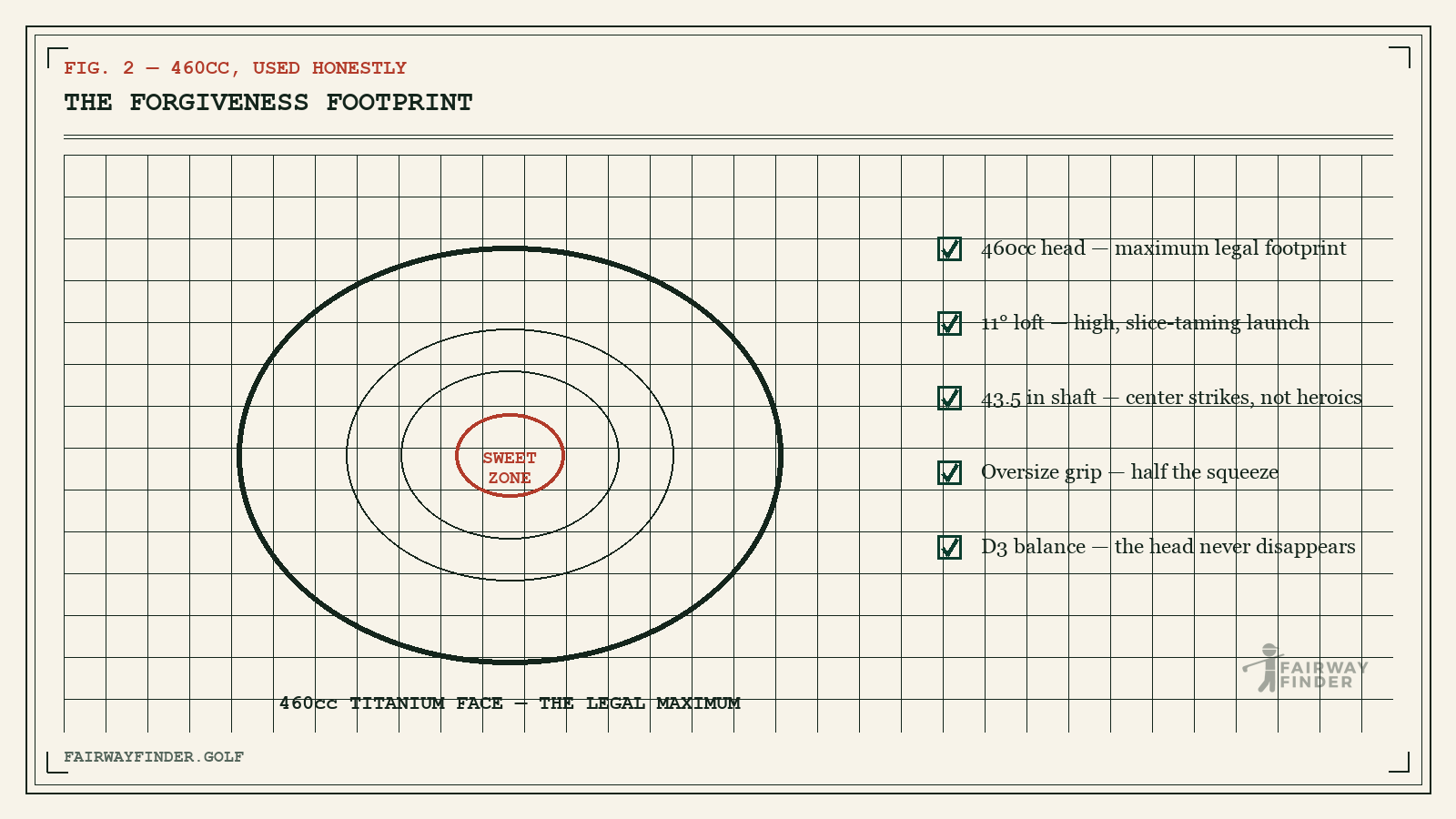
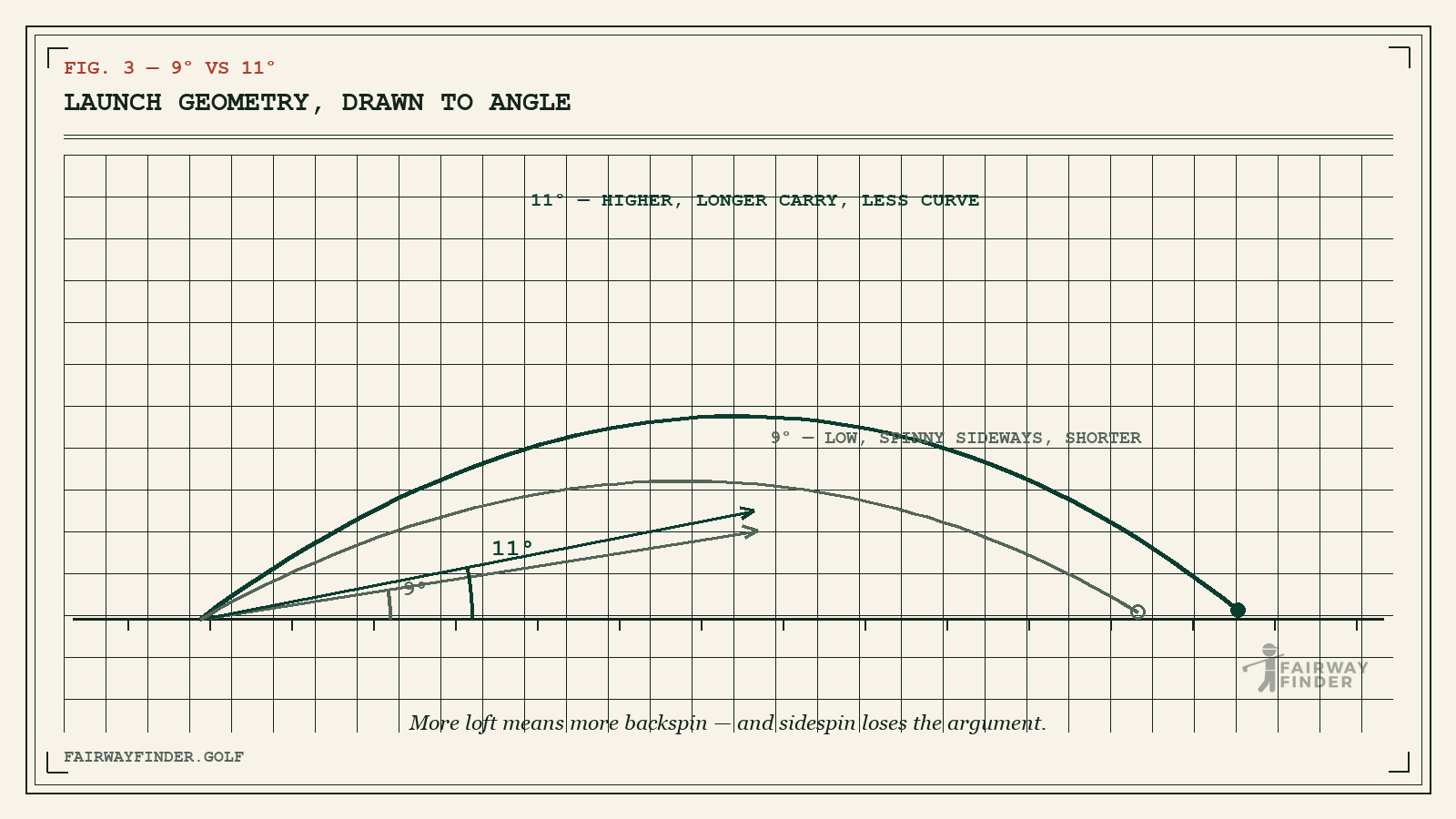
The Fairway Finder driver — 43.5" control length, 460cc titanium, 11° high launch, oversize leather grip. $299 USD / CA$399 with headcover and 1-year warranty.