Flagship drivers crossed the $600 line, and golfers barely blinked. Add a premium shaft upgrade and you're staring at a car payment for one club. So let's ask the question the ads never will: are expensive drivers worth it — for you, the golfer shooting 88 to 105 — or are you funding a marketing war you were never invited to win?
Are Expensive Drivers Worth It? Follow the Money First
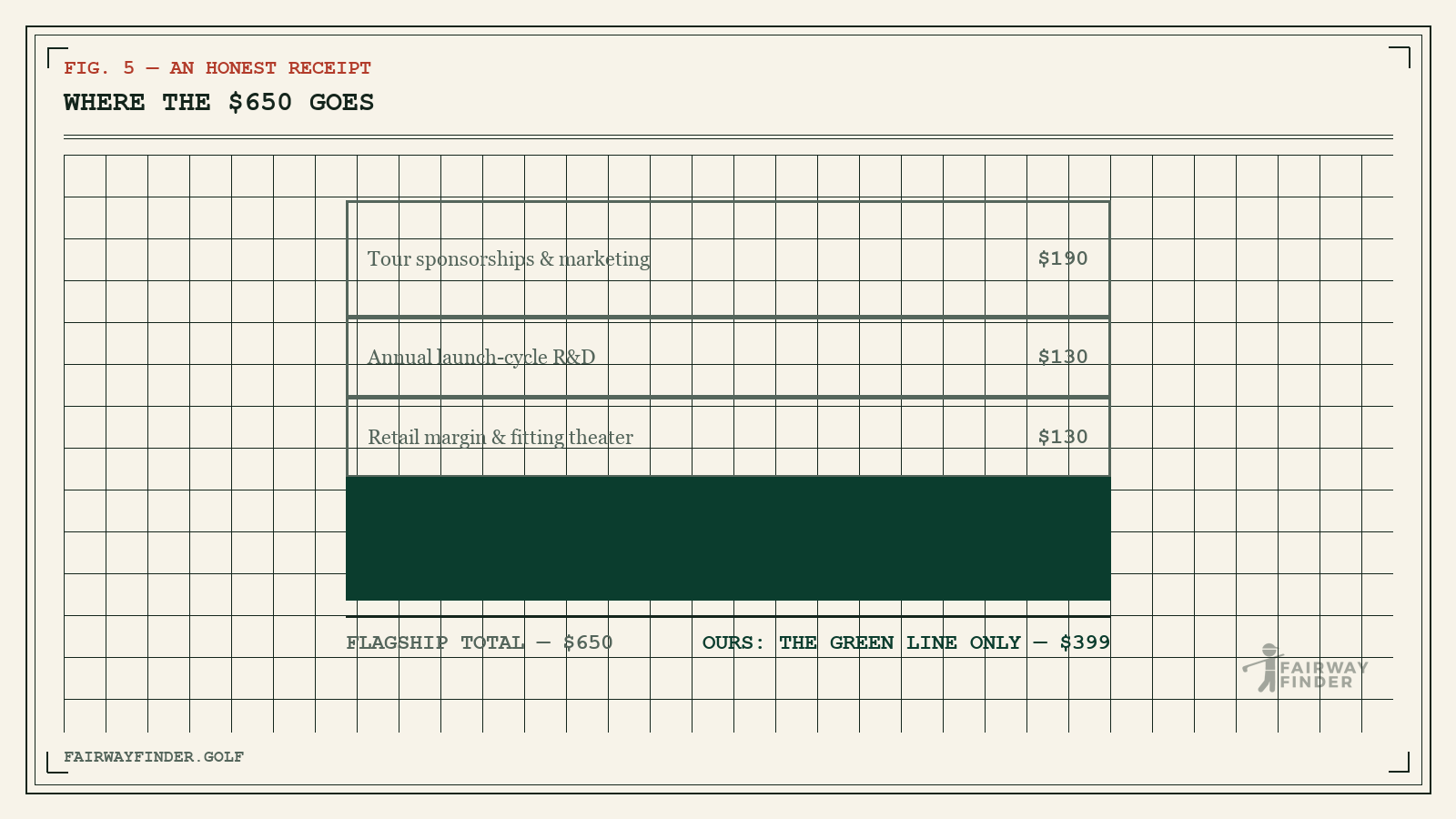
When you hand over $600 for a flagship driver, here's roughly what you're funding:
- Real engineering. Carbon crowns, movable weights, AI-milled faces — the R&D is genuine, and at tour-level swing speeds the gains are measurable.
- A tour truck. Sponsorship deals with the players you watch on Sunday are baked into every retail price.
- A launch cycle. A new model every twelve months, each promising a leap over last year's leap. Independent testing routinely finds year-over-year gains of a few yards at most — for robot swings, not yours.
- The shaft that isn't. Here's the industry's quietest trick: most stock shafts in $600 drivers are made-for-retail versions — lighter, softer, cheaper builds wearing the same paint as the aftermarket shafts the pros play. The "real" shaft is a $200+ upcharge.
None of this is a scandal. It's just worth knowing what the invoice actually covers, because it mostly isn't your fairways-hit percentage.
What Actually Moves the Needle for a 15-Handicap
Strip away the launch-event fog and ask what measurably helps an average golfer keep the ball in play. The list is short and unglamorous:
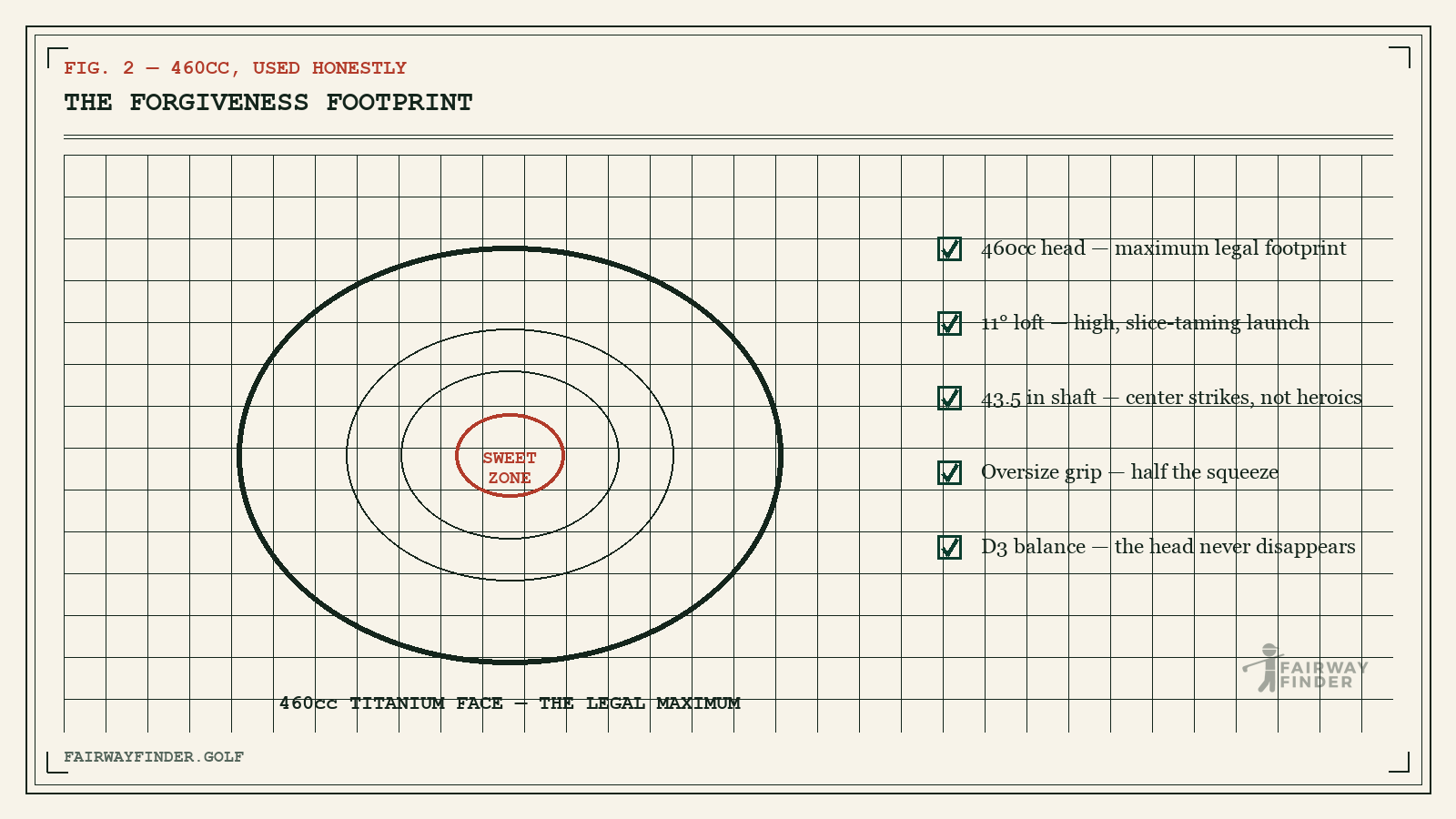
- A head size at the legal forgiveness limit. 460cc is 460cc; it costs the same to mold whether the sticker says $349 or $649.
- Loft that matches your speed. More loft launches higher and curves less. This is physics, and physics is free.
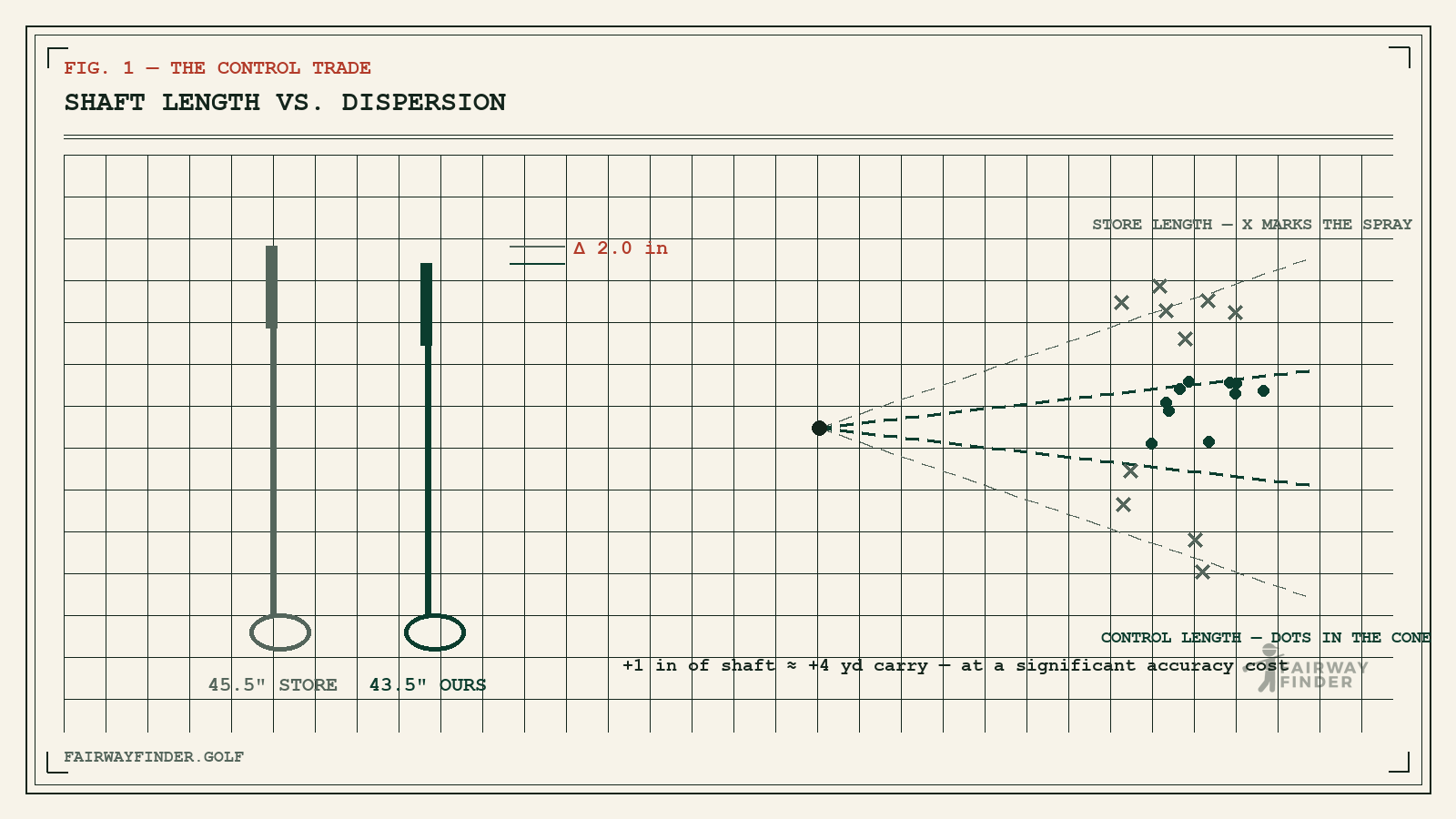
- A length you can actually control. Nearly every flagship ships at 45.5 inches or longer because length juices demo-day speed numbers. Meanwhile the accuracy evidence — from clubfitting studies to tour pros voluntarily cutting their drivers down — points the other way.
- A build that quiets your hands. Sensible shaft weight, a swingweight you can feel, a grip that lets you hold the club without strangling it.
Notice what's on that list: geometry, loft, length, weight. Notice what isn't: sliding weights you'll set once and never touch again, and a crown made of the same material as a fighter jet.
The $200 Question
The Fairway Finder driver costs $399 and spends its budget on exactly the unglamorous list above: a full 460cc titanium head, 11 degrees of launch-friendly loft, a genuinely different 43.5-inch length, a 75-gram control shaft, D3 swingweight, and an oversize leather grip. No adjustability, no carbon-fiber theater, no tour-pro contract built into the price.
Is it "better" than a $650 flagship? Wrong question. On a launch monitor at 115 mph, the flagship wins the spec sheet. The right question is which club puts more of your Saturday drives in the short grass — and for a golfer whose miss is wide, the specs that matter are the ones the flagships won't ship: shorter, heavier, more loft. We broke down the weight piece in Driver Shaft Weight Explained, and the length logic runs the same direction.
When the Expensive Driver IS Worth It
Fair is fair — there are golfers who should buy the flagship:
- You swing 105+ mph with a repeating pattern, and small optimizations are real money to your game.
- You're getting a full professional fitting and will actually use the adjustability the price includes.
- You genuinely love the newest gear, and the joy is worth $600 to you. That's a legitimate reason; golf is supposed to be fun.
If that's you, enjoy it. But be honest about which purchase you're making — a performance decision or a pleasure decision. Both are fine. Confusing them is how a 20-handicap ends up with a low-spin tour head that turns his slice into a crime scene.
Run Your Own Numbers
Before your next driver purchase, do this simple exercise:
- Count your penalty strokes and re-tees off the tee last month. Multiply by how many rounds you play a year. That's the real cost of your current driver.
- Now ask which spec change attacks that number: five more yards on your good drives, or a tighter spread on your bad ones?
- Price both options. One costs $600 and chases the yards. One costs $399 and chases the spread.
For most golfers who spray it, the math isn't close. The scorecard doesn't have a column for what your driver cost — only for where it went.
Ready to find more fairways?
The Fairway Finder driver — 43.5" control length, 460cc titanium, 11° high launch, oversize leather grip. $299 USD / CA$399 with headcover and 1-year warranty.