Nobody gets treated worse by golf marketing than a beginner. You walk in looking for your first real driver and walk out with the same 45.5-inch, low-loft, tour-cosmetic club that a scratch player would buy — because that's what the wall sells. So here's an honest field guide to the best golf driver for beginners: the four specs that genuinely make the game easier, and the shiny stuff you're free to ignore.
What the Best Golf Driver for Beginners Actually Needs
A beginner's driver has one job: get the ball airborne and keep it on the golf course while you build a swing. Four specs do almost all of that work.
1. Maximum forgiveness — a full 460cc head
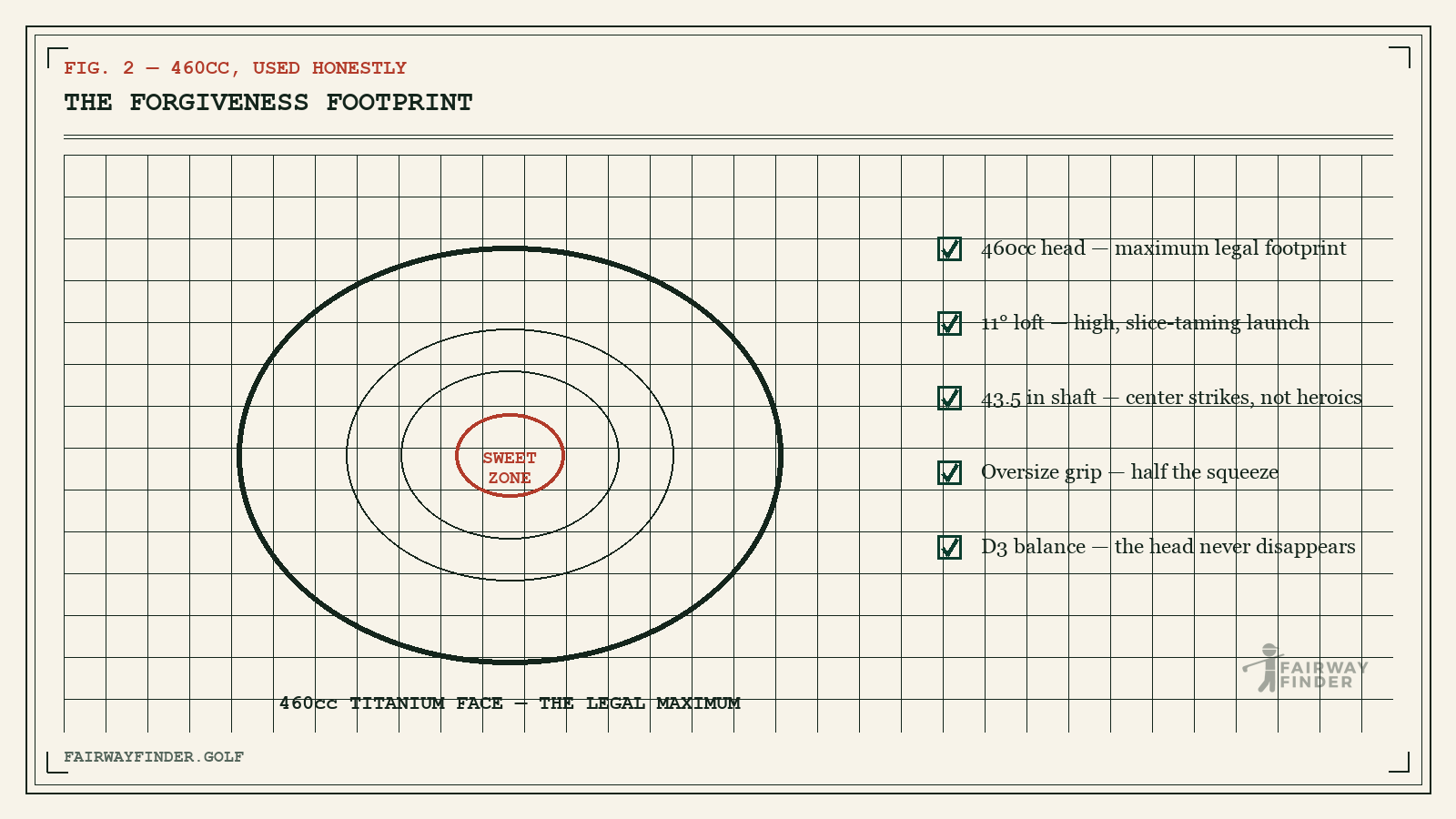
The rules of golf cap driver head size at 460cc, and as a beginner you want every cubic centimeter. A bigger head means a bigger effective hitting zone, so the strikes you'll inevitably catch off-center lose less ball speed and twist the face less. There is no beginner on earth who benefits from a compact "players" head. This one's simple: buy the limit.
2. Generous loft — 11 degrees or more
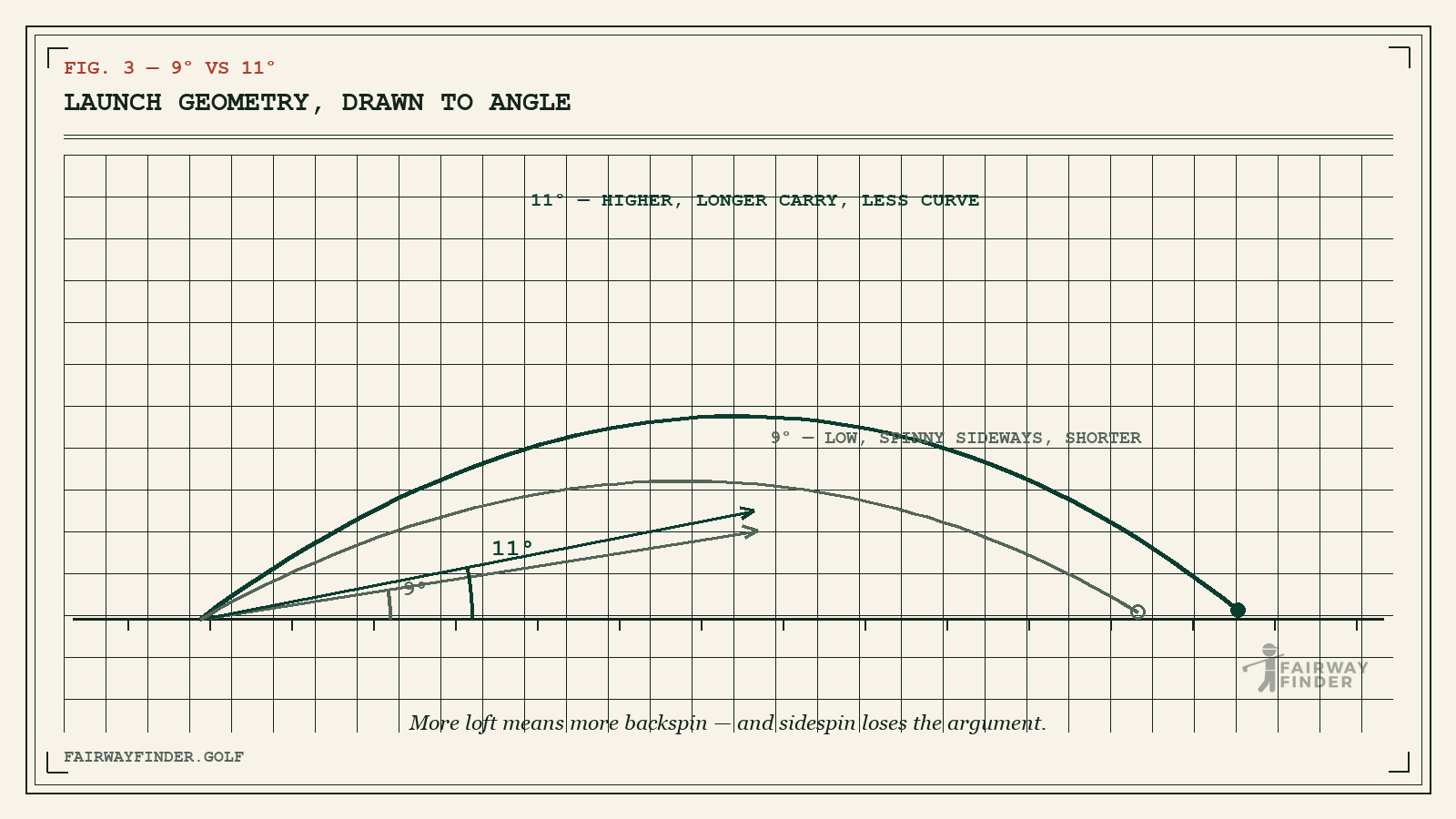
Beginners almost universally launch the ball too low, and low launch compounds every other error. More loft launches the ball higher, carries it farther at moderate swing speeds, and — the part nobody tells you — adds backspin that fights the sidespin of a slice. High loft is the single most beginner-friendly number on the club. Ten-and-a-half is the minimum you should consider; more is better. The full physics are in our piece on 11° vs 9° driver loft.
3. A length you can control
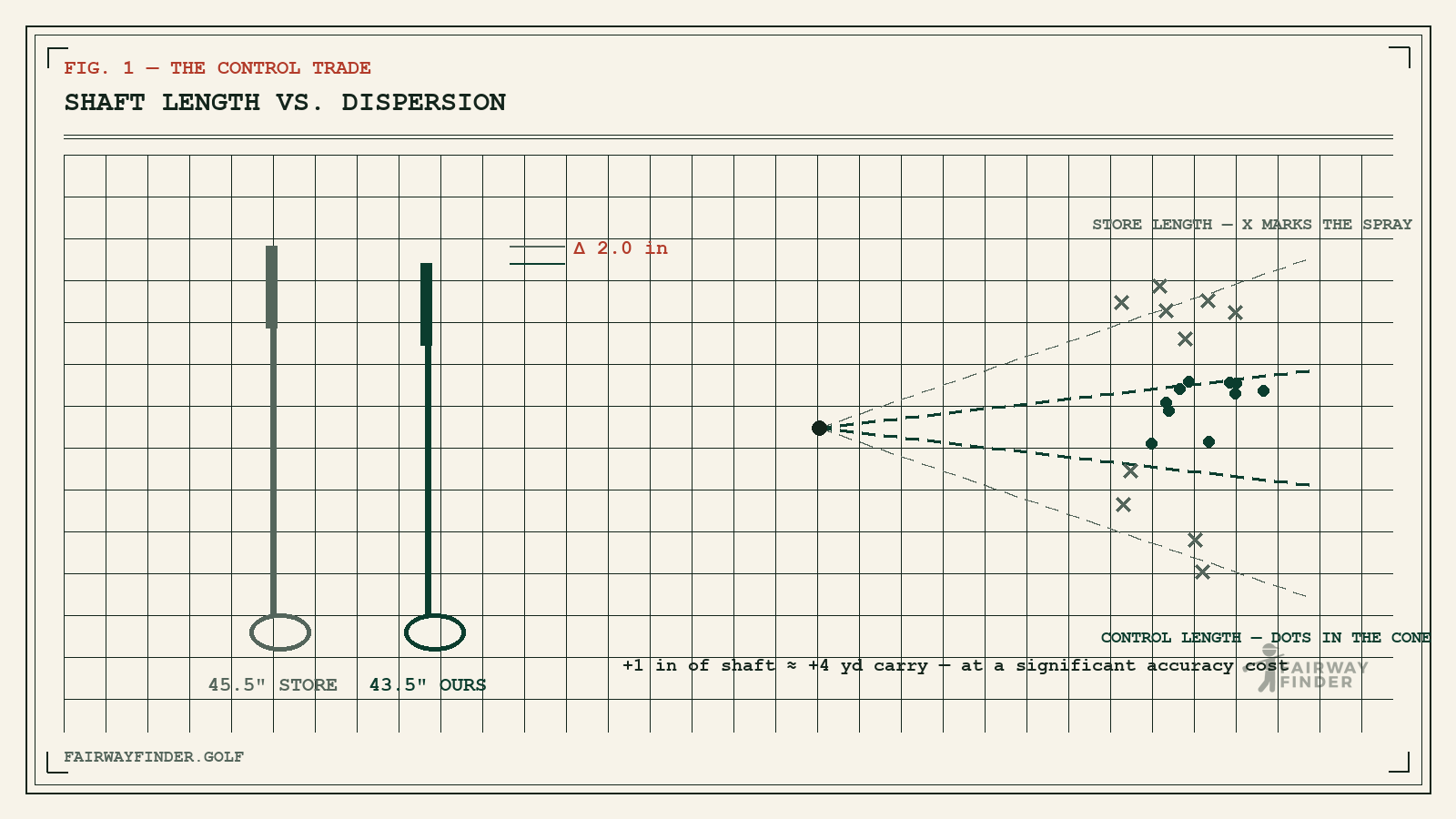
Here's the industry's dirty little secret: drivers got long because long tests fast, not because long plays well. Even tour pros — the best strikers alive — mostly play drivers shorter than what's sold off the rack, and some have famously cut theirs down further to find fairways. For a beginner still finding the center of the face, a shorter driver is a cheat code: it puts you closer to the ball, shortens the arc, and makes solid contact dramatically more achievable. If a club is easier to hit solid, it's easier to learn with. Full stop.
4. A build that resists your nerves
First-tee anxiety is real and it lives in your hands. A grip thick enough to hold without squeezing, and enough shaft weight to feel where the clubhead is, turn a nervous lunge back into a swing. These "feel" specs never make the ad copy, but ask any teaching pro what beginners fight most and they'll say tension and tempo — which is exactly what grip size and weight address.
What You Can Safely Ignore
Now the money-savers. As a beginner, none of these will change your scores:
- Adjustable hosels and sliding weights. Fitting tools for established swings. Your swing is changing weekly (that's the point) — tuning a moving target is theater.
- This year's face technology. Year-over-year driver gains are a few robot-tested yards. You will out-improve every face innovation by taking one lesson.
- Low-spin "tour" models. Spin is your friend right now. It keeps the ball in the air and fights curve. The LS head on the pro's bag would make your slice worse.
- $600 price tags. You're paying for a tour truck and a launch party. Learn the game first; buy jewelry later if you still want it.
Why We Built the Fairway Finder This Way
You can probably see where the checklist points. The Fairway Finder driver is essentially the beginner's (and honestly, the average golfer's) spec sheet made real: full 460cc titanium head, 11 degrees of loft, a short 43.5-inch shaft you can actually find the middle with, a substantial 75-gram shaft with D3 balance for tempo, an oversize leather grip for tension-free hands, and alignment guidance on the crown so aiming isn't guesswork. Headcover included, $399, no upsells.
One honest caveat, because we'd rather lose a sale than misfit a golfer: the stock shaft is stiff flex at 75 grams, which suits average-to-quicker tempos. If you're a genuinely slow swinger — most petite players, many older players — a softer, lighter flex elsewhere may serve you better until your speed develops.
A Sensible Buying Checklist
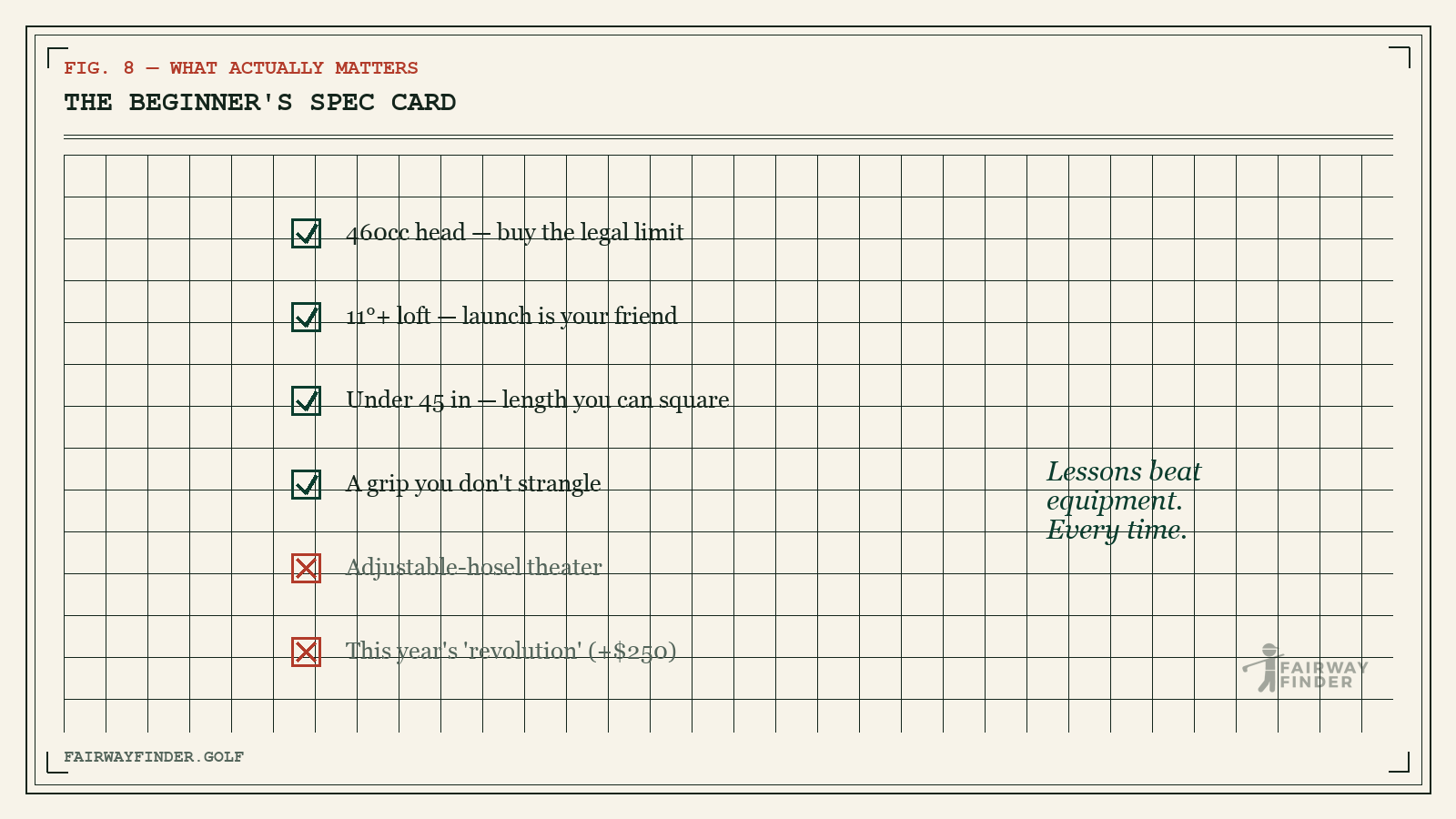
Print this, ignore the wall of marketing, and check boxes:
- 460cc head? ✔
- At least 10.5° of loft — ideally 11°+? ✔
- Shorter than 45 inches, or at minimum not the longest club in the shop? ✔
- Comfortable, secure grip you don't have to strangle? ✔
- Priced so you can still afford lessons? ✔ (Lessons beat equipment, every time.)
The best golf driver for beginners isn't the one the pros play. It's the one that makes your next hundred range sessions productive — high launch, easy contact, quiet hands, and a ball that stays findable. Buy that, and let your swing grow into the rest.
Ready to find more fairways?
The Fairway Finder driver — 43.5" control length, 460cc titanium, 11° high launch, oversize leather grip. $299 USD / CA$399 with headcover and 1-year warranty.